For the past several years a group known as Dakhma of Angra Mainyu has been offering satanic rituals in various venues. Several attempts to hold them at college campuses resulted in angry protests which caused the services to be canceled. In Oklahoma City, however, they have had success. The powers that be there have determined that satanic worship is protected by the First Amendment, thus they permit the service, and will be holding another one this Monday, August 15th, the same day as the Catholic Church celebrates the 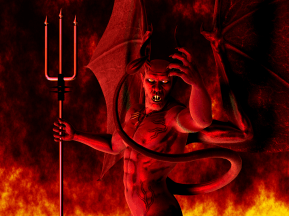 Solemnity of the Assumption of the Blessed Virgin Mary.
I know many people who don’t like satanic worship will nonetheless believe it is defended by the First Amendment and will criticize any attempt to stop it. Whi
le that certainly seems reasonable, I do not agree.
I believe we can make a strong argument that the Freedom of Religion established by the First Amendment was intended to protect the rights of those looking to worship God as they understand him and not Satan. Absolute tolerance is never possible; there are always inherent limits to any freedom, and none of our freedoms is absolutely unrestrictable. For example, Freedom of Speech does not protect the right to libel or slander, nor does it protect the right to yell “fire!” in a crowded theater. Similarly, any religion that seeks to worship not God but Satan and advocates obscenity (check out the Dakhma of Angra Mainyu website – it will shock and disgust you) does not, I believe, enjoy the protection of the First Amendment. Similarly, the so-called “Separation of Church and State” that so many people invoke to prohibit prayer in public places and to prevent religious organizations from using public facilities cuts both ways. This satanic worship does not merely worship Satan. Rather, it blatantly mocks Catholicism. Consider this:
During their service o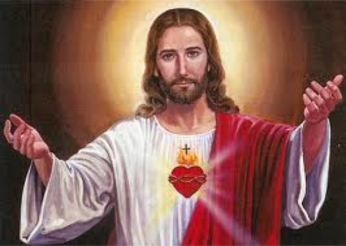 n August 15th, they will hold what they are calling the “Consumption” of the Blessed Virgin Mary. They will decapitate a statue of the Blessed Mother, remove a previously-placed pig heart from it, and eat it. This, they claim, symbolizes the Blessed Mother being cast into hell! Of course, it coincides with our feast of the Assumption of Mary. The timing of this insult for the same day and using a parody of the name of our feast is no accident. Neither was it an accident when the last one mocking Mary was held on Christmas Eve. This is not freedom of worship but hate speech. If public facilities cannot be used to support religion, then neither should they be used to mock it.
In solidarity with Archbishop Coakley of Oklahoma City and his request for all people of good will to join in a day of prayer and fasting in reparation for this horror, here at St. Ann’s we will hold Adoration of the Blessed Sacrament from 9:00 AM until 8:00 PM in the chapel. A Holy Hour with recitation of the rosary will be held at 7:00 PM.
I urge all people of good will of whatever religion or of none whatsoever to join in solidarity with Catholics whose beliefs are being mocked and desecrated. An attack on one religion is an attack on all!

 with each other, support one another, solidify their positions on issues, and bring about a unity that helped them feel more proud of their party and their candidate. This would never have been possible if everything were done at home through the internet. As human beings we are naturally social creatures, and when there is a strong need to bond together we must do so in person.
 conventions and the reasons we go to church. Paramount, of course, is to participate in the Holy Sacrifice of the Mass and receive Holy Communion so that we can be one with Christ in His suffering, death, and resurrection and thus have all of our (venial) sins forgiven. But in addition to that, the human element is of great importance. Being in a gathering with others who share our beliefs strengthens us in our identity as members of the Church and in our commitment to follow Jesus, which does not happen sitting home alone. Sure, we could read a good spiritual book at home, pray with the Bible, read the Pope’s comments in L’Osservatore Romano, and say private prayers, but we’d be lacking the communal gathering element that is essential to our well-being.
 Rev. Andrew P. Carrozza