One of the dangers I have always seen in current American society is that we have reversed the intentions of our founding fathers. They imagined a country where religion was freely respected and openly tolerated (cf the First Amendment) but where no one would be compelled to follow any particular religion. We today are more and more creating a society that is inimical to religion, that wants to remove any public mention of God altogether, and more and more people are buying into the idea, even though they personally believe in God and consider themselves spiritual. The following video by a Harvard professor is an excellent statement on what I consider a very crucial error in modern society. Please take a moment to view it. It is only 1 1/2 minutes long.
Author Archives
What is the Purpose of the Church?
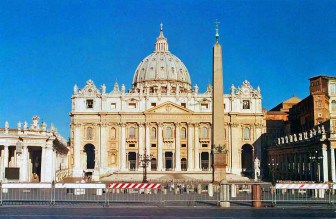 Last week at our teen club meeting I asked a question of the teenagers, and I was a little surprised at the answers I got. I asked the question, “What is the purpose of the Church?” I got back a variety of comments such as to help people, to show people goodness, to teach the gospel, to show people to follow Jesus, but only eventually did I get the answer I was looking for: to lead people to heaven; to save souls. That is the purpose of the Church, and when I said it of course the kids agreed, but it wasn’t what they first thought, and it occurred to me that maybe that is the cause of many of the problems that we have today with people who either do not embrace the Church, do not follow it as fully as they should, or do not understand why we hold the positions we do. Because they don’t understand what the Church is all about, they don’t understand our insistence on certain teachings. This is not the first time that I’ve come across this.
Recently I had a phone conversation with a man who was rather angry because a layperson I invited to speak after Communion mentioned that gay marriage was wrong. He was furious with me because he thought that the Pope had allowed gay marriage when he said “Who am I to judge?” When I explained to him that that’s not exact at all what the Pope said he started giving me his diatribe of “Well, see this is why people don’t follow the Church any more. The Church insists on holding these unpopular opinions and the Church has to change and say what people want to hear if they want to get people to come. When I asked the man, “What is the purpose of the Church?” he couldn’t answer me. He actually said, “I don’t know!” I said to him, “So you really don’t know what the purpose of the Church is, yet you can be firm in telling me that the Church is wrong in teaching that gay marriage is not permissible.” He then just yelled some more insults at me and hung up. Don’t we need to know what the goal of the Church is before we can assert with force that the Church’s teaching is wrong? Sadly, many people have totally lost track of what we’re all about.
I recall a woman who once called me asking if I could do her wedding even though she needed an annulment. She told me she knew that technically she needed an annulment. I said to her, “No, truly you need an annulment.” “Well, Father,” she asked, “can’t you just marry me anyway without it? The way I look at it God just wants me to be happy and marrying this man will make me happy so, why won’t you do it?” I tried to explain to her that she had it all wrong, that God doesn’t just want us to be happy. Jesus didn’t have to suffer and die on the cross to help us figure out whatever is going to make you happy and then do it; that was Original Sin! In fact he’s called us to quite the opposite: not just to listen to what you think is right and what you feel is right but to listen to and follow what God teaches us. That was the whole temptation from Satan. God had warned Adam and Eve not to try to listen to their own hearts and heads and what they think is right, because they can be wrong, but God can’t. Basically God was saying, “I am God and you are not. I am all-knowing, you are not. If you follow your own heart and mind you can be wrong, but I can never be wrong. So do and follow all I tell you and your life will be perfect.” Of course, they didn’t listen to God, and when they decided to choose for themselves what was right and wrong instead of listening to God they destroyed Paradise. When I told the girl on the phone this she didn’t want to hear it and abruptly hung up the phone on me.
But that’s the problem we’re facing: in so many situations people somehow got the got the idea that the Church is here just to make people happy. No, the Church is here to show people the way through a fallen world to return to what we lost by Original Sin. It was the disobedience of Adam and Eve to the will of God that lost that unity – that Paradise – that we once had. Christ, by his obedience to the Father even unto death, reversed the disobedience of Adam and Eve, and now, when we are obedient to him we allow him to lead us to union with him – which is what “going to heaven” means – to be one with God. Our beliefs are not arbitrary and they are not decided by vote or opinion but by the truth revealed to us by God and preserved through the Church, what we call the Deposit of Faith.” Just because the majority of people don’t agree with it does not make it all of a sudden wrong, or because now a majority of people accept it doesn’t automatically make it in fact a means to union with God.
 If you want to have a healthy body, you know that you can’t eat junk food. Well, imagine if people were to say “We like junk food; therefore, we think we should be allowed to eat all the junk food we want!” Nutritionists are simply going to tell you you’re wrong, that junk food doesn’t make you healthy. They tell you you have to severely limit your intake of it, perhaps even avoid it all together. You don’t like it. You want to be able to eat all the junk food you want and still be healthy, but your opinion or desire doesn’t change the fact that junk food is not healthy. Even if nutritionists should decide to appease people and tell them, “Okay. Since you believe there’s nothing wrong with junk food and a majority of you feel that way, then we’ll now declare that junk food is good for you,” does that now make junk food healthy? Your opinion can’t change the truth. In just the same way, when God reveals that something such as gay marriage, contraception, abortion, whatever it may be, is not healthy for your soul and does not lead us into union with him, all the opinion to the contrary doesn’t change the truth that these activities do not make us healthy but are harmful to that union with God, which is the definition of a sin.
Moral teachings tell us what leads us to union with God (salvation) and what harms that union (sin). If we were to say that something that was once revealed as a moral absolute has now changed, that what was once sinful is now holy, that would imply that God had changed, and that’s a metaphysical impossibility! We know that drinking rat poison would kill us. For rat poison to now be good for us there would have to be a complete metabolic change in the very structure and essence of the human body. If 96% of people now believe rat poison is okay and we should now be allowed to drink it, that doesn’t change the fact. Opinions don’t change truth.
 If a doctor should have a patient who was insisting that the doctor allow him to drink rat poison, if the doctor cares about his patient and is doing his duty, he doesn’t tell the patient drinking rat poison is healthy no matter how much he whines, pickets, petitions, carries on, or threatens to go to another doctor who will tell him it’s okay. Imagine if the doctor were to say, “Oh, I don’t want to lose any patients, so I’d better allow him to drink rat poison or he’ll leave me,” and he tells him it’s okay, what is the outcome? A dead patient! What would then happen to the doctor? He’d be sued for malpractice, lose his license, and probably be sent to jail as a killer! His duty is to counsel his patients only in the truth. If he tells them otherwise he would be held accountable for their death. If they guy refuses to listen to the doctor and threatens to leave him, the doctor can only say, “Well, you are wrong. Drinking rat poison is not healthy, and if you drink it you will die. You may choose to leave and find a doctor who will tell you it’s okay, but that doctor will not be teaching you the truth, and if you follow his advice, you will die!” In the same way, if the Church truly loves her members, she does not tell them it’s okay to do something that God has declared is sinful no matter how much they demand it. If we were to do that, the person would die in sin and we’d be responsible for their death. We cannot change the truth because people don’t like it, and we cannot change the teachings because people may choose to leave. We may only teach the truth.
And so, my brothers and sisters, if you feel concerned or confused about what the Church teaches and don’t understand one thing or another, remember that the purpose of the Church is not to be a social club. Our purpose is not to try to win in as many people as we can by promising anything that will make people join us. Our purpose is to save souls, and the only way we do that is by teaching the truth, by pointing out what is sinful and calling people to avoid sin and embrace what is holy. No opinion, no changes in popular acceptance of an idea can ever change that. To do the work of the Church means simply to preach the Gospel of Jesus, the good news that calls us away from sin and to union with him, and nothing else. Lies destroy and kill. Jesus came that we might have life and have it abundantly. That life is only found in obedience to the truth, the truth that will set us free.

You’ve been granted an interview with God!
 Imagine God were to tell you that he was giving you a five minute interview, and you could ask him or say to him whatever you wanted. What would you say to him? I’m sure some people would use the opportunity to present their laundry list of wants and demands to him, kind of like a child on Santa Claus’s lap, “give me this, give me that…” Others would assuredly decide to take God to task for everything he’s not doing right. They would proceed to chastise him for all the things he’s doing wrong, for all the evils he’s not ending, and telling him all the things they think he should be doing if he’s going to be just. I know what I would do: I would only ask him one question. I would say to him, “Lord, are you pleased with me?” I would then allow him to speak. I would listen to what he told me he was pleased with, and I would (hopefully) accept with humility the areas where he wanted me to change. But I certainly hope I would not waste precious time before God talking to him rather than listening to him. To me that seems to be one of the biggest problems that we often face in our relationship with God: we spend far too much time talking to God and not enough time listening to him. Samuel, when he heard the voice of God said to him “Speak Lord, for your servant is listening!” We too often say to God, “Listen Lord, for your servant to speaking!”
How much time do we spend listening to the Lord? Isn’t it a shame that we go to him talking and talking and very seldom listening to him? If a student were studying a sport or a musical instrument under a master teacher, would he spend all of the time telling the teacher how bad he is at his sport or his musical instrument? Would he constantly try to tell him how he could improve in his art, or would he sit and ask the master to teach him what he needs to do to be better at that sport or at that musical instrument? So it needs to be with us and God. Our job is not to dictate to the Lord how we think he should be running the world, but to turn to him and ask him what he wants us to do to make the world a better place, and to change my life so that I will be the person he has created me to be.
If we really want to know meaning in our lives we need to know God. Lots of times we come across people looking to “find themselves”. Whenever I’m talking with someone who says they need to find themselves, I always tell them “if you wish to find yourself, find God!” We need to know why we were made and what we’re here for in order to know that we’re fulfilling that function, and since we are all here because God wants us here, then we can only know true peace and contentment when we know what God wants us to do with the life he has given us. And that often comes not from talking to God but from listening to God. So my suggestion to all of us is, if you want to know peace, if you want to know contentment, if you want to know happiness and have meaning in your life, spend less time talking to God and more time listening to God. May our motto never be “Listen Lord, for your servant to speaking!” But rather “Speak Lord, for your servant is listening!”
St. Ann’s Parish makes Catholic New York front page!!


What Do You Want God To Do For You?
Have you ever felt that you don’t know what God is supposed to do for you? When you go to church, when you pray, what are you looking for? It seems to me that many people come before the Lord but really don’t know what they’re expecting from Go. Or they have a completely different plan for God than what he wants. So the question we all need to ask is, “What are you looking for?” What do you expect God to do for you? And then we must ask, “Is that what God wants to do for us?” If we are not on the same page as God, he will forever be a frustration to us, or as Jesus says, a stumbling block. Do we want the same thing for ourselves that God does?

Let’s start by talking about what God isn’t and what he does not want to do for us: He’s not Santa Claus; he doesn’t promise to bring you good things or do good things for you if you’re good but if you’re bad he’ll punish you. He’s also not the genie in the lamp, that if you just rub the lamp properly the genie will come out and grant all your wishes. He’s not the police officer who’s going to make someone stop hurting you, nor is he the judge that is going to punish somebody who has harmed you when you bring it to him. So what does God want to do for us?
Somehow we have this idea in our heads that God has said “Come follow me and I’ll make sure nothing bad ever happens to you. I’ll give you the life of Riley!” So we go to church faithfully and we pray every day, thinking that nothing bad will happen to us, and then when something bad does happen we get very angry at God and we say, “You didn’t hold up your end of the bargain! I followed you and you still let bad things happen to me!” But God never said he would make sure nothing bad ever happens to us! He never promised that! We think he should do that, and when God does not work the way we think he should we get angry at him. No, God has come to help us turn away from sin and to help us deal with the difficulties and tragedies of life by finding him in the midst of our life and turning to him for strength to carry the crosses we must bear. By doing that, we turn the evils that befall us into means to bring us closer to God.
Let me give you a perfect example: this past September I had to go to Louisiana to participate in the funeral of a young girl only 21 years old whom I had baptized. She died after a long battle with brain cancer. I sat with her father at the very same kitchen table where I had played cards with her as a child years before. Her parents are faithful Catholics who have followed the Lord regularly their whole lives. Her father told me over lunch that so many people have remarked to him that they don’t know how he dealt with losing a daughter. They say they would have fallen apart if that it happened to them. They realize that it was his and his wife’s strong faith that is helping them through it. And he told me that several people have written to him emails or spoken to him and told him that watching him face the most difficult thing anyone could ever imagine has reinforced their faith. They’ve come to see the reason why we worship God and the importance of it and it has inspired them to return to church. The father said to me, “We were praying for a miracle for Kelly, but maybe the miracle we got was different from what we wanted. Instead of Kelly being healed, by her death she brought many people back to God.” Amen! That is indeed the power of faith. Only God could get them through that. There is nothing in the world that would have helped them through that very difficult time. And by their faith they turned that evil into an opportunity to bring other people home to God.
Now, faith is not something you can store in a box in the closet for years and never use until you need it. The faith to do what this family did is the result of following God each and every day, knowing him, loving him, and finding his presence in your life. After that, worrying about praying for God to help us win the lottery or to lose 10 pounds seems almost silly! What does God want to do for you? Very simple: he wants to be there to help you every step of the way to make sense of and deal with the tragedies in life. Bad things happen in the world, and it is not God’s fault that bad things happen. He has come to help us carry the cross and turn it around so that we can deal with the difficulties, take the bull by the horns, and know that nothing can destroy us as long as God is there with us. When we realize that every bad moment has the power to bring us closer into God’s embrace, what have we to fear? Evil has no power over us!
And of course, most importantly, he comes to save us from our sins. And when we really think about it, the only thing worth fearing is being in sin. Sin is the only thing that can destroy the promise of eternal life that God has given us. Ultimately we’re on a journey to heaven, and Jesus is showing us the path to get there. We are set on that journey at our baptism, and by faithfully worshipping him, by following everything he tells us, by knowing and loving him, he helps us stay on that path and not be distracted by all the things around us that would make us want to leave that call to heaven behind to make ourselves happy and comfortable here on earth. There is no tragedy that can take us away from God or can destroy our promise of salvation in and of itself. Only if we allow it to turn us away from God does it have its real evil. And that is exactly what Satan is trying to do; he brings evil into the world hoping we will get angry at God for the evil that happened and turn against him so that Satan can just reel us in. Some people need only stub their toe to get angry at God, and when that happens they are Satan’s easy prey. When people get angry at God for the bad things that happen, does that give them any peace? Does it help them deal with the problems? Does it help them to heal and move on? No. It gives them a target for their anger, but nothing more. In fact, it turns them away from the only one who can give them peace. Only by turning to God, by doing what he wills for us to do and by inviting him into every moment to help us deal with our struggles, our weaknesses, the bad things that happen to us, our confusions, whatever it may be, do we find God. So do not fear bad times. Do not fear ill health. Do not even fear death. Fear only dying in sin. And if we follow the Lord, if we come to Mass to adore him and love him for everything he’s done and to ask for the strength to walk each and every day knowing he is holding us by the hand every step of the way, then we have found what God wants to do for us.
Why Do You Catholics Pray to the Saints?
A common objection we receive from critics as well as people trying to understand the faith is why we invoke the saints. “Why do you Catholics pray to the saints?” they ask: “Why don’t you just pray directly to Jesus?”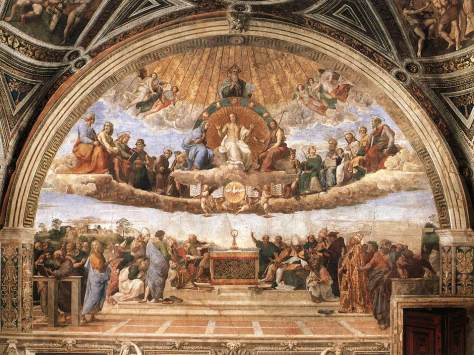
I always respond this way: “Do you ever ask a friend to pray for you?” “Of course!” they respond. “Well, why do you pray to your friend? Why don’t you just pray to Jesus yourself?” No one who asks a friend to pray for them is for a moment implying that they’re asking the friend to pray instead of praying themselves; they’re asking their friend to pray along with them. And of course, no one is thinking that their friend is going to be the one who grants the answer to their prayers. Well, if we can ask friends on earth to pray for us, why can’t we ask our friends in heaven, the saints? It’s part of what we call the Communion of Saints, that the souls on earth, the souls in Purgatory, and the souls in Heaven are not separated from each other in such a way that we can’t be of assistance to one another when needed. Only the condemned souls in Hell are beyond our ability to help. Purely speaking, we don’t pray to the saints; rather, we pray through them, or we ask them to pray along with us. Saint Augustine once put it perfectly in a treatise against a man named Faustus that he once wrote:
“We celebrate the martyrs with love and fellowship.
“We, the Christian community, assemble to celebrate the memory of the martyrs with ritual solemnity because we want to be inspired to follow their example, share in their merits, and be helped by their prayers. Yet we erect no altars to any of the martyrs, even in the martyrs’ burial chapels themselves.
“No bishop, when celebrating at an altar where these holy bodies rest, has ever said, “Peter, we make this offering to you,” or “Paul, to you,” or “Cyprian, to you.” No, what is offered is offered always to God, who crowned the martyrs. We offer in the chapels where the bodies of those he crowned rest, so the memories that cling to those places will stir our emotions and encourage us to greater love both for the martyrs whom we can imitate and for God whose grace enables us to do so.
“So we venerate the martyrs with the same veneration of love and fellowship that we give to the holy men of God still with us. We sense that the hearts of these latter are just as ready to suffer death for the sake of the Gospel, and yet we feel more devotion toward those who have already emerged victorious from the struggle. We honor those who are fighting on the battlefield of this life here below, but we honor more confidently those who have already achieved the victor’s crown and live in heaven.
“But the veneration strictly called “worship,” or latria, that is, the special homage belonging only to the divinity, is something we give and teach others to give to God alone. The offering of a sacrifice belongs to worship in this sense (that is why those who sacrifice to idols are called idol-worshippers), and we neither make nor tell others to make any such offering to any martyr, any holy soul, or any angel. If anyone among us falls into this error, he is corrected with words of sound doctrine and must then either mend his ways or else be shunned.
“The saints themselves forbid anyone to offer them the worship they know is reserved for God, as is clear from the case of Paul and Barnabas. When the Lycaonians were so amazed by their miracles that they wanted to sacrifice to them as gods, the apostles tore their garments, declared that they were not gods, urged the people to believe them, and forbade them to worship them.
“Yet the truths we teach are one thing, the abuses thrust upon us are another. There are commandments that we are bound to give; there are breaches of them that we are commanded to correct, but until we correct them we must of necessity put up with them.”
The saints are our heavenly prayer partners, our role models, our heroes, but only God is our God! So by all means, invoke the aid of the saints! They help us by their example and their prayers to follow Christ.
Hey, you Catholics! This is 2014! You gotta get with it and change those unpopular teachings!
 A comment we all frequently hear from people is that lots of people don’t accept the Church’s teaching on certain issues, therefore the Church should change them so that people will come to church again. They will claim, “This is 2014! The Church has to get with the times and change its teachings or more people will continue to leave!” We don’t at all like the idea that people are leaving, but what would it profit us to change the teachings just to keep people in church on Sunday? Recall what happened when Jesus revealed his teaching on the Eucharist and many people found it too hard to accept and no longer followed him (cf John 6). What didJesus do? Did he call out after them and say, “Wait a minute! Come back! You don’t like that teaching? Okay, I’ll change it. What do you want me to teach? Just tell me and I’ll teach that, as long as you stay with me!” No. Instead, with a heavy heart, he let them go. He was not happy that they would no longer follow him, but he could not change his message and the call to unity with himself and the truth he had come to reveal simply because people didn’t like it. Neither can the Church change a teaching just because it is not popular.
“But,” they may object, “if the message were more appealing, more people would come, and you’re never going to get certain people to come back as long as the Church holds that teaching!” In other words, “give the people what they want and they will come!” I like to use this analogy:
I could fill our church every Sunday night with teenagers, young adults, and others who would never otherwise come to Mass. It’s very simple: give away free beer and show porn. First of all, I’d be arrested. But even if I weren’t, would that be doing anyone any good? Are we merely trying to count how many people are sitting in church on Sunday, or are we trying to bring them the call of salvation by fidelity to the teachings of Christ? I realize this is a drastic example, but it makes the point: anyone who would have us change the teachings just to get more bodies in the pews does not understand the call to salvation by avoiding sin and being formed in the image and likeness of Christ.
Yes, we should do everything in ourpower to be welcoming and acknowledge that even people who are sinners – as we all are – are welcome in church on Sunday and can have positive gifts to offer, which is what Pope Francis has been saying. But under no circumstances can we pretend that sin is not a sin just to make them happy. Our job is not to craft a popular message but to be consistent to the message of salvation by fidelity to the call of Christ. Only that can save people.
Suppose someone, tired of paying over $4 per gallon for gasoline, observing that water from the garden hose is far cheaper, decides he wants his car to run on water. He even gets 96% of car owners to agree with him, and petitions the car manufacturer to allow them to put water and not gas in the gas tank. All the opinion of those people doesn’t change the fact that the car doesn’t run on water. If the people complain that the car manufacturer lacks compassion and understanding of the people’s difficulties and keeps petitioning every new CEO who comes along to change the “law” and allow the car to run on water, does the manufacturer give in and allow it because the people want it? Of course not! Put water in your gas tank and your car will be destroyed! Similarly, when the Church clearly teaches that any given action (such as any sexual act outside of the covenant of marriage, abortion, etc.) does not lead to union with Christ but instead damages that union, no one’s personal opinion changes that. So anyone who advises us to ignore what the Church teaches and “follow their own hearts” is like telling people it’s okay to put water in the gas tank.
“Okay, but how about issues that do notseem to have moral relevance, such as women priests?” Some people are clamoring for the Church to readdress this issue. Well, Pope Paul VI did precisely that. He looked carefully at Tradition, at Scripture, and at previous magisterial teachings, and after extensive prayerful study, he defined in the encyclical Inter Insigniores that the Church does not possess the authority to admit women to the priesthood, and that this is a teaching that is part of the Deposit of Faith which must be adhered to by all. Pope John Paul II further defended and upheld this position in his encyclical Dignitatis Mulieris. Both Pope Benedict XVI and Pope Francis have upheld this, Pope Francis most emphatically so when in one interview he would not even address the question. He simply said, “No. That has been settled definitively.” The question is therefore settled; end of discussion. So those who are still clamoring for women priests are, quite frankly, throwing an ecclesiastical temper tantrum. Like a child who continues to cry and nag when a parent says no, trying to wear them down until they give in and give the child what he wants, so these people continue to cry and carry on, kicking and screaming in their tantrum. This is hardly mature behavior, and hardly what a disciple of Jesus is expected to do. While some issues are within the Church’s power to change (such as married clergy), others are not, such as women priests, gay “marriage”, abortion, contraception, etc. These have been definitively settled by the Church. So let’s end the temper tantrums, but in a spirit of love for the Lord and maturity of action, accept it and move on.
Remember that the Church’s purpose is not to be popular. We’re not battling other religions to see who has the most people in our pews on Sunday. Our commission by Jesus is to preserve what he has revealed to us and to faithfully teach everything he has commanded us and call people to salvation. Our job is to teach the truth whether people accept it or not. Yes, we will do everything we can to help people understandand accept Christ’s call to holiness, but we cannot change Christ’s teaching. That would betray our very reason for existence. 
How NOT to read the Book of Revelation
Many people, when they first come to the faith and decide they want to read the Bible, turn right away to the Book of Revelation. This is especially true of born-again Christians. The reason they turn to the Book of Revelation is that it’s easy reading and it contains fascinating stories. I always recommend, however, that people NOT begin with the Book of Revelation and instead start with the gospel accounts. The Book of Revelation, while fascinating, is easily misunderstood and by reading it without understanding it, can cause harm to the person trying to come to faith by sidetracking them into pointless discussions and endeavors that prevent them from truly understanding the Gospel of Christ and the call to salvation. Let’s talk a little bit about exactly what the Book of Revelation is and is not, first by using this example:
Suppose you were to get a letter from a friend who wrote to you, “Today was a horrible day! My mother got canned and my father got thrown in the slammer!” You know right away what the person meant: his mother lost her job and his father was sent to prison. He is using idiomatic expressions that have clear meaning for us. Now imagine several hundred years from now, somebody in another culture finds your letter, translates into his own language and responds “Oh my goodness! Look how horrible they were back in the 21st century in America! They took this man’s mother and stuffed her into a little can, and then they took his father and slammed him between two big bricks!” We get a good laugh at the idea. But this error is precisely what often happens when people in 21st century America read the book of Revelation. The book of Revelation is written in a style called “Apocalyptic Literature.” It is highly stylized, and uses a lot of idiomatic expressions and cryptic language that would be understood only by the people to whom it was written. A lot of its meaning is lost on us 21 centuries later. So therefore, people who try to read the book of Revelation as if it’s a literal forecast or prediction of what’s going to happen at the end of time are making a huge mistake and frightening themselves for no reason. What’s worse, they start aligning their faith with solely trying to decipher these expressions and live their lives based on what they’re reading or think they’re reading in the Book of Revelation and missed the whole point of the gospel.
The basic point of the Book of Revelation is that God sent his word to St. John to comfort Christians during a time of persecution. Many were being threatened to abandon their faith in Christ and follow the pagan religion of the Empire, and some were going along with it. The Book of Revelation reminds them with vivid language and cryptic terms that we don’t understand but that they did not to give away their faith in Christ and abandon it for pagan religions, because pagan Rome will be destroyed and the faith will survive, just as the Temple in Jerusalem had been destroyed. Some of the language is actually referring to the destruction of the Temple in Jerusalem in 70 A.D, which had already happened by this time, and it reminded Christians that just as the Temple fell, so will pagan Rome and the temples of paganism fall. So if you abandon your faith in Christ to go with the pagan religions, you’ll be siding with the losers in the final struggle. And then ultimately of course the most important part of the Book of Revelation is a reminder that Christ will return in glory and there will be a new creation a new heavens and new earth where he and those who follow him will reign together. That’s about all we need to know! Getting caught up in specific numbers, whether it’s “666” or the thousand years before the devil rules or only 144,000 being saved as other denominations of Christianity and other groups have done, is completely missing the point. People who do so are translating literally cryptic languages from ancient times into modern English and assumed they’ve captured the fullness of the meaning. This can be as wrong as reading “he got canned” and understanding it to mean someone was shoved into a tin container! Just as in order to understand the writing from any different times – even from different cultures in our contemporary times – we need to know their idiomatic expressions, figures of speech, and popular references, etc. Similarly, we need to know those things about the times in which the Book of Revelation was given in the end portions of the first century A.D. to Jewish Christians and Gentile Christians living specifically in Rome. So before getting all frightened by everything in the Book of Revelation, remember when you read it that your reading a type of literature we do not understand – apocalyptic literature – and that much of its significance is lost on us. We would need an extensive education in the idiomatic expressions and the cultural references of the first century A.D. in order to more completely understand exactly what was being said.
So to sum up: the revel the Book of Revelation is not a prediction of exactly what’s going to happen when Jesus returns! There is no sense wasting time worrying over the rapture and the tribulation and looking for specific signs in comets and asteroids and earthquakes and plagues and trying to see how they come together to forecast the end of time. This is silly! Instead, remember the point of the Book of Revelation: do not abandon your faith in Christ for anything, because Christ has won the victory and he will return in glory on the last day. He has guaranteed the victory. He is the winner. Side with Christ and you will be on the side of the Victor on the last day!
No, the Pope did not just permit gay marriage!
On Monday, the Vatican released what it calls a “relatio post disceptationem”—Latin for “report after debate” that has caused a tsunami of discussion and has sent the press into a feeding frenzy of speculation over “changes” in the Church’s teaching about gay marriage. I myself received many questions from people about what was going on, even people asking, “Is it true that the pope said he’d allow gay marriage?” The answer is an emphatic, “Absolutely not!” The Pope did no such thing! Let’s look at the document that caused the controversy:
The document is not a bull or an encyclical; it is a report. It merely summarizes ongoing discussions among top Catholic clergy, which are taking place as part of a two-week synod, or gathering of cardinals and bishops at Vatican City. George Weigel, who wrote the authoritative biography of St. John Paul II, had this to say about the document: “…it was an interim report on themes that had been raised in the previous ten days of debate and discussion at the synod. It had absolutely no legislative weight — synod documents are consultative, not legislative — and I am told by those who were there that various formulations in the report were seriously criticized in the synod debates. Moreover, the interim report will be chewed over in the ten synod language-based discussion groups — where, one suspects, further criticisms will be aired — before any final report is issued. To turn this kind of interim report into the virtual equivalent of a papal encyclical is ludicrous on its face.”
This document was merely the summary of discussions, kind of like minutes of a meeting, and is not authoritative in any way. As I read the document, I understood what the Holy Father was trying to say. It is a sad but true reality that there are many people – even in our churches on Sundays – that are not following all the teachings of the Church. This has been true since the time of Christ Himself. The moral teachings of the Church are absolute and neither can nor ever will change. For moral teachings to change would imply a change in the very nature of God, which is a metaphysical impossibility. But we are all sinners; none of us is a perfect follower of Christ. We are all sinners on the path to perfection. The Church is not a gathering of saints but of sinners trying to become saints. All of us are in need of conversion, and no one is beyond the call to salvation in Christ by adherence to all of the Church’s teachings. If sin precludes someone from coming to church and taking an active role in the life of the parish, then I cannot be a pastor, as I too commit sins and need to confess them. At the same time, there is a huge difference between embracing sinners and calling them to Christ and embracing their sins as acceptable behavior. What would Jesus do? Would he tell people, “Come back when you’re sinless and then I’ll accept you?” That’s what the Pharisees wanted Him to do. Instead, Jesus came to save sinners. He went after the lost, welcomed them, reassured them of His undying love for them, and then tried to bring them around to where He wanted them to be. He never told them it’s okay to continue to live in sin, as he told the woman caught in adultery, “I do not condemn you; go and sin no more”. What would Jesus have said to that woman if in fact she did continue to commit adultery? He would forgive her every time she repented, but He would constantly call her to leave her sin behind, reminding her that she’s only hurting herself by continuing to sin. He would never tell her, “Get away from me! Don’t come back until you’re sinless!”
I currently have in my parish (and have always had in every parish) people who are not validly married. I’m not happy that they’re invalidly married, but my job is not to judge them but to try to bring them into conformity with the mind of Christ and His call to them to holiness, and I have a much better chance of doing that by keeping them in the congregation and trying to bring them to where I want them to be rather than rejecting them and sending them away simply so I can present a “clean congregation” to the public. Many of these people do in fact have many talents and skills that have proved useful to the parish, and I am glad they are able to use their gifts to further the Gospel call to holiness, even for themselves. While they cannot receive Holy Communion and cannot hold certain positions that require one to be validly married, such as being Extraordinary Ministers of the Eucharist, they still make a great contribution to our parish, and I’m hoping that their active involvement will increase their love for Christ and bring them to the point where they willingly choose to adjust their lifestyle so as to be consistent with Jesus’ call to holiness for them. It seems to me that this is what the Pope was saying, and I find that truly Christ-like and compassionate.
As for some of the comments made by a few bishops that seem a bit unorthodox or too lax, I’m sure that once the document reaches any level of authority any such comments will have been deleted. Open discussion among the bishops is vital for the true development of doctrine and discerning the call of the Holy Spirit. So let the debates continue – that’s what the synod is all about – but pray that the bishops will be led by the Holy Spirit in all their deliberations.
Christopher Columbus: Not a villain but a Catholic hero
I came across this article on the website “Return to Order’ and was most impressed by it. As a Third degree member of the Knights of Columbus I have been especially upset by the recent demonization of Columbus that has taken place at the hands of revisionist historians. This article sets the record straight.
The Catholic Spirit of Christopher Columbus
As the sun set, the Salve Regina hymn rang out across the Atlantic. Ninety men stood on the decks of three boats, led in prayer by Christopher Columbus, the foreign captain they had come to trust. They had kept the same ritual of evening prayers since they left Spain months ago, but tonight was different.  Tomorrow would be the Feast of Our Lady of the Pillar, Spain’s great patroness. Columbus had promised his men that had they not spotted land by her feast day, he would order the ships to turn back, a promise he intended to keep. He knew Our Lady would not abandon the enterprise he had worked so hard to bring about. The signs that they were near land were increasing by the day.
As Columbus climbed the steps to his cabin, his gaze fell instinctively to the western horizon. Off in the distance, he caught sight of a light, like a candle rising and falling on the waves. Quickly, he called another man, who confirmed the sighting. The crews on all three ships were alerted, each man was on deck, peering out for signs of land nearby. At 2 a.m., the cry came out, “Tierra!” Land! The excitement of the crew was such that they hardly noticed the many hours it took to navigate the treacherous reef that surrounded their new destination. As Columbus knelt on the beach to give thanks, the following prayer rose from his lips: “O Lord, eternal and omnipotent God, Thou hast, by Thy holy word, created the heavens, the earth, and the sea; blessed and glorified be Thy name; praised be Thy majesty, who hast deigned that, by means of Thy unworthy servant, Thy sacred name should be acknowledged and made known in this new quarter of the world.”1

San Salvador
The above prayer, recited in Latin and the first spoken in the Americas, was followed by the chanting of the Credo, the Te Deum, and many other prayers in thanksgiving. As the banners were unfurled, the admiral solemnly proclaimed, “In the name of Our Lord Jesus Christ…” He proceeded to claim the new land for his sovereigns, but not before first claiming it for his Divine Master, giving it the name San Salvador (Holy Savior).
The details in the above account of the first landfall of Europeans in the Americas are rather unknown in modern times. Historians have typically shied away from the Catholic aspects of Columbus’ journeys, either making passing mention or ignoring them entirely. Yet a reading of the writings of Columbus himself, along with the testimonies of his contemporaries, shows that the Catholic spirit permeated all aspects of life and was central to the mission of exploration.
While a detailed retelling of the events of 1492 and afterward is far beyond the scope of this article, we will examine the Catholic inspirations for the discovery, which are essential to understanding Columbus himself. Contrary to the opinion of many modern historians, and far from being a minor aberration, Columbus’ militant Catholic faith was the source of his greatness and influenced his every action.
Catholic Piety
All evidence shows Columbus was a man of deep devotion who took his faith extremely seriously. One of his contemporaries, Bartolome de las Casas, described him as a man of righteousness and deep piety:
“He observed the fasts of the church most faithfully, confessed and made communion often, read the Divine Office like a churchman, hated blasphemy and profane swearing, and was most devoted to Our Lady and to the seraphic father St. Francis. . .”2
These two devotions had many manifestations. The full name of Columbus’ flagship on the first voyage was Santa Maria de la Inmaculada Concepción (Holy Mary of the Immaculate Conception). During the return of the first voyage, when the ships were in danger of sinking, Columbus and his men vowed a pilgrimage to the first Marian church they came to, which they fulfilled in the Azores two weeks later. Upon his return to Spain, Columbus made a pilgrimage to the monastery of Our Lady of Guadalupe in Extremadura as a solemn act of thanksgiving.
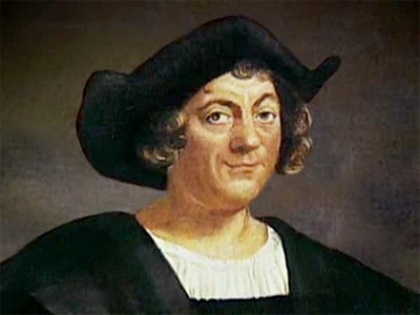 As a Third Order Franciscan, Columbus was often seen wearing the Franciscan habit. As a Third Order Franciscan, Columbus was often seen wearing the Franciscan habit. |
As a Third Order Franciscan, Columbus was often seen wearing the Franciscan habit, particularly when in the presence of clergy or nobility. His close personal association with the Franciscans was instrumental in securing contacts in the royal court, and provided much needed encouragement when it seemed the enterprise would never get the support it required. His son Diego remained in the care of the Franciscans at the monastery of La Rabida near Palos during the first voyage, where the friars took charge of his education. Upon his return to Spain, Columbus spent the summer of 1493 at La Rabida, preparing spiritually for the second voyage later that year.
After Columbus’ death, his second son Fernando would write of his father’s piety:
“In matters of religion he was so strict that for fasting and saying all the canonical offices he might have been taken for a member of a religious order. And when he had to write anything, he would not try the pen without first writing these words, ‘Jesus cum Maria sit nobis in via.’”3
This inscription is found in the majority of Columbus’ letters still extant. The literal meaning, “May Jesus with Mary be with us on the way” is a fitting prayer for an explorer, and could rightly be considered his motto.
Missionary Zeal
Scholars have been quick to point to the influence of Marco Polo’s Book of the Marvels of the World upon Columbus and his contemporaries, and rightly so. Yet the chapter which most influenced Columbus himself was the introduction. In it, we read of Polo’s father and uncle, Niccolò and Maffeo Polo, travelling to the Orient while Marco was still an infant. Their extensive travels eventually put them into contact with Kublai Khan, referred to in the book as the Great Khan. The Great Khan questioned them about life in Western Europe and the Catholic Faith, in which he took an interest. Upon their departure, he entrusted them with a letter to the Pope requesting 100 missionaries to instruct his kingdom in the Catholic faith, along with oil from the lamp at the Holy Sepulcher in Jerusalem. On the return of the Polos to the West in 1268, they discovered Pope Clement IV had died, and the long interregnum which followed prevented the Khan’s requests from being fulfilled.4
In his petitions to Ferdinand and Isabella over a period of 7 years, it was Columbus’ desire to fulfill the Great Khan’s request which finally persuaded the sovereigns to approve the journey. Aboard his flagship was a letter to the Great Khan from the king and queen, and Columbus went to great lengths in order to deliver it. In the prologue to the report on the first voyage, Columbus directly addresses this evangelistic mission:
“I had given [a report] to Your Highnesses about the lands of India and about a prince who is called ‘Grand Khan,’. . .how he had sent to Rome to ask for men learned in our Holy Faith in order that they might instruct him in it, yet the Holy Father had never granted his request, and thus so many people were lost, falling into idolatry and accepting false and harmful religions; and Your Highnesses, as Catholic Christians and Princes, lovers and promoters of the Holy Christian Faith. . . thought of sending me, Cristobal Colon. . . to see how their conversion to our Holy Faith might be undertaken.”5
 “He was extremely zealous for the honor and glory of God; he deeply yearned for “He was extremely zealous for the honor and glory of God; he deeply yearned forthe evangelization of these peoples and for the planting and flourishing everywhere of people’s faith in Jesus Christ.” |
Yet the mission to complete the Khan’s request for missionaries was but one aspect of Columbus’ desire to spread the Gospel. As Bartolome de las Casas wrote, “He was extremely zealous for the honor and glory of God; he deeply yearned for the evangelization of these peoples and for the planting and flourishing everywhere of people’s faith in Jesus Christ.”6 Upon his first encounter with the natives on San Salvador, Columbus concludes, “I recognized that they were people who would be better freed [from error] and converted to our Holy Faith by love than by force.”7
On six separate occasions, Columbus wrote to the Holy Father requesting missionaries be sent to the recently discovered islands, a request which was fulfilled. On January 6, 1494, the Feast of the Epiphany, the first Mass in the Americas was offered by a Benedictine who had accompanied the second voyage.
Five centuries after the fact, American Jesuit Fr. John Hardon would remark, “It is one thing to say that Columbus discovered America. It is something else to realize that he opened the door to the most phenomenal spread of Christianity since the time of St. Paul.”8
Crusader Spirit
A question arises from the modern reader: “What about the quest for gold?” As Columbus makes clear in his log, the finding of gold, spices, and other valuables is central to his mission, but not for the reason most are taught.
On December 26, 1492, Columbus had established a makeshift settlement named La Navidad on the north end of the island of Hispaniola from the wreckage of the Santa Maria, run aground on a reef. Seeing the hand of Divine Providence, he then proceeded to write of his desired result:
“I hope to God that when I come back here from Castile. . . I will find a barrel of gold, for which these people have traded, and that they will have found the gold mine, and the spices, and in such quantities that within three years the Sovereigns will prepare for and undertake the reconquest of the Holy Land. I have already petitioned Your Highnesses to see that all the profits of my enterprise should be spent on the conquest of Jerusalem, and Your Highnesses smiled and said that. . . even without the expedition they had the inclination to do it.”9
Now that Spain was finally free from Muslim domination (Jan. 2, 1492), the great desire to take the fight to the enemy and complete the liberation of the Holy Land could finally be completed. By sailing west, Columbus was aiming to outflank Islam, gaining access to the riches of the East so as to finance the retaking of Jerusalem. Since the fall of Constantinople in 1453, while Columbus was still a child, calls had come from all corners of Europe to renew the Crusade. Columbus saw himself as the instrument to fulfill the longed-for end.
In a letter to Pope Alexander VI, Columbus reiterates the seriousness of his intentions:
“The enterprise must be undertaken in order to spend any profits therein for the redemption of the Sepulcher and the Temple Mount unto Holy Church.”10
Historian George Grant succinctly concludes, “Clearly, the motivations of Columbus were shaped by the eons long conflict between Christendom and Islam. The evidence is inescapable. He sailed, not to discover a new world, but to find a way to recover the old one.”11
Our Great Debt to Columbus
The events of 1492 and afterward could have transpired far differently. The richest nation in the world at the time was China, followed by the Islamic caliphates which stretched from Morocco to the edges of the Far East. Why didn’t the Chinese expand their empire to the east across the Pacific? Why was it not a Muslim who established lasting contact between the continents? For that matter, why was it not an Indian who discovered Europe?
Modern historians are at a loss to answer these questions, and conclude that it was simply by chance that events unfolded as they did. This hardly explains the fact that Spain was the poorest nation in Western Europe at the time, bankrupt from its completion of the Reconquista. Yet not only did Spain successfully go about colonizing and evangelizing the Americas, it also kept the Muslims out of the Americas. Had Islam spread to the Americas in place of Christianity, what we know today as the United States could very well have been the United Emirates.
Columbus believed he was specially chosen by God to bring the Gospel to a people who were living in darkness and the shadow of death. He believed his given name, Christopher, signified the mission he was destined to carry out, as his son Fernando would later explain: “Just as Saint Christopher bore Christ over the waters, so too was he to bear the light of the Gospel over the vast oceans.”12
In conclusion, spreading the Catholic faith and acquiring riches so as to finance the retaking of Jerusalem from the Muslims were at the heart of Columbus’ mission. Any hopes of personal rewards or honors were secondary. In writing the royal treasurer of Spain at the completion of the first journey, he gives the reason all people, present and future, should celebrate what would come to be known as Columbus Day:
“And now ought the King, Queen, Princes, and all their dominions, as well as the whole of Christians, to give thanks to our Savior Jesus Christ who has granted us such a victory and great success. Let processions be ordered, let solemn festivals be celebrated, let the temples be filled with boughs and flowers. Let Christ rejoice upon earth as he does in heaven, to witness the coming salvation of so many people, heretofore given over to perdition. Let us rejoice for the exaltation of our faith, as well as for the augmentation of our temporal prosperity, in which not only Spain but all Christendom shall participate.”13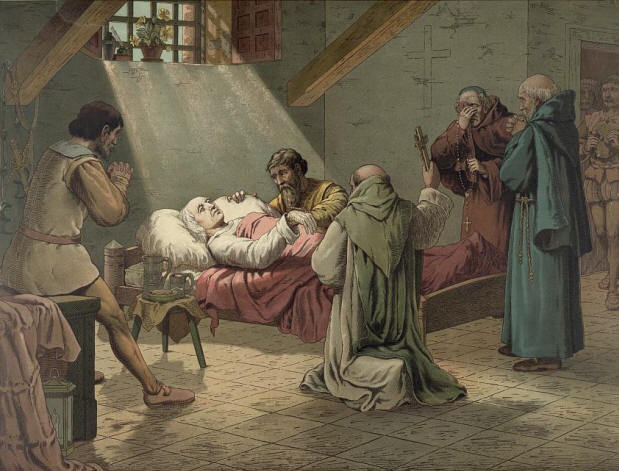
Five Myths About Christopher Columbus
- MYTH: Columbus was sailing to prove the world was round.
FACT: Every educated person at the end of the fifteenth century knew the earth was a sphere, a fact known since antiquity. What was in dispute was the earth’s circumference, which Columbus underestimated by one-fourth.
- MYTH: Queen Isabella sold her crown jewels to finance the first journey.
FACT: The royal treasury of Spain was depleted after the completion of the conquest of Granada early in 1492. However, Luis de Santangel, the royal treasurer, was able to secure funding by reaching out to the Crusading societies throughout the Mediterranean, as well as other financial backers from Spain and elsewhere. The crown put up very little to finance the journey.
- MYTH: There was a priest on board the Santa Maria in 1492.
FACT: Because of the dangers involved, there were no priests or friars on the first voyage, despite the deep piety of Columbus. Many of the paintings of the first landfall in the new world on San Salvador show a priest with Columbus—contrary to the facts. There were five priests on the second voyage: Benedictine Father Buil; the Jeronymite Father Ramon Pane; and three Franciscans.
- MYTH: Columbus introduced slavery to the New World.
FACT: Slavery was already widespread among the native Indians when Columbus arrived. Columbus was insistent on the fair treatment of the Indians, a policy which gained him many enemies as governor of Hispaniola. Bartolome de las Casas, a Spanish friar who worked for the protection of the Indians, is quick to excoriate his fellow Spaniards in their grave abuses, but is filled with nothing but respect and admiration for Columbus. The mass subjugation and importation of Africans to the Americas did not begin until a generation after Columbus’ death.
- MYTH: Columbus died a pauper, in chains, in a Spanish prison.
FACT: Despite the fact that the Spanish crown retracted some of the privileges promised to Columbus, he was relatively wealthy at the time of his death. Although he returned to Spain in chains in 1500 after his third voyage, the King and Queen apologized for the misunderstanding and had them removed.
On May 20, 1506, the Vigil of the Ascension, Christopher Columbus lay on his deathbed in his apartment at Valladolid, surrounded by his fellow Franciscans and his sons. As the friars chanted Compline, his last words echoed those of Christ on the cross: In manus tuas, Domine, commendo spiritum meum. (Into your hands, O Lord, I commend my spirit.)
Notes:
1. Irving, Washington. A history of the life and voyages of Christopher Columbus. Paris: A. and W. Galignani, 1828. 237.
2. Grant, George. The Last Crusader. Wheaton, Illinois: Crossway Books, 1992. 85.
3. Columbus, Ferdinand. The life of the Admiral Christopher Columbus by his son Ferdinand. 1. Madrid: 1892. 14-15.
4. Polo, Marco. The Travels of Marco Polo. Project Gutenberg, 2004. 11-14. http://www. gutenberg.org/cache/epub/10636/pg10636.html.
5. Marckham, Clements Robert, ed. The Journal of Christopher Columbus. London: Chas. J. Clark, 1843. 16-17.
6. Miller, Kevin A. “Why Did Columbus Sail?” Christian History. Oct 1992: 6.
7. Marckham, Clements Robert, ed. The Journal of Christopher Columbus. London: Chas. J. Clark, 1843. 37.
8. Hardon, SJ, John. “Christopher Columbus, the Catholic.” Fr. Hardon Archives. Inter Mirifica, 2003. Web. 27 Jun 2012.
9. Markham, Clements Robert, ed. The Journal of Christopher Columbus. London: Chas. J. Clark, 1843. 139.
10. Grant, George. The Last Crusader. Wheaton, Illinois: Crossway Books, 1992. 67.
11. Grant, George. The Last Crusader. Wheaton, Illinois: Crossway Books, 1992. 69-70.
12. Columbus, Ferdinand. The life of the Admiral Christopher Columbus by his son Ferdinand. Vol. 1. Madrid: 1892. 6.
13. Columbus, Christopher. The first letter of Christopher Columbus to the noble lord Raphael Sanchez announcing the discovery of America. Boston: Trustees of the Boston Public Library, 1891. 16.

