There has been so much tension these past few weeks that we can use a humor break. I hope you enjoy it! Click here for an enjoyable 3-minute video

There has been so much tension these past few weeks that we can use a humor break. I hope you enjoy it! Click here for an enjoyable 3-minute video
I find it so sad to see the number of liberal groups and individuals who are threatening violence at Donald Trump’s inauguration this week. Observe how the people demanding that others tolerate their opinions, practices, etc. have absolutely no to lerance for anyone who disagrees with them and some groups have actually been formed to disrupt the inauguration and damage public property! read the story here. I know the election was extremely contentious and anyone who didn’t like Donald Trump will not be happy on Friday. But look: I was very upset when Barack Obama won the election twice in a row. But the American people had spoken and our political process had run its course legitimately. I didn’t start screaming that he was “not my president” nor did I threaten to destroy anyone’s property; I just accepted it and prayed that he wouldn’t make any bad decisions or policies as president. If Hillary Clinton had won the election I would have been very upset and fearful for our nation’s future, but I would have begrudgingly accepted the outcome as I did with Obama and would never have threatened violence against anyone.
Those who are carrying on, refusing to accept the results of the election, and threatening violence, are showing themselves to be immature sore-losers. They have lost any semblance of credibility in my eyes. Apparently there is no such thing as a true liberal. Liberals always pontificate to people with more traditional views that we have to be open and accepting of people who don’t see things our way. But they can’t do the same. Liberals love to call anyone who disagrees with them “hate-filled.” But who is actually doing the hating and threatening the violence? It is not the people with traditional Christian values; it is the liberals who aren’t getting their way.
All of this threatened violence could be quelled by one word from Obama or Hillary condemning it. But you don’t hear a peep out of the White House or Chappaqua. Why are they so silent?
What liberals are really saying is that we all have to have respect only for liberal opinions. Traditional conservative values have no grounds for respect according to them. But that does not represent the values of our founding fathers and the Constitution, who valued the free exchange of ideas and in the long run cooperated for the well-being of our new nation even if they disagreed vehemently with each other (cf. John Adams and Thomas Jefferson). Rather, this new liberalism reeks of totalitarianism, Communism, Nazism, Fascism, and every other malicious “ism” that threatened freedom during the 20th century. The more these sore losers carry on, the more glad I become that Hillary didn’t win, as her minions are becoming increasingly the people of “my way only”. It’s amazing that the party that accused Donald Trump of wanting to divide America is doing far more to divide us than he ever could. They are advocating violence and are threatening destruction in order to get their way. Sounds a lot like Kristallnacht to me!
I didn’t vote for Barack Obama and I disagreed vehemently with many of his policies, but he WAS my President, whether I liked it or not. Whether or not you like Donald Trump, as of Friday he IS your President. Deal with it!
I don’t normally read Dear Abby because I rarely agree with the advice she gives, but today’s headline caught my attention and I was horrified at what I read. Did anyone else see it? Here is the column for today:
DEAR ABBY: My brother and sister-in-law have been dressing my 2-year-old nephew, “Charlie,” in dresses and pink clothes. They say these are what the boy has chosen. To me, a toddler will pick out whatever gets his attention at the moment, and children that age have only a rudimentary understanding of gender.
It would be one thing if Charlie were old enough to understand and still insisted he felt more comfortable in girls’ clothing. But at his age I feel what they’re doing will only confuse him. Keep in mind, I do not believe this is a transgender issue. I think people who are transgender should dress and act the way they feel. I just feel that age 2 is too young to determine this.
My parents (the boy’s grandparents) are worried and angry. My sister-in-law knows this upsets my mother and yet it’s like she’s taunting her with texts and pictures of Charlie in pink and/or dresses.
Should we be worried about this or should it be none of our business? Are we overreacting? Would it be best to approach my brother to tell him our concerns? — TOO YOUNG TO UNDERSTAND
DEAR TOO YOUNG: It is likely that Charlie is going through a phase and doing something he has seen other people do. But more important than what his mother buys for him is how others respond to it. A family’s negative reaction sends a strong message. If Charlie is innocently testing out his/her authentic self, his grandparents’ negative response will signal that they disapprove of who he is, which could have lasting ramifications for him.
Counselors at PFLAG (Parents, Families and Friends of Lesbians and Gays) have told me that many parents say that, looking back, they realize that by disapproving, they had sent their child the message that they couldn’t accept him/her. One child had suicidal thoughts at the age of 5 because of it. (And yes, sometimes children that young do act on the impulse.)
Hello??? The child is two years old!!! What two-year-old chooses his own clothing for the day? It is obvious to any sane person that the decision to dress the child in pink and dresses is the parents’ and not the toddler’s.
Why are these parents behaving in this way? Are they trying to encourage him to grow up believing he’s actually a girl? Did they perhaps want a girl but got a boy instead? What their rationale is I certainly cannot say, but whatever it is, what they are doing to the child is downright cruel. What parent would want to encourage their child to grow up gender confused?
As for Dear Abby’s response, this is a clear example of what I have repeatedly said is the dangerous afterbirth of an overly accepting attitude toward gender confusion. What started out as a perhaps noble attempt to understand and be compassionate toward those who are gender-confused has deteriorated into an effort to encourage people to be whatever gender they choose to be. There are even some people who will tell you that can change from day to day. “If I want to be a woman today, I’ll be a woman, and if tomorrow I want to be a man I’ll do so.” Don’t believe me? Look at one case that took place in a Ross department store in Texas.
A female customer complained that a man was changing in the ladies’ fitting room. When confronted by the manager, the man said “he was identifying as a woman today” and the manager told the woman who had complained that he had the right to change in there. see video here Target has also had serious problems with abuses due to their policy openly welcoming people to use whatever bathroom they feel better matches their identity. See this link: click here
When it comes to a toddler (as it is in this case), whatever the motive of the parents is, trying to force their child to identify with the opposite gender is unconscionable! It is an unthinkable kind of violence to do such a thing to a child.
I think it’s time the world wake up and face reality: we are male or female down to every gene in our body, and with the exception of the rare case of people with genetic abnormalities, our gender was determined at the moment of our conception and does not change because we feel differently. Feelings don’t dictate reality; only facts do, and encouraging people to choose whatever gender they want to be is an insult to the Lord who “created them male and female” (cf Gen. 1:27).
The truth cuts through error like a sharp sword. These twelve Catholic cardinals and bishops have spoken out against gender theory, clearing the toxic fog spread by the transgender movement and its biology deniers. In clear terms these prelates call gender theory what it really is: destructive, anti-reason, neo-Marxist, tyrannical, a form of spiritual terrorism and demonic.
Please share these quotes:

“We are living in a time when ordinary human reason is quickly being replaced by ‘the barren thorns of passion.’ Our entire culture has been caught up in a kind of sentimentalized and relativized tyranny of tolerance: we vilify and condemn, ever more quickly, any sense of reasonable and ordered social policy. We have a vague sense that endorsing certain fashionable kinds of social and emotional disorders—including transgenderism—is a mandate of justice, or a victory for civil rights…
“But the Church will not deny that God created us male and female. We will not confuse respect and compassion with capitulation to a tragic delusion. Our Catholic schools will continue to teach and live the truth, because of our care for every student. We can only help students grow in holiness when we help them to live in accord with the truth. We will continue to do that, no matter the cost.”
(Source: Southern Nebraska Register)

“[In France] they corrected me, they said I cannot use the word ‘deviation’, but I would not know which other word to use [about gender theory]… Even fools recognize that, between a man and a woman, there is a difference and a complementarity. Man is nothing without a woman and vice versa. This is not my own position, this is the position of the Church, and all Christians, all families are called to fight against this deviation.”
(Source: LifeSiteNews.com)

“Gender theory is an invention, an artificial creation. It is impossible to have an identity that does not respect the proper nature of man and that of woman. It is madness that will cause immense damage in society and in the lives of those who support this theory. With gender theory, it is impossible to live in society. Already today, in certain places in the United States, anyone at all can change identity and say, ‘Today I am a man; tomorrow I will be a woman.’ That is truly madness. Some men insist on going into the women’s rest rooms. That is inhuman. In the schools, you can imagine the confusion. […] Nowadays there is enormous confusion, which is based on the false idea that there are practically an infinite number of possible sexual orientations. The twofold expression of the human person is not heterosexuality and homosexuality, but male and female. This is the authentic theology of anthropology: that God created man: ‘male and female he created them.’”
(Source: LifeSiteNews.com)

“We reject the implementation of gender ideology in the Colombian education, because it’s a destructive ideology, [it] destroys the human being, taking away its fundamental principle of the complementary relationship between man and woman… Individual rights can’t go against the rights of the community… [we must] proclaim the family as the cell of social life.”
(Source: Crux)
“The future of humanity is played in marriage and the natural family is formed by a heterosexual couple… The proliferation of the mentality of gender ideology… denies the natural reciprocity between a man and a woman.”
(Source: Crux)
“[G]ender ideology is an atomic bomb that wants to destroy Catholic doctrine, the image of God in man, and the image of God the Creator.”
(Source: Crux)

“Gender theoreticians use the equality issues in order to introduce in society a notion of man that goes far beyond specific concerns of equality and, finally, paradoxically, leads to the dissolution of that which ought to be protected, specifically the intrinsic value of male and female existence. The gender theory implies a denial of the nature of man and woman and, hence, also the exclusion of the belief in God, the good Creator… the essence of man and woman is the potential to become a father and the potential to become a mother, respectively. These are not exchangeable roles, but, rather, gifts from the Creator, and, in the last instance, a calling… gender theory [is] an ideology that completely opposes reality and the integrity of human nature.”
(Source: Catholic News Agency)

“The transgender activists would have you believe that their politically correct ideology is based on science; however, the American College of Pediatricians has pointed out that transgenderism is classified as a mental illness and therefore has warned legislators and educators that conditioning children to accept transgenderism as normal is child abuse. They advised, ‘When an otherwise healthy biological boy believes he is a girl, or an otherwise healthy biological girl believes she is a boy, an objective psychological problem exists that lies in the mind, not the body, and it should be treated as such.’
“… People who are confused about their gender identity—especially children and adolescents—should be treated with compassion and provided counseling rather than being further confused by activists promoting their political ideology.”
(Source: Courageous Priest)

“What is at stake [in the fight against gender theory] is the very order of creation […]
“The primordial divine plan was spoken of clearly by Christ himself: ‘Have you not read that he who made them from the beginning made them male and female?’ (Mt.19:4). At the core we see the father and the mother, a couple with their personal story of love: ‘Therefore a man shall leave his father and mother and cleave to his wife, and they shall become one flesh’ (Gen.2:24). The result of this union is that, both physically and in the union of their hearts and lives, and eventually, in a child who will share not only genetically but also spiritually in the ‘flesh’ of both parents. The family is thus the place where parents become their children’s first teachers.”
(Source: Catholic Diocese of Calgary)
“I go back to the very basics and in the book of Genesis we read, ‘God created the human family.’ Male and female, he created them. There was no third option.”
(Source: NBC 10 News)

“Gender ideology, which is so popular today in the so-called highly developed world, is not rational. The foundational thesis of this sick ‘product of reason’ is the end result of radical feminism, to which the homosexual lobby has attached itself. It is claimed that there are not only man and woman, but other ‘genders.’
“[…] They want to force us all to believe in this fully absurd, new gender-fairy tale! But, is there really a ‘self-chosen gender?’ Experience points to a simple answer: NO!…
“[I]s gender theory demonic?…It is obvious, after seeing the many draconian laws in favor of the new gender ideology, ones that simply rape our God-made natures, ones that ‘change the form’ of people only show one thing: Their proposers want to be like God. They desire to ‘create’ new, self-made men. In the meantime, the Slovak, Polish, Croatian, Portuguese, and bishops from Italy and other lands have lifted their voices in protest. They are all united in their message: Gender ideology is a threat to civilization itself, especially the Church. The gender ideologues are a sort of spiritual ‘Taliban’ and they even have their own ‘sleeper cells’ ready to go into action at any time!…
“Yes, gender ideology is the destruction of man.”
(Source: Kath.net – translation is ours.)
“The gender ideology (movement) is the product of many decades of ideological and cultural changes that are deeply rooted in Marxism and neo-Marxism endorsed by some feminist movements and the sexual revolution. This ideology promotes principles that are totally contrary to reality and an integral understanding of human nature.”
(Source: Rorate-Caeli Blog)
“The Church does not accept ‘gender theory’ because it is an expression of an anthropology contrary to the true and authentic appreciation of the human person.”
(Source: Zenit.org)
People dispute the idea that they have a nature, given by their bodily identity, that serves as a defining element of the human being. They deny their nature and decide that it is not something previously given to them, but that they make it for themselves.
According to the biblical creation account, being created by God as male and female pertains to the essence of the human creature. This duality is an essential aspect of what being human is all about, as ordained by God. This very duality as something previously given is what is now disputed. The words of the creation account: “male and female he created them” (Gen 1:27) no longer apply.
(Source: Vatican website)

Rio de Janeiro, Brazil, Dec 19, 2016 / 03:58 am (CNA).
– Brazilian feminist Sara Winter used to work to legalize abortion. She was one of the founders of a radical group that carries out offensive topless protests at churches.
Now, she says people should learn from religious women who put their faith into action – and reject the powerful forces promoting abortion in her country.
What changed her mind? The birth of her child.
“I understand I made a huge mistake, and I ask forgiveness from the bottom of my heart. The way to achieve public policy changes for women has nothing to do with mocking people’s religions,” she said in a Facebook post late last year.
“What I was missing was love (which changed when I became a mother), love that came to me after having reflected a lot on today’s militant feminism,” she said.
Sara Winter is the pseudonym of Sara Fernanda Giromin. Three years ago she was one of the founders of the Brazilian branch of Femen, a radical feminist organization of sometimes violent, often offensive activists who protest topless in favor of abortion and LGBT activism.
Winter asked for forgiveness “from all those people, whether religious or not, that I offended during a feminist protest last year involving a same-sex kiss in front of a church in Rio de Janeiro.”
Last month she denounced international funding to promote abortion in Brazil. She asked forgiveness for having been “part of that scheme to get abortion legalized.”
“But I never knew that all that talk about legalizing abortion in Brazil had been the work of organizations controlled by tycoons, rich men interested in reducing my country’s population.”
Sara confessed that she had always thought that an abortion was “something every woman should be able to get.”
“I’m not waving that flag any more. I don’t agree with women being jailed for having an abortion, I think they should always be treated with compassion, but I’m against the promotion of abortion being carried out by the feminist NGOs.”
The young woman also encouraged feminists “to learn from women who are religious.” While feminists are “putting on ridiculous protests (I myself used to be one of them) which are embarrassing to women, there are women of faith with homes protecting rape victims, and other women giving life by providing housing, taking in women in dangerous situations, and providing all kinds of assistance.”
“There are a lot of NGOs and institutions that need a helping hand and volunteers to care for the victims of violence, so let’s get going, help them, do your part. Take care of, assist and love other women,” she encouraged her readers.
Sara first began to speak about this radical turnabout in her life in October 2015.
“I regret having an abortion and today I’m asking for forgiveness,” she wrote on Facebook at that point, almost one month after the birth of her second child. Since her baby was born, she said, “my life has taken on new meaning.”
“I don’t want you to go through the same thing I did,” she told her readers.
Years before, she underwent an abortion using a drug provided by a feminist.
“I almost bled to death and had very serious complications,” she recalled, adding that the person who came to her aid in those circumstances was a man who had “no connection to radical feminism.”
On abortion, she urged, “feminism should be focusing more on taking care of women instead of putting their lives at risk.” She said her prior abortion had caused difficulties early into her second pregnancy.
Sara has also become a critic of transgender ideology. She explained that she has no animus against people who say they are transgender, but she added, “I don’t think that changing your clothes, getting silicone breast implants and making the transition with hormones and surgery can change anybody’s sex.”
By mid-November, Sara was urging Brazilian feminists to “respect women who are religious believers.” Although she has no religious affiliation, she said that “one of the things I regret in my life is pulling away from God and devoting all my time to militant feminism.”
“Having faith is not a retrogression and other people’s religion needs to be respected,” she urged.
Sara said that she has faced a hostile reaction from the feminist faction she has abandoned.
“You have no idea of the reprisals I’ve been a victim of coming from the feminists,” she wrote. “I’m afraid of even stepping out on to the street with my baby, but I have faith that all this is going to go away.”
In early December last year, Sara published a short digital book about “seven times I was betrayed by the feminist movement.” The book is a compilation of the bizarre experiences she says she had as part of the Brazilian feminist movement, involved orgies, alcohol, drugs and misuse of funds.
For every book sold, she has offered to donate a Brazilian Real (about 25 cents) to “initiatives helping women in violent situations and against abortion.”
She said the main reason Brazilian people do not like the feminists is because many of them act hysterically and use social media “to mock and humiliate religious people, preach hatred against men, besides being extremists and disrespectful of other people’s religious heritage.”
“I’m just as guilty. I used to be like that too, but thanks be to God I’ve been healed,” she said.
This article originally ran on CNA Jan. 6, 2016.
This article originally appeared in the National Catholic Register
Virginity Linked to Greater Health in Teens, Says CDC
The sexual choices and values our young people hold have real-life consequences far beyond sexuality itself.

In my nearly 25-year career at Focus on the Family as a social science researcher, I am constantly amazed and encouraged in my faith at how what God requires of us in our familial and sexual lives is never contrary to good, honest science. The two correspond in remarkable ways. And why shouldn’t it? When sociologists study the behaviors of man without agenda, they unwittingly discover the rightness of God’s wisdom and care in His directions to us. The scholars just don’t realize it. We as believers should.
This is demonstrated in a new report from the United States Centers for Disease Control (CDC). It’s the first ever of its kind, examining a very large and diverse array of health behaviors of high school students according to their self-reported sexual activity. What makes this report particularly interesting, beyond its categorization by sexual activity, is it examines widely varied safety and health behaviors from bike helmet and seat belt use to substance abuse, diet, doctor’s visits, exercise and even tanning bed use. The two major conclusions from the report are quite stark:
An additional report conducted by Child Trends, a Washington, DC-based think tank focused on children’s health, adds to the robust research literature on this topic. It finds that teens from homes where mother and father have a healthy relationship, both have warm, monitoring relationships with their children and the family has regular, dependable schedules and practices at home are substantially less likely to be sexually active by every measure.
Here’s a sampling of various measures the CDC examined and the health disparities between the three categories of students: virginal, heterosexual and same-sex or bi-sex sexually active.
Seat Belt Use: Opposite-sex-active (OSA) teens are 143% more likely to never or rarely wear a seat belt than their virginal peers. Same-sex/bisexual active (SS/BA) teens are 317% more likely than their virginal peers.
Passenger w/ Drinking Driver: OSA teens are 94% more likely to ride with a driver who’s been drinking than their virginal peers. SS/BA teens are 115% more likely than virginal students.
Dating Violence: OSA teens are 260% more likely to experience some form of physical violence in dating relationships than virginal peers. SS/BA teens are 683% more likely than virginal youth.
Smokes Daily: OSA teens are 3300% more likely to smoke daily than virginal peers. SS/BA teens are 9500% (you read that right) more likely than their virginal classmates.
Ever Binge Drank: OSA teens are 337% more likely to ever binge drink than virginal peers. SS/BA teens are 375% more likely than virginal their peers.
Pot Use: OSA teens are 336% more likely to be currently using marijuana than their virginal peers. SS/BA teens are 483% more likely than the virginal.
Ever Injected Illegal Drug: OSA teens are 500% more likely to have ever injected a non-prescription drug than virginal peers. SS/BA teens are 2333% more likely.
Felt Sad of Helpless: OSA teens are 48% more likely to report feeling so sad or helpless almost every day for 2 or more weeks in a row that they stopped doing some of their usual activities compared to their virginal peers. SS/BA teens are 181% more likely to feel this way compared to virgins.
Tanning Beds: OSA teens are 282% more likely to use indoor tanning beds than their virginal peers. SS/BA teens are 364% more likely than virginal peers.
Eat Breakfast Daily: OSA teens are 24% less likely to eat breakfast daily than virginal peers. SS/BA teens are 48% less likely than virginal classmates.
Eight Hours Sleep: OSA teens are 21% less likely to get 8 hours of sleep a night than virginal peers. SS/BA teens are 34% less likely than virgins.
Asthma: OSA teens are 24% more likely to have ever had asthma than virginal peers. SS/BA teens are 48% more likely.
Physical Fight: OSA teens are 133% more likely to have been in a physical fight than virginal peers. SS/BA teens are 187% more likely.
Dentist Visit: OSA teens are 8% less likely to have visited the dentist in the last year than virginal peers. SS/BA teens, 20% less likely.
It is intriguing to note how many of these health measures have no seemingly direct relation to sexual activity and decision making itself, even tangentially; things like seat belt use, eating breakfast daily, smoking, dentist visits, illegal drug use, suffering from asthma, etc. Obviously, there’s a curious and meaningful relationship between our teens’ sexual values/activity and a substantial number of unanticipated but very consequential health behaviors.
What is more, this data seems to challenge the popularly held charge that same-sex and bi-sexual sexually active kids have these more troubling measures and higher risk of attempted suicide because their sexuality is not affirmed by the larger society. This is used as accusation against those of us who cannot support any non-marital sexual behavior. We are told that people like us are responsible for such tragic outcomes. It’s no minor charge. But is it true?
If it were, it would follow that opposite-sex sexually active kids are taunted and rejected for their sexuality as well given their remarkably high levels of unhealthy behaviors and higher levels of suicidality than the virginal. This, of course, it would also mean that the virginal are the most widely accepted, celebrated and encouraged students at school. Does anyone believe that?
This “accept-our-sexuality-or-we-die” accusation also faces stiff challenge by the fact that even in the most gay-affirming countries in the world, these imbalances in health measures and suicidality are present. In fact, there is nowhere in the world where the hetero and homosexual measures, in general are close. That is seen in research of same-sex identified adults in places like Scandinavia, the Netherlands and Switzerland. See here, here, and here for example.
It’s difficult to determine from this CDC report alone just how these various measures are related to one another. Does sexual activity drive the increase in other negative health behaviors, vice versa or if at all? This data does not say. But the fact that the CDC measured all these health behaviors by sexual activity and distributed it to health professionals around the world in this major report certainly indicates their relationship is of significant interest to health-care workers.
These findings should be very concerning to all parents and professionals concerned with our teens’ general health and well-being. The sexual choices and values our young people hold have real-life consequences far beyond sexuality itself. Thus, there are indeed compelling reasons to encourage teens to choose not to be sexually engaged with peers of the opposite or same-sex.
Our children should know there’s very compelling scientific evidence on so many levels showing how saving the precious gift of their sexuality for the safe harbor of marriage is not about old-time moralism or unhealthy sexual repression. Just the opposite is true. Chastity is related to so many substantial measures of human health and well-being that it should be strongly appreciated by parents, health and education professionals as one of the most important health boosting factors for our nation’s young adults.
This article was published in the ChristLife Magazine at the request of Dianne Davis and David Nodar of ChristLife.
As Christians, our “mission statement” is very clear: “Go out and make disciples of all the nations. Baptize them in the name of the Father and of the Son and of the Holy Spirit. Teach them to carry out everything I have commanded you, and know that I am with you always, even until the end of the age.” (Matt. 28:19-20) Any parish that is truly striving to be faithful to our call to be disciples and to have a missionary spirit rather than simply being stuck i n maintenance mode struggles with the question of how to bring in people who have left the faith as well as reach people who have never known Christ. When we especially think of the question of people who have left, there are so many different ways we have tried to reach out to them. My experience, however, has convinced me that we’ve been addressing the symptoms and not the malady. Lots of people, for example, say that they’re bored at mass or they don’t get anything out of it. While this is true, we’ve responded in all the wrong ways to try to make them “get something out of mass.” We’ve brought in puppets and balloons, we’ve told jokes and done shtick, all to no avail. As a priest I’ve tried all the gimmicks that are touted with the promise that they will get people to come to mass. Perhaps they work for a time, but none of them offers the permanent effect of faithful discipleship. I was told for example that if you want to get teenagers to come to mass you need to have a rock mass. So we did that. We got all of the teenagers who had ability to play musical instruments together and set up a rock mass once a month on a Sunday night and we rocked the church! That place was jumping and many of the people there enjoyed it very much. But what we noticed month after month was that it never brought any other teenagers back to church. The teens who told their friends about it found it was not enough to get them to start coming to mass. They weren’t staying away because they didn’t like the music – that was the reason we told ourselves. The real reason was that they didn’t come to mass because they saw no value in it. When it comes to little children and getting their parents to attend mass, we were told that we should have special masses for children because their parents will come. This is true – to an extent. When children are doing something at mass the parents will come, but that doesn’t make them come back the next week.
I have come to realize that all of the things that we’re trying to do to bring people back are simply addressing the symptom and not the malady. People are not staying away from church because they don’t like the music or because the priest is boring; those are the excuses they use. No, they are staying away because they don’t realize why we go to mass in the first place and why they need to be there. Most people don’t like to go to the doctor, but they go because they know it is important for them to do so. They don’t complain that they don’t like the music they play in the waiting room or that the doctor is boring and doesn’t tell jokes. If someone actually were to use that as an excuse for why they don’t go to the doctor, I doubt that anyone would tell doctors to learn good jokes and start playing different music in the office. Why, then, do we think this is the answer for how to bring people back to mass? This is not to say that we don’t strive to provide prayerful music, homilies, etc., but that we don’t make this an end in itself.
I have come to believe very firmly that the only way we are going to get people to return faithfully is to get them to see that “I need a regular relationship with Jesus that I will find not by praying on my own at home, but that I will find when I come to church every Sunday to receive the Eucharist for the forgiveness of my sins, to unite myself with Christ in his suffering, death, and resurrection, and be strengthened by my fellow Christians as we journey together to follow Christ and be a community.”
We’ve had lots of wonderful programs that have attempted to provide precisely this, yet many of them in my opinion have failed. I’ve used lots of retreat programs that had people giving personal witness talks about the power of Christ in their lives and the things he’s done for them, and they can be very powerful. The problem is that not everybody’s witness talk is appropriate, and some are questionable in their content or in their interpretation of what God actually did for them. I’ve heard people say things that have made me cringe. In order to make sure every talk is appropriate the priest has to listen to every talk through beforehand to accept, modify, or reject it. Not only do most priests not have the ability to dedicate that much time to this, when he does suggest changes, some people’s feelings get hurt. Other times programs tend to become a clique. The people bind nicely to each other in the name of the program, but not in the parish and in the church, and it ends up creating a sub community of the parish rather than encouraging participants to be active members of the Church Universal. They tend to refer to each other as “my ‘Such-and-Such’ Program brothers and sisters”, but not “my fellow parishioners”, and certainly not, “my fellow Catholics.” Being members of the ministry program frequently becomes the end in itself to the exclusion of parishioners who are not part of the program. When this happens the program has failed in its stated purpose. It has brought people closer to each other but not together in Christ. They may strive to bring other people into the program, but it often becomes apparent that they are more interested in membership in the program rather than in the Church. ChristLife is different.
We started using Christ life a year ago, and like any other program I was optimistic but also skeptical, because I’ve been down this path before. What pleases me about ChristLife is that the heart of the program is not personal witness by individual volunteers but rather the videos that ChristLife provides. The videos are solid in their theology, but also touching. They have a way of communicating the need for Christ in his Church in a common sense manner that combines the beauty of being part of a community with an authentic encounter with Jesus. The programs do not turn in on themselves, having the people do merely a group huddle, but are founded firmly on Christ. Yes, there is certainly group sharing, and yes there is a great sense of community, but it is a community founded on Christ and not merely on membership in the group. We had members as young as twelve and as old as their eighties who started seeing the work of Christ in each other. ChristLife does what we want to do as a parish and what we need in a program: it brings people together in Christ. So many of the other programs have brought people together but the “in Christ” portion of it was somehow missing.
I am very happy with using ChristLife in our parish, and we are now planning to use it as our pre-catechumenate in hopes that people will experience the need for Christ and develop a desire to know and follow him before entering into the formal catechesis of the RCIA process. ChristLife is far less expensive than many of the programs that we have tried and the support from the Christ life staff is fantastic. The people on the ChristLife staff see their work as a ministry and not merely an occupation. I strongly encourage the use of ChristLife in every parish, as I think it is the only program out there that truly addresses the real malady and doesn’t merely spend time putting Band-Aids on wounds.
This post is by special request from one of my readers.
A lot of information – and misinformation – has been going on about Pope Francis’ decision to continue giving individual priests the right to resolve someone from the sin of abortion without having to refer the issue to the Bishop. Let me explain what the situation is: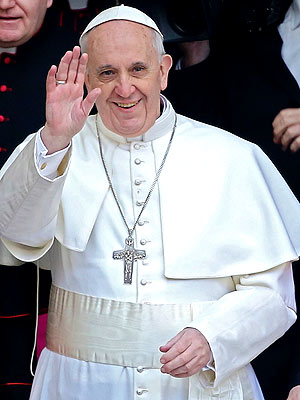
According to Canon law, bishops have the right to withhold forgiveness for certain sins to themselves. Usually the rationale for this would be to discourage people from committing the sin, knowing that forgiveness would require a communication with the Bishop and might make them second-think committing that sin. In some dioceses in the world the bishops have exercised this right concerning the sin of abortion and have withheld that permission from priests and retained it for themselves. That is not the case in almost all of the dioceses of the United States. Here in the Archdiocese of New York I have always had the right to forgive the sin of abortion in confession, so for us it’s a moot point. Last year during the year of grace, Pope Francis, in a gesture of mercy, exercised his authority to override the bishops and extended that right to all priests for one year. Apparently, he found the results of that favorable and has chosen to extend that privilege. The media coverage, however, has often failed to mention that most priests in the United States have had that right all along, and there were many people who had confessed abortion to a priest who were now wondering if in fact they had been forgiven. The answer is, yes you were! If the priest forgave you, it meant he had the right to do so. If he did not have the right he would’ve had to petition the Bishop for forgiveness for you, so don’t worry! If the priest forgave you, you were forgiven!
Another question I was asked was to comment on a response somebody had made saying that the priest’s forgiveness is only in the name of the church and not in the name of God, since no priest can forgive sins in the name of God. That is false. All one has to do is read John 20:22-23. The scene is the upper room where the Last Supper took place. The time is the evening of the resurrection. Jesus is appearing to the apostles for the first time on Easter night after his resurrection: “Then he breathed on them and said, ‘receive the Holy Spirit. Whose sins you forgive are forgiven them; whose sins you retain are retained.’” (John 20:22-23) The priest does in fact have the authority to forgive sins in the name of God. Jesus gave the church and the priests that authority at his appearance to the apostles, the first priests. Notice that the Sacrament of Reconciliation was the first gift Jesus gave the church after his resurrection. Now that he had died to take away our sins he gave priests the authority to take them away in his name. So anyone who is trying to use the rationale that they don’t have to go to a priest for forgiveness because only God can forgive sins needs to reread the Gospel according to John. They are very much mistaken. In fact, anyone who has faithfully participated in the Sacrament of Reconciliation knows the peace that comes from the moment and will understand why Jesus in fact gave that authority to men. Just last week I was hearing the confessions of our third through fifth grade children in our Religious Education program, and after we finished, while I was talking with the children in the hallway, one of the boys said to me “I feel so good now! I feel like a weight has been lifted off me!” The other children all agreed. I told them that was the proof that they had made a worthy confession. Jesus gave this sacrament to us through the ministry of priests because he knows how important it is for us to have a human being tell us we are forgiven and not merely assume that because we knelt in church and asked God to forgive us that we are forgiven. I have a previous blog on this issue that goes into this topic in further depth. If you’d like to read that information, please click the following link:5 fears about going to confession, and how to overcome them.
So do not be afraid! If a priest for gave you the sin of abortion you were forgiven, and do not be afraid to go to a priest. Christ is in fact forgiving you through the ministry of the priest.
Every once in a while I find myself sitting down with someone who wants to talk to me about a problem they have with their church. They don’t like their parish and they want to know whether or not they should start going somewhere else for Sunday Mass. I rarely give them a “yes” or “no” answer. What I try to do is to guide them through their feelings and to see if their transfer is warranted. Let’s look at just a few of the common reasons people use:
1. “I don’t like our pastor.” That’s a very common reason. Fair enough. My first question is always, “What is your reason for not liking him?” Was it because of something he did that wasn’t wrong but with which you were not in agreement? Seven years ago here at St. Ann’s we repainted the church and reappointed it with tile flooring, chandeliers, new paintings, new furniture, and recently a new memorial piazza in front of the church and chapel where people may purchase bricks in memory of loved ones or for special events. Before beginning the work, I shared my plans with the Parish Council and sought their opinion. I did nothing without consulting them and the people beforehand. While the response to our efforts was overwhelmingly positive and I received tons of accolades over the end results, nevertheless, there were some people who didn’t like it and even left the parish over it. No priest is ever going to get 100% agreement on any project and there’s always going to be someone who doesn’t like it. That’s just a part of life! (Actually, we did get 100% approval on one thing: when we first did a feasibility study to find out if the people of the parish agreed that there was a need to replace our leaking roofs, the responses to the survey were unanimous! 100% of respondents agreed that the roofs on the church & rectory needed to be replaced, and only one person did not agree that the same was true of the school roof!) Sometimes pastors need to make decisions for the well-being of the parish, and not everyone will agree with him. If your pastor made changes you don’t like, my advice is to accept it and move on without ruminating over it and letting it eat away at you. Maybe the next pastor will make changes you will like!
Is your dislike of the pastor due to something you yourself experienced or from a story you heard from another? Before you form an opinion, make sure you have your facts straight. I have had people not like me for reasons that were totally untrue. Sometimes they heard gossip or rumors that took a kernel of truth and so distorted it to make it sound like something horrible which was in fact quite innocent. For example, I once mentioned at a funeral that when news first broke of a particular person’s death, the phone began ringing off the hook with people wanting to know the arrangements. The point I was making was that the man had obviously been loved by many people who wanted to come and pay their respects, and I told the widow from the pulpit that I regretted not ever having met him, as I seemed to have missed meeting a very special person. Well, someone with a grudge against me twisted what I said and began telling people that in my homily I complained to the widow that when I got the phone call about his funeral, “the phone was ringing off the hook” with so many other demands that I was annoyed that I had to do his funeral! (I’m not making this up! This REALLY HAPPENED!) Sadly, there are even some people who are also not opposed to stooping so low as to create conflicts that never in fact took place. One person once actually accused me of stopping the Mass and publicly chastising a lector for mispronouncing a word in the reading. I assure you that never happened! Other times stories are told in a manner that, while in their core are true, are missing critical information that changes the whole nature of an account. I remember a woman once complaining to me about the neighboring pastor who “refused to do her daughter’s wedding and threw her out of the rectory.” Since that didn’t sound like something that priest would ever do, I asked him about it. What happened was that the priest informed her daughter that her fiancé needed an annulment before she could validly marry him and that he could not perform the wedding without it. According to the priest, the woman’s daughter got angry at him and the Church for their “stupid rules” and stormed out of the rectory. Big difference! While some criticisms of priests are spot on and the priest did in fact act badly in a certain situation, make sure you have all the facts before deciding you don’t like someone. You could be reacting to faulty information and turning against someone unjustly. Remember also that priests are human and we too have our bad days. I’ve had to apologize on occasion for being a little short with someone, so one bad day should never be used to mar the otherwise stellar reputation of a very compassionate priest. Would any of us want to be judged by our behavior on our worst day?
But let’s not be naïve: there are some nasty priests out there. I am appalled by the behavior I have at times experienced from pastors and parochial vicars with whom I have worked, who often behave that way on a regular basis. I feel sorry for good people who have to endure the rants of an angry curmudgeon or of an insecure pastor whose only method of dealing with people seems to be to intimidate them so terribly that they will fear to ever question him. What do you do then? Well, some people respond by saying, “Hey! I’ve been here for thirty years and he’s not chasing me out of the parish I love!” They decide they can endure his term, knowing he will eventually leave and perhaps be replaced by a more kindly soul. Others find his very presence an obstacle to their ability to pray and worship effectively, and they decide it’s time to change parishes. If your parish has a nasty pastor, can you withstand him, or do you need to leave in order to encounter Christ? Only you can make that decision.
2. “I don’t like what my priest/pastor preaches.” My response to this statement is always the same: “What does he say that you don’t like?” Is he preaching heresy? Then you have a valid gripe. You have a right to hear – and the priest has a duty to preach – the authentic Gospel of Jesus Christ as revealed through the Church and nothing else. So if you are certain that the priest is preaching heresy or his own personal view of what he’d like the Church to teach; if he preaches that the Church is wrong in its position on moral issues, flee! He is a false prophet and he will have to answer to Christ as he stands before the Lord in judgment as to why he dared to preach as the Gospel something other than what Christ has revealed through His Church. As St. Paul said, “But even if we or an angel from heaven should preach a gospel other than the one we preached to you, let them be under God’s curse!” (Galatians 1:8)
But how about if what he’s preaching is the Gospel and authentic Catholic teaching but you don’t like hearing it? Now the situation is different! Father has a duty to preach the Gospel and to not withhold the truth just because some people don’t like it. As St. Paul wrote to Timothy, “I charge you in the presence of God and of Christ Jesus…proclaim the word; be persistent whether it is convenient or inconvenient; convince, reprimand, encourage through all patience and teaching. For the time will come when people will not tolerate sound doctrine but, following their own desires and insatiable curiosity, will accumulate teachers and will stop listening to the truth and will be diverted to myths. But you, be self-possessed in all circumstances; put up with hardship; perform the work of an evangelist; fulfill your ministry.” (2 Timothy 4:1-5) So if you leave your parish because you only want your priest to speak “sweet nothings” and what I call “marshmallow theology” – nice and sweet and fluffy but no nutritional value whatsoever – then you have a serious problem! Your argument is not with your pastor but with Christ! You are looking for a priest who will not tell you the truth for fear of offending you and who will never say anything you don’t want to hear. That would be like going to a doctor and telling him never to tell you that you are sick or that you can’t eat certain foods. “I want you to tell me I can eat all the junk food I want and not exercise and still lose weight and be healthy!” Well, if the doctor tells you that just because that’s what you want to hear, he’s not doing you any good at all; on the contrary, he’s harming you. The doctor’s job is to tell you the truth about what you need to do to be healthy even if you don’t like it. The same is true of a priest. I’m not saying a priest has to beat people over the head with moral teachings constantly (he has to be sensitive and give the truth in appropriate doses), but any priest who is afraid to say something the people will not like is not fulfilling his duty before the Lord. Whenever I find out that someone has left my parish because I spoke the truth of the faith, especially if they’re bad-mouthing me, unless I know I was unduly harsh in my delivery of the truth, I rejoice! As Jesus says in the Beatitudes, “Blessed are you when they insult you and persecute you and utter every kind of evil against you because of me. Rejoice and be glad, for your reward will be great in heaven. Thus they persecuted the prophets who were before you.” (Matthew 5:11-12) So be very careful when criticizing a priest’s preaching. Ask yourself honestly if he was wrong or if he is right but you just don’t want to accept it.
3. “There’s no life in my parish.” That may be true. While sometimes I’ve discovered that people claim there is nothing going on in their parish when in fact it’s a hopping place, some parishes do lack activities. Have you suggested anything to your pastor? Are you willing to work on the project? Lots of times people are full of ideas but no one wants to help out. If the pastor were to say yes to everything without anyone helping him out he’d be burned out very quickly! He can’t do it without volunteers. If you’re eager to belong to a group or an activity that your parish doesn’t or cannot provide, see if a nearby parish does. There’s usually no rule that says you must be a parishioner in that parish in order to participate, and you don’t always have to leave your parish just because a nearby parish is more active.
On the whole I try to encourage people not to leave their parish but to try to do something to make a difference. Sometimes we exaggerate the problems in a parish, and other times we give up too easily and don’t attempt to do things that are well within our power to change. Don’t think that by leaving you are spiting the pastor. He may not even know you’ve left! If you feel you must leave, don’t leave for his sake; leave for your own! Try and see if you can make a positive difference. Have you talked to the pastor about your complaint? Many times people gripe, complain, and leave, but never once speak with the pastor. Maybe he will listen to you. If, however, you have tried your best or things are beyond your ability to change, you feel a warmer connection with another parish where the Gospel is more faithfully proclaimed, where the Mass is celebrated with greater dignity, where’s there’s a greater spirit of family and a Catholic life about this parish, then I would think in good faith you should not hesitate to join that parish and become an active part of it.
Here’s the teen club fun activity we did tonight. We followed with a very powerful discussion on forgiveness, but this gets them gathered for the meeting. Enjoy!

