Over the past years there has been a lot of discussion about Pope Pius XII, saying he did nothing to help Jews during the Holocaust. Later, the accusations even became that Pius XII was “Hitler’s Pope”, in league with Hitler to help kill of all the Jews in Europe. Most popular among these was John Cornwall’s book “Hitler’s Pope.” A few years ago the Pope gave permission for scholars to explore the secret Vatican archives to answer the question once and for all. Rather than finding any evidence that Pope Pius XII was in league with Hitler, they in fact found quite the opposite: information that Hitler had planned to kidnap Pius XII because he was such a danger to Nazism. In the aftermath of this information (which of course the modern media lightly glanced over), John Cornwall who wrote the book “Hitler’s Pope” admitted he was wrong. Of course, that still didn’t settle the question. Many people continue to believe that Pius XII did nothing or even helped Jews be put to death during the Holocaust, even though all evidence proves quite the opposite. The reasons why people continue to believe a proven lie are legion, usually because of an animus for the Catholic Church that makes them loathe to give up a good angle to use against us, even when it is proven to have no value. So the old canard continues still. It has often been rumored that the whole plot was a KGB initiative deliberately started by the Communists in order to break down any concord between Catholics and Jews, both strong enemies of Communism. I recently read an essay from a firsthand Communist who has admitted having had a role to play in starting this KGB campaign against the Pope Pius XII. I have reproduced the article here below because it is solid information about what truly happened to turn Pius XII, who was praised by Golda Mier and so many others as a righteous Gentile turn into “Hitler’s Pope.” This article definitively proves – as has the other evidence – that Pope Pius XII did everything in his power to help Jews and was not in league with Hitler. There will, however, still be people who will always believe what they choose to believe and will repeat this canard even though it is been completely discredited. The following article by a communist who had a firsthand role in this manipulation again to turn Pius XII from a holy hero into a Nazi collaborator is well worth reading:
Author Archives
If God is so good, Why is there so much evil in the world?
Recently one of my blog followers posted this question: “If God created everything, then isn’t it true that he also created Satan and all the other evils in the world? If he loves us, why would he do this?”
It is an excellent question; in fact, it is probably the biggest obstacle to belief in God for many people. It is the old philosophical dilemma of the problem of evil: if God is so good, why is there evil in the world?
To answer the question properly, we have to discuss what evil is. Let’s begin by saying what it is not: it is not a positive or real identity; it is not a thing. Evil is a privation, a lacking of good where good should be. It’s kind of like darkness: it is not a thing in itself but a lacking of light. Nothing is evil in itself. There is no such thing as a person, place, or thing that is intrinsically evil. Everyone and everything that God created is good. Evil occurs when something is not used for its good purpose but is instead misused. In effect, it is the abuse of an object. For example: fire can do great good. It can heat our homes and cook our food. This is the good use God intended of it. But when someone uses fire to burn not wood in a fireplace but his neighbor’s house down, it is the decision of the person to misuse the fire that constitutes evil, not the fire itself. In the same way, no person is evil. God created all of us in his image and likeness, to show his face to the world in a unique way. But some people choose not to live the calling God gave us, but instead accept the temptation of Satan to use our lives for a purpose contrary to what God intended. That is what sin is, or evil, depending on the context. So sin/evil is failing to do what God has intended for us. This covers every range of the spectrum, from a child saying no to his mother to murderers. We create the evil by not following God, so the existence of evil is our fault and not God’s. We therefore can say that God did not create evil – we do!

Okay, so how about Satan, the great tempter, who started it all? Well, even Satan is one of God’s creatures. Technically, God did not create Satan; he created an archangel he called “Lucifer”, meaning “light-bearer”. God created Lucifer to be an instrument for showing his light to the world. But Lucifer, using his free will, rebelled against God and did things his way. He in effect decided, “I don’t need to listen to God! I can choose for myself what is right and wrong; I’m just like God!” So he rebelled, but quickly discovered that he was not the equal of God and was not all-knowing. He could not in fact choose for himself and be certain to always get it right. He was fallible, God is not. By rebelling, he turns against God and made himself God’s adversary – Satan – that’s what the name means: God’s adversary. It’s an interesting point to notice what the name of the angel who fought against Lucifer is Michael , which means “Who is like God?’ It was a strong reminder to Lucifer that no one is God’s equal and that he cannot survive without God.
After Lucifer fell and became Satan, or the Devil (the slanderer), he could have apologized to God and been forgiven. But he didn’t. Instead, he saw his agony by being separated from God, but rather than apologize, he blamed God for his pain and vowed revenge. Since his own rebellion against God failed, he figured that the best way to get back at God was to get God’s most beloved creature to turn away from him as well – mankind.
Satan found it very easy to trick Adam and Eve. He tempted them to eat of the forbidden tree, the tree which God said that if they ate of its fruit or even touched it, they would die. It’s important to notice the name of the tree is not merely the Tree of Knowledge but the Tree of Knowledge of Good and Evil. Forbidding them to eat the fruit of the Tree of Knowledge of Good and Evil is a beautiful metaphor for God telling Adam and Eve, “I am God and you are not! Don’t try to decide for yourself what’s right and wrong. You don’t have the knowledge to make those decisions on your own. If you try to follow your own heart and your own mind you can be mistaken; I cannot! Listen to me and do as I tell you and everything will be fine.” Satan starts by lying to them, saying, “No you will not die! God knows the minute you eat of the fruit you will be like God yourself knowing right from wrong.” In effect what he was saying is that God was lying to them. “He is tricking you into thinking that you can’t decide for yourself what’s right and wrong because this is the way he keeps you under his power. He has been lying to you to make you think that you can’t decide on your own, when in fact you can! You can decide right from wrong by what you think and believe; you don’t need to listen to God!” Eve believed him and ate the fruit of the tree. With that her eyes were opened, and did she know right from wrong? No. She saw that she was naked. It was a lie by the devil from the beginning. He played on their gullibility, and with that they brought evil into the world, and of course, death. We often make the same mistake. How often do people say “you don’t have to listen to God or the Church! Think for yourself what’s right and wrong and follow your heart and your mind?” Anytime we do this, we are repeating Original Sin; we are making the same mistake as Adam and Eve and are falling into the devil’s trick once again. Therefore, every time we decide to listen to our own feelings and not what God teaches us, we perpetuate the evil into the world. It is our disobedience to God that creates evil and not God himself.
Of course, we must ask the question, “Why did God allow us to be tempted in the first place? Why couldn’t he just create us so that we could not sin?” The answer is that, if God created us without free will, that is, without the ability to choose right from wrong, we’d be just like the animals. Animals can’t choose right from wrong; human beings can. That’s what it means when we say we are created in God’s image and likeness. In order to be created in the image and likeness of God, we must have the ability to love. But to be able to love requires that we have the ability to make a choice. We cannot truly love God if we cannot freely choose to love him. Of course, freedom to choose is a two-edged sword. The ability to love must bring with it the ability to hate; the ability to follow God must also include with it the ability not to follow God. And sure enough, we frequently choose to reject God. Now God knew from the beginning that we would use that free will to turn against him and that he’d have to save us, and yet he created us with free will anyway! It’s amazing to think that God knew from the moment he created us with free will that he’d have to die on the cross to save us, and he did it anyway! It’s as if he were saying that dying on the cross was less painful than not having us to love in the first place! And so God worked our salvation for us by dying on the cross, freeing us from our sins, and now he calls us through the Church’s teachings and the sacraments back to that original unity with him, which is accomplished by trusting him and following what he teaches us and not what our minds and our hearts think is right, which is the source of all evil in the world in the first place! Our salvation will come when we learn not to follow our own hearts and minds but his commands. That is the struggle we face every day, and that is precisely the problem we see over and over again with moral and social issues, where people keep trying to tell the Church to change her teachings to give people what they want. They are in effect telling God he is wrong and we are right! God is not wrong because people don’t like what he’s teaching, and common consensus cannot turn something sinful into something good just because people voted for it. That is Original Sin all over again! Evil, therefore, is not something God created but something we create by continuously following our own hearts and not listening to God. When we finally learn to listen to God and not the voice of mankind and our own hearts, that’s when we will find true justice and the true peace that only God can give.
An Excellent Defense of Traditional Marriage
The link below is from a discussion in the State of Indiana House Judiciary Committee on defense of marriage. It is an excellent scientific, psychological, and legal defense of traditional marriage. It is professional, it does not insult those of different opinions, and gives a clear explanation of what those in favor of keeping the traditional marriage definition see as the dangers of altering the definition. I encourage everyone to view this carefully, even if – perhaps especially if – you are not in agreement with the traditional definition of marriage or are not sure. The link is to the blog of the Catholic Apologist Matt Fradd.
Faith and Science: arch enemies or twin sisters?
I was requested by one person who posted a comment on my blog to please comment upon the relationship between faith and science. I’m happy to oblige!
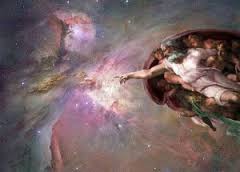
Faith and Science: what does the juxtaposition of these terms signify to you? Are they an oxymoron (words that contradict each other, like a “married bachelor”)? Sadly many people view them this way, as if we either must believe the Bible or believe science, but not both. For example, it is in fact very true that there were and still are many fights in the Southern Bible Belt and elsewhere regarding the teaching of Creation vs. Evolution. The creationists believe that the world came to be precisely as the Book of Genesis tells us, while evolutionists will tell you that God had nothing to do with it, that it all started with the Big Bang. (Sounds like a TV show theme song!) We Catholics are often stuck right in the middle of this never-ending conflict. The biggest problem for Catholics about the whole debate is that this fight is not ours!

Faith and science do not preclude each other; in fact, they complement each other perfectly. The only people who have problems seeing this are the fundamentalists on both sides, Christians, for example, who believe the world was created in seven 24-hour periods, and that if the Bible doesn’t say it is true, it isn’t, and atheistically-based scientists who believe their job is to prove believers wrong about God and to use their scientific discoveries to prove that God doesn’t exist. Both sides are wrong. First, the Bible never claims and never did claim to be the absolute word on every bit of knowledge ever to be had. If that were the case, we could never cook our food, for we don’t find any recipes in the Bible to tell us what the proper temperature and time for cooking a 21 pound turkey is! By the same token, figuring out how things work in the world and how they came about by no means disproves the existence of God. If you imagine a very smart person who takes a piece of chocolate cake, analyzes it, figures out that all the ingredients (sugar, chocolate, eggs, etc.) got mixed together and heated at a certain temperature for a certain time and then got covered with icing, if he told you his (correct) conclusion thereby proves there’s no such thing as a baker, what would you say? That’s foolishness! Figuring out how something was made by no means proves that no one made it.
Pure creationism to the exclusion of any scientific knowledge is not a Catholic belief but one held by Fundamentalists. For us, science and theology go hand in hand. They are not bitter enemies but twin sisters. Catholics have always been at the forefront of learning and scientific knowledge. Observe just a few facts: the modern university system was in fact created by the Catholic Church. The oldest university in Western Civilization is the University of Bologna, founded in 1088. Some of the greatest teachers of higher learning throughout the Middle Ages, including the modern sciences, were priests and bishops: St. Bonaventure, St. Albert the Great, St. Thomas Aquinas, just to mention a few. Pope Sylvester II (pope from 999-1003) was a prolific scholar and teacher. He endorsed and promoted study of Arab/Greco-Roman arithmetic, mathematics, and astronomy, reintroducing to Europe the abacus and armillary sphere, which had been lost to Europe since the end of the Greco-Roman era. He is said to be the first to introduce in Europe the decimal numeral system using the Arabic numerals. It was Pope Gregory XIII who introduced the modern calendar that corrected errors in the Julian calendar, and to this day the Pope’s summer residence at Castelgandolfo boasts the magnificent Vatican Observatory, with two state of the art telescopes that are run by the Vatican Observatory Research Group. These are hardly indicators of a Church that despises science, are they? No, theology and science go hand-in-hand, and the only people who have problems with it are those fundamentalists on either side who automatically think one precludes the other.
Okay, so how about Creation vs. Evolution? Let’s take a look: First, we have never claimed that the stories of creation in the Book of Genesis represent an eyewitness account of how God created. Those who believe every word is scientifically or historically accurate will have a hard time explaining why there are two stories of creation in the first two chapters of Genesis that contradict each other on the order of creation. In Chapter 1 we see the familiar seven-day creation account where God creates simply by willing something into existence: “Then God said, ‘let there be light’, and there was light”(Genesis 1:3). He starts small and builds up to man. “’Let us make man in our image, after our likeness’…and so it happened…male and female he created them” (Genesis 1:26-27). Once he has created man, he has created his masterpiece. It is finished, and he rests. We also see that everything is orderly, good, and all leads up to the creation of man. In other words, man is the ultimate end of all creation; all exists for him. Then, immediately after God has finished creating, he seems to be starting all over again with a barren land from which “the Lord God formed man out of the clay of the ground and blew into his nostrils the breath of life, and so man became a living being” (Genesis 2:7). Wait a minute! Didn’t we just see that in Genesis 1? What did God do, destroy what he had just done and start all over? No, of course not! Both of these stories are from ancient oral traditions that predate the writing of the biblical texts. When the biblical writers got around to writing down the Book of Genesis in an organized text, they had both of these ancient stories before them. The first one tells of God’s transcendent power, his sovereignty, his ability to create merely by his will, and that all led up to man, who had dominion over it all, and it was orderly and good. The second story shows God molding clay into man and breathing into him, working very immanently. He creates the man and cares for him. He creates the garden for him, and then declares it is not good for him to be alone, so he makes a suitable partner for him. First he creates the animals, but none of them is a suitable partner, so he forms the woman out of Adam’s rib (something near his heart) and brings her to him. The man accepts her at last as “flesh of my flesh and bone of my bones”, and the text then explains that “this is why a man leaves his father and mother and clings to his wife, and the two of them become one body” (Genesis 2:24). So they have these two stories which contradict each other in historical ‘fact” but which both tell important things about God and his love for us. Which one is right? Well, they both are! Both relate important points about our relationship with God. No one for a moment believed that either one was written by a stenographer taking notes as God created. Only the Fundamentalists believe that! We are not Fundamentalists.
Now let’s look at the scientific end. Some people try to disprove the existence of God by quoting the Big Bang Theory. First of all, we must remember that this is still a theory and not an established fact. I do think there’s a lot of merit to it, but even if someone someday proves the Big Bang so that it is no longer a theory but a scientific fact, does that prove God doesn’t exist? Of course not! All they did was discover how God created! You haven’t gotten rid of God! How does figuring out how something came about prove that no one created it? There is nothing in the Big Bang Theory that requires it to be a product of chance that was not guided by anyone.
I find religiously-minded people who are afraid that science is going to one day disprove the existence of God to be terribly naïve and weak in faith. How can exploring God’s creation possibly prove he doesn’t exist? Does that make any sense? At the same time, scientists who believe that science will one day prove God does not exist are being equally naïve and in fact unscientific. Just logically speaking, if you ask me to believe that the world in all its magnificent array was merely the perchance result of actions over time that were not guided by anyone but just happened that way or that a conscious mind guided it, which is easier? I am perplexed by scientists who reject the idea of intelligent design, that God guided the scientific actions that bring things about. What are they so afraid of?
Scientific people tell us constantly that the existence God cannot be proved, therefore, we have to trust only the solid proof of scientific experimentation. But the fact of the matter is, scientists place their faith in others’ writings all the time. Someone recently wrote on my blog that he knows science to be true because he can do the experiment himself and prove it. Fair enough. But until he does, he’s putting faith in another’s words. It’s not feasible as a scientist to say you’d only believe something once you’ve proven it for yourself. So scientists trust the evidence of others just as we trust the evidence of faith. Scientists have been wrong before, and people feel rather foolish who put their trust in their findings, only to discover they were in error. So there’s always going to be faith involved, and neither religion nor science will ever preclude the other.
We have no problem reconciling belief in God’s creation with scientific facts. Truth can’t contradict truth. If a religious truth and a scientific truth seem at first to contradict each other, all that means is that there is something about one or the other, or perhaps both, that we don’t fully understand. Once we understand them both completely, they fit hand and glove!

2013 in review
The WordPress.com stats helper monkeys prepared a 2013 annual report for this blog.

Here’s an excerpt:
A New York City subway train holds 1,200 people. This blog was viewed about 3,700 times in 2013. If it were a NYC subway train, it would take about 3 trips to carry that many people.
Excellent column by Matt Fradd on the polygamy/homosexual marriage discussion
I have received numerous responses to my post a few days ago about the legalization of polygamy and of how it is a natural outgrowth from the homosexual marriage legalization. Matt Fradd, a famous Catholic apologist posted a discussion about it on his site that I found excellent. I recommend everyone check it out.
Fr. Carrozza
http://mattfradd.com/2013/12/20/homosexuality-and-the-duck-dynasty-debate/
Here is one time I hate being right – polygamy is now legal!
In a previous post I wrote that the legalization of gay marriage was just the tip of the iceberg, and I warned about what was waiting in the wings. Some people scoffed at my prediction. Well, my predictions are coming true!
An activist federal judge ruled on Friday that polygamy is now essentially legal in the United States. U.S. District Judge Clark Waddoups recklessly decided that reality TV stars Kody Brown and his four “wives” could not be prosecuted for polygamy, even though the Utah law against the practice is the strongest in the nation. So now, watch! State after state will start legalizing polygamy (including polyamory – three men and two women, for example – it’s the same thing!) and we will be branded as “polyamorophobes” because we oppose it.
I warned from the beginning that once the biblical standard of man-woman marriage was breached, there would be no logical place to stop. Though we as Catholics have been accused of exaggerating and scare-mongering, this ruling shows that we were right all along to sound the alarm. The next in line to be overturned will be bans against incest. After that, bestiality (zoophilia)! Just watch! Don’t believe me? No one believed me when I said polygamy would be accepted. Pandora’s Box is open! All the evils are now out and free! God save us! We obviously can’t leave it up to ourselves to know right from wrong! My biggest fear is that I’m being proven right far sooner than I ever imagined! Do you still think there was nothing wrong with legalizing gay marriage?????
The Catholic Faith in a Nutshell
 I was having dinner with a friend the other night who is not Christian but who was asking me a lot of questions concerning what our Catholic faith is all about. When I explained it to him, he said I pretty much captured it in a nutshell. Since he found it helpful, I thought it might help someone else by posting it on my blog, so here goes!
With Original Sin, Heaven was lost to mankind. Satan had his entry into our world, and with him came his greatest weapon: death. No matter how good any one of us tries to be, because of Original sin, when we die, we would enter into Hell and condemnation for all eternity, and there was nothing we could do about it. A good image would be of us being thrown into a prison and shackled to the wall with the door slammed shut behind us. With Satan, all our pleading and begging for mercy to let us out falls on deaf ears. The only one who can help us is God. We need his help; without him we’re doomed. God did come to our help by becoming a man. He took on our human nature precisely so that now he could enter the realm of death, something he couldn’t do as God alone. He took on flesh in the person of Jesus, who is both truly God and truly man. When he died on the cross – which was his plan from the beginning – he was able to enter into Hell and free us. You can imagine it as Satan letting the one person in who had the key to our shackles and the gate to Hell. When he rose from the dead, he destroyed death’s hold over us. It’s as if Jesus paved a highway that goes right through Hell and up to Heaven. So Jesus totally reversed the power of death by taking Satan’s prime weapon and turning it against him. What Satan intended as the means to enslave us in his kingdom – death – is now the way we leave his power and enter into heaven. We will still die, but death now leads to our salvation and not our condemnation. But in order for us to follow the path, we have to be one with Jesus. God took on our nature, and now we must take on his. This is accomplished through the Sacraments. In Baptism, we die with Christ and are buried with him, but we also rise with him. We inherit heaven and become heirs with Christ to everything he won by his death. In the Eucharist, Jesus gives us his body and blood as our food so that our flesh is now made up of his flesh, and every time we celebrate the Holy Sacrifice of the Mass and receive Jesus in Holy Communion, we are on the cross with him in an unbloody and painless manner, are buried with him and risen in him over and over again. It’s as if Jesus created a power line that transverses eternity for us to plug into his death and resurrection and receive the salvation he won for us once and for all. He made the sacrifice he offered on Calvary forever present to us in the Holy Mass. He also gave his teachings to the Apostles with the authority to continue these Sacraments for all of time, and told them to “teach them to carry out everything I have commanded you.” (Matt. 28:20) We still have to walk the path to heaven – there is no moving sidewalk that automatically takes us there – and sometimes, because while Baptism washes away Original Sin, concupiscence (the inclination to sin) still remains – we stray from the path. Christ calls us back to the right path constantly through the Sacrament of Reconciliation, and teaches us through the Church, especially the successor to St. Peter (the Pope) to whom Jesus gave the ultimate authority to speak in his name (cf. Matt. 16:13-20), to help us know when we’re not sure if certain activities or beliefs lead us to heaven or not. So, in order to reverse the effects of Original Sin, we must accept Jesus as God-made-man, be baptized, receive him in Holy Communion every Sunday for the forgiveness of our sins, and allow him to keep us on the path to heaven by following the way he shows us through the teachings of the Church. Do that and you’ll get to Heaven. It’s as simple as that!
P.S. Thanks, Joe, for the inspiration!!
Do You Want To Go To Heaven?
“Do you want to go to heaven?” Anyone who believes in God would almost certainly answer that question with a “yes!” No one who believes would desire anything else. So why, then, do we have to worry about going to heaven? Some people mistakenly hold that, “since God is all-loving, what loving God would want us to burn in hell for our sins rather than be with him in his kingdom? He wouldn’t deliberately condemn any of his children; therefore, everyone will go to heaven!” Unfortunately, that’s not a correct read on God, as they leave out one very important element: free will. Yes it is true: God desires the salvation of everyone. His death and resurrection made that possible for all of us. But in order to enter heaven, we must follow him. That is up to us.
Imagine if you will a ship that has come to rescue people who were tossed overboard in a shipwreck. The ship anchors and sends a ladder down into the water for everyone to climb up to safety. Many people do, but others, for whatever their reason, refuse to climb the ladder. Maybe they are enjoying the water and see no reason to get on the ship, or maybe they’re expecting the captain to jump into the water and drag them out personally. They argue, “The captain doesn’t want us to drown, so he’ll jump in and pull each of us out of the water.” And so they stay treading water waiting for the captain to save them. The ladder is still there and the captain is saying, “Come on! Grab onto the ladder and climb up onto the ship!” but the person says, “No, I don’t have to because I know you’ll come down and get me!” Well, what happens? Glug! Glug! Glug! The person drowns. Did the captain deliberately drown the person because he refused to climb the ladder? No, he is very upset by the fact that the person drowned, but it was the person’s own fault. So those who were saved were saved because the captain threw down a ladder to make their rescue possible. As for those who weren’t saved, it was their own fault!
It is the same way with God. By becoming man and suffering, dying, and rising for us, he made our salvation possible. But you and I have to freely avail ourselves of what he offered in order to enter heaven. Remember that, while we often think of heaven as this big banquet going on in heaven, theologically speaking, “to go to heaven” means to be perfected, to be perfectly formed in the image and likeness of Christ, to be totally present to him. What needs to be perfected? Our muscles? No. Our hairdo? No. Obviously, it is our will. Original Sin occurred when Adam and Eve said no to God and yes to sin. Our salvation is when we reverse that, when we say no to sin and give our full assent to God’s will. Now, if God were to force us to follow him, that would not be our free will, our own consent; it would be coercion. So God cannot drag us by the hair into heaven whether we want to enter or not – he can’t force us to be perfected. He will help us, but it has to be our own choice. Hence, anyone who is saved is saved by the grace of God; anyone who is not, it is his own fault! God saves those who are saved; the condemned man, by his own refusal to follow God, condemns himself!
So therefore, no one can sit back and rest on his laurels thinking his salvation is in the bag. We must work on it every day by following God’s law. Yes, he desires our salvation and he helps us in a thousand ways every day to walk the path, to climb the ladder out of the waters of death, but we have to walk, we have to climb. He cannot do it for us.
Respect Life – but don’t shoot the priest!
This Coming Sunday the Church celebrates Respect Life Sunday. It is the weekend every year when we are asked to reflect upon the sanctity of human life in all its stages, from conception to natural death. Of course, whenever we talk about the precious gift of life and the crimes against it in our society, we know we will meet opposition, sometimes even within our own household. This fact has often put the priest in a great dilemma at mass. Some people, aware that some Catholics in church on Sunday do not take defense of life seriously, expect the priest to give a fiery condemnation of abortion, euthanasia, and all other crimes against human life. For them only a frontal attack will do. I would be the last person in the world to deny the seriousness of these practices, and I too sometimes get angry when I see Catholics taking them lightly. But I also know that there are people in our congregation who have had abortions. Some regret them terribly, and a strong condemnation only digs the knife of their pain deeper in their heart. Others do not regret it, or at least not as severely, and can end up feeling that the priest is trying to make them feel guilty when in fact they don’t. So a strong attack will not benefit them. Then there are some who do not want to even talk about it because they don’t want their children to have to hear about it. But by never talking about it, we fail to instruct our children from an early age to respect life and deprive others of possible tools to help them make life-affirming choices should they or someone they love be in a crisis situation. So the priest is often stuck between the barrels of the shotguns of two groups: one demanding that he preach strongly and condemningly against abortion and the other demanding that he never mention it at all. So what should the priest do? Well, I always ask how Jesus would handle it. I believe first of all that Jesus would undeniably affirm the sanctity of every human life, and that it is never permissible for us to take or prevent any human life. I think he would be very strong when confronted with those who advocate doing so. At the same time, he would be most forgiving and comforting to those who have submitted to any life-denying actions and now regret it, and if he needed to bring the person to realize the error of their ways, he would do it with tremendous charity. That’s what I try to do, and I suggest we all do the same. So if at any time your priest does not speak about life matters in the manner you would wish, I plead with you not to shoot him and make him the source of all evil, whether it is the accusation of keeping silent and allowing evil to triumph or of talking about it and upsetting children and making others feel guilty. Remember that the priest is not the source of the problem of lack of respect for life. It is a sad reality in our world that we must discuss unpleasant matters at times, even if it makes some people who don’t want to hear it uncomfortable, but at the same time we cannot come out like gangbusters bashing everyone; we must be sensitive to the needs of all parishioners. Let us strive to advocate respect for all life in uncompromising fidelity to the truth but also with tremendous understanding and compassion. I think that’s what Jesus would do!

