 We have known for some time that many college campuses have ceased to be centers of learning and open debate and have instead become indoctrinating grounds for liberal beliefs that show no toleration for any opposing opinion – “either accept my liberal position or shut up” – and this story is proof positive. A teacher in California told students that “college campuses are not free speech zones” as he proceeded to erase their pro-life chalkwork and encouraged his students to do the same. Even if you are pro-abortion, you have to admit that what this teacher did was wrong. It violated the students’ First Amendment right to free speech. The courts agreed; they sided with the students and ordered the teacher to undergo training sessions on the First Amendment. Please view the full story and the video of the encounter between the teacher and the pro-life student here.
Category Archives: All Matters Catholic
Disagree, but do so respectfully!
A common criticism of the Internet and public media forums is that they remove accountability from individuals posting their comments on a website or blog. Because people are able to leave comments anonymously, they often resort to saying things they would never say face to face or when their name would be attached to it. The result is that discussions frequently deteriorate into mudslinging matches with little or no constructive discourse.
I always teach my students that they are free to disagree with me, but respond with constructive arguments that will lead to dialogue and not simply fling insults. Sadly, constructive debate has been all but lost in our society and has spread into the public arena as well. The story in the Journal news on October 26 see story here of the man who put a tombstone on his front yard with Donald Trump’s name on it with the epitaph “Burn in Hell” is evidence of that. There are two levels of problems here. Not only do I find the tombstone offensive – regardless of whom he was depicting – and an inappropriate lesson for him to be teaching his children, but also people who offered criticisms even said that, while they may disagree with it, this is a free country and the gentleman has his right to free speech.
Whether or not publicly insulting someone is protected by free speech is a matter for courts. But I would like to appeal to a higher authority: human decency. Whatever happened to the golden rule: “Do unto others as you would have them do unto you?” What has become of “Do not judge, and you will not be judged?” I think it is high time that we begin remembering our basic human decency and learn once again how to respectfully disagree with someone and debate an issue without resorting to insults, name-calling, questioning someone’s upbringing, or any of the plethora of other attacks that are frequently thrown at people when they state their opinion. The media are especially responsible in this area to set standards which other people can follow. When personalities on TV can get away with mean-spirited attacks of an individual simply because they disagree with them, what incentive does that give the common individual to treat others with respect?

I appeal to all people certainly to remain firm in their convictions, but be respectful of others who disagree with them. Offering constructive criticism leads to healthy dialogue and perhaps a resolution of differences. Insults and flinging mud only leads to mayhem.
Setting the Record Straight about Columbus
Every year around Columbus Day, the politically-biased historical revisionists spread a legion of lies and distortions about Christopher Columbus in an attempt to vilify him and paint him as a monster who ruined the lives of the indigenous peoples. All of these myths and falsifications implode at even a cursive reading of the facts of history. Columbus’ critics offer no concrete evidence, just brushstrokes of fabricated condemnation. I found the article below very insightful and have chosen to copy it to my blog, as I couldn’t do the topic the justice the author here does.
In addition, I find it important to point out that, even if Columbus were in fact the villain some people defame him as being, we are not celebrating the canonization of a saint on Columbus Day; rather, we are celebrating the origin of our New World, which Columbus’ accidental discovery revealed, which gave rise to a land of hope and promise for millions seeking religious freedom, economic opportunity, and human rights denied them in their homelands. Thus, any attempt to remove Columbus Day and paint it as a dark day in history is an outright condemnation of the United States and everything we hold dear as Americans. I also must point out that the people who are touting these absurd condemnations of Columbus did not give their houses to a Native American and move back to Europe, nor have they even the slightest intention of doing so. They have done very well by the American standard of living, so they should be grateful to Columbus for his discovery and the rise of the freedom to criticize the government that they enjoy. In other countries they would be shot as traitors!
The Catholic Spirit of Christopher Columbus
By Ben Broussard
As the sun set, the Salve Regina hymn rang out across the Atlantic. Ninety men stood on the decks of three boats, led in prayer by Christopher Columbus, the foreign captain they had come to trust. They had kept the same ritual of evening prayers since they left Spain months ago, but tonight was different. Tomorrow would be the Feast of Our Lady of the Pillar, Spain’s great patroness. Columbus had promised his men that had they not spotted land by her feast day, he would order the ships to turn back, a promise he intended to keep. He knew Our Lady would not abandon the enterprise he had worked so hard to bring about. The signs that they were near land were increasing by the day.

As Columbus climbed the steps to his cabin, his gaze fell instinctively to the western horizon. Off in the distance, he caught sight of a light, like a candle rising and falling on the waves. Quickly, he called another man, who confirmed the sighting. The crews on all three ships were alerted, each man was on deck, peering out for signs of land nearby. At 2 a.m., the cry came out, “Tierra!” Land! The excitement of the crew was such that they hardly noticed the many hours it took to navigate the treacherous reef that surrounded their new destination. As Columbus knelt on the beach to give thanks, the following prayer rose from his lips:
“O Lord, eternal and omnipotent God, Thou hast, by Thy holy word, created the heavens, the earth, and the sea; blessed and glorified be Thy name; praised be Thy majesty, who hast deigned that, by means of Thy unworthy servant, Thy sacred name should be acknowledged and made known in this new quarter of the world.”1
San Salvador
The above prayer, recited in Latin and the first spoken in the Americas, was followed by the chanting of the Credo, the Te Deum, and many other prayers in thanksgiving. As the banners were unfurled, the admiral solemnly proclaimed, “In the name of Our Lord Jesus Christ…” He proceeded to claim the new land for his sovereigns, but not before first claiming it for his Divine Master, giving it the name San Salvador (Holy Savior).
The details in the above account of the first landfall of Europeans in the Americas are rather unknown in modern times. Historians have typically shied away from the Catholic aspects of Columbus’ journeys, either making passing mention or ignoring them entirely. Yet a reading of the writings of Columbus himself, along with the testimonies of his contemporaries, shows that the Catholic spirit permeated all aspects of life and was central to the mission of exploration.
While a detailed retelling of the events of 1492 and afterward is far beyond the scope of this article, we will examine the Catholic inspirations for the discovery, which are essential to understanding Columbus himself. Contrary to the opinion of many modern historians, and far from being a minor aberration, Columbus’ militant Catholic faith was the source of his greatness and influenced his every action.
Catholic Piety
All evidence shows Columbus was a man of deep devotion who took his faith extremely seriously. One of his contemporaries, Bartolome de las Casas, described him as a man of righteousness and deep piety:
“He observed the fasts of the church most faithfully, confessed and made communion often, read the Divine Office like a churchman, hated blasphemy and profane swearing, and was most devoted to Our Lady and to the seraphic father St. Francis. . .”2
These two devotions had many manifestations. The full name of Columbus’ flagship on the first voyage was Santa Maria de la Inmaculada Concepción (Holy Mary of the Immaculate Conception). During the return of the first voyage, when the ships were in danger of sinking, Columbus and his men vowed a pilgrimage to the first Marian church they came to, which they fulfilled in the Azores two weeks later. Upon his return to Spain, Columbus made a pilgrimage to the monastery of Our Lady of Guadalupe in Extremadura as a solemn act of thanksgiving.
As a Third Order Franciscan, Columbus was often seen wearing the Franciscan habit, particularly when in the presence of clergy or nobility. His close personal association with the Franciscans was instrumental in securing contacts in the royal court, and provided much needed encouragement when it seemed the enterprise would never get the support it required. His son Diego remained in the care of the Franciscans at the monastery of La Rabida near Palos during the first voyage, where the friars took charge of his education. Upon his return to Spain, Columbus spent the summer of 1493 at La Rabida, preparing spiritually for the second voyage later that year.
After Columbus’ death, his second son Fernando would write of his father’s piety:
“In matters of religion he was so strict that for fasting and saying all the canonical offices he might have been taken for a member of a religious order. And when he had to write anything, he would not try the pen without first writing these words, ‘Jesus cum Maria sit nobis in via.’”3
This inscription is found in the majority of Columbus’ letters still extant. The literal meaning, “May Jesus with Mary be with us on the way” is a fitting prayer for an explorer, and could rightly be considered his motto.
Missionary Zeal
Scholars have been quick to point to the influence of Marco Polo’s Book of the Marvels of the World upon Columbus and his contemporaries, and rightly so. Yet the chapter which most influenced Columbus himself was the introduction. In it, we read of Polo’s father and uncle, Niccolò and Maffeo Polo, travelling to the Orient while Marco was still an infant. Their extensive travels eventually put them into contact with Kublai Khan, referred to in the book as the Great Khan. The Great Khan questioned them about life in Western Europe and the Catholic Faith, in which he took an interest. Upon their departure, he entrusted them with a letter to the Pope requesting 100 missionaries to instruct his kingdom in the Catholic faith, along with oil from the lamp at the Holy Sepulcher in Jerusalem. On the return of the Polos to the West in 1268, they discovered Pope Clement IV had died, and the long interregnum which followed prevented the Khan’s requests from being fulfilled.4
In his petitions to Ferdinand and Isabella over a period of 7 years, it was Columbus’ desire to fulfill the Great Khan’s request which finally persuaded the sovereigns to approve the journey. Aboard his flagship was a letter to the Great Khan from the king and queen, and Columbus went to great lengths in order to deliver it. In the prologue to the report on the first voyage, Columbus directly addresses this evangelistic mission:
“I had given [a report] to Your Highnesses about the lands of India and about a prince who is called ‘Grand Khan,’. . .how he had sent to Rome to ask for men learned in our Holy Faith in order that they might instruct him in it, yet the Holy Father had never granted his request, and thus so many people were lost, falling into idolatry and accepting false and harmful religions; and Your Highnesses, as Catholic Christians and Princes, lovers and promoters of the Holy Christian Faith. . . thought of sending me, Cristobal Colon. . . to see how their conversion to our Holy Faith might be undertaken.”5
 “He was extremely zealous for the honor and glory of God; he deeply yearned for
the evangelization of these peoples and for the planting and flourishing everywhere
of people’s faith in Jesus Christ.”
Yet the mission to complete the Khan’s request for missionaries was but one aspect of Columbus’ desire to spread the Gospel. As Bartolome de las Casas wrote, “He was extremely zealous for the honor and glory of God; he deeply yearned for the evangelization of these peoples and for the planting and flourishing everywhere of people’s faith in Jesus Christ.”6 Upon his first encounter with the natives on San Salvador, Columbus concludes, “I recognized that they were people who would be better freed [from error] and converted to our Holy Faith by love than by force.”7
On six separate occasions, Columbus wrote to the Holy Father requesting missionaries be sent to the recently discovered islands, a request which was fulfilled. On January 6, 1494, the Feast of the Epiphany, the first Mass in the Americas was offered by a Benedictine who had accompanied the second voyage.
Five centuries after the fact, American Jesuit Fr. John Hardon would remark, “It is one thing to say that Columbus discovered America. It is something else to realize that he opened the door to the most phenomenal spread of Christianity since the time of St. Paul.”8
Crusader Spirit
A question arises from the modern reader: “What about the quest for gold?” As Columbus makes clear in his log, the finding of gold, spices, and other valuables is central to his mission, but not for the reason most are taught.
On December 26, 1492, Columbus had established a makeshift settlement named La Navidad on the north end of the island of Hispaniola from the wreckage of the Santa Maria, run aground on a reef. Seeing the hand of Divine Providence, he then proceeded to write of his desired result:
“I hope to God that when I come back here from Castile. . . I will find a barrel of gold, for which these people have traded, and that they will have found the gold mine, and the spices, and in such quantities that within three years the Sovereigns will prepare for and undertake the reconquest of the Holy Land. I have already petitioned Your Highnesses to see that all the profits of my enterprise should be spent on the conquest of Jerusalem, and Your Highnesses smiled and said that. . . even without the expedition they had the inclination to do it.”9
Now that Spain was finally free from Muslim domination (Jan. 2, 1492), the great desire to take the fight to the enemy and complete the liberation of the Holy Land could finally be completed. By sailing west, Columbus was aiming to outflank Islam, gaining access to the riches of the East so as to finance the retaking of Jerusalem. Since the fall of Constantinople in 1453, while Columbus was still a child, calls had come from all corners of Europe to renew the Crusade. Columbus saw himself as the instrument to fulfill the longed-for end.
In a letter to Pope Alexander VI, Columbus reiterates the seriousness of his intentions:
“The enterprise must be undertaken in order to spend any profits therein for the redemption of the Sepulcher and the Temple Mount unto Holy Church.”10
Historian George Grant succinctly concludes, “Clearly, the motivations of Columbus were shaped by the eons long conflict between Christendom and Islam. The evidence is inescapable. He sailed, not to discover a new world, but to find a way to recover the old one.”11
Our Great Debt to Columbus
The events of 1492 and afterward could have transpired far differently. The richest nation in the world at the time was China, followed by the Islamic caliphates which stretched from Morocco to the edges of the Far East. Why didn’t the Chinese expand their empire to the east across the Pacific? Why was it not a Muslim who established lasting contact between the continents? For that matter, why was it not an Indian who discovered Europe?
Modern historians are at a loss to answer these questions, and conclude that it was simply by chance that events unfolded as they did. This hardly explains the fact that Spain was the poorest nation in Western Europe at the time, bankrupt from its completion of the Reconquista. Yet not only did Spain successfully go about colonizing and evangelizing the Americas, it also kept the Muslims out of the Americas. Had Islam spread to the Americas in place of Christianity, what we know today as the United States could very well have been the United Emirates.
Columbus believed he was specially chosen by God to bring the Gospel to a people who were living in darkness and the shadow of death. He believed his given name, Christopher, signified the mission he was destined to carry out, as his son Fernando would later explain: “Just as Saint Christopher bore Christ over the waters, so too was he to bear the light of the Gospel over the vast oceans.”12
In conclusion, spreading the Catholic faith and acquiring riches so as to finance the retaking of Jerusalem from the Muslims were at the heart of Columbus’ mission. Any hopes of personal rewards or honors were secondary. In writing the royal treasurer of Spain at the completion of the first journey, he gives the reason all people, present and future, should celebrate what would come to be known as Columbus Day:
“And now ought the King, Queen, Princes, and all their dominions, as well as the whole of Christians, to give thanks to our Savior Jesus Christ who has granted us such a victory and great success. Let processions be ordered, let solemn festivals be celebrated, let the temples be filled with boughs and flowers. Let Christ rejoice upon earth as he does in heaven, to witness the coming salvation of so many people, heretofore given over to perdition. Let us rejoice for the exaltation of our faith, as well as for the augmentation of our temporal prosperity, in which not only Spain but all Christendom shall participate.”13
Five Myths About Christopher Columbus
1. MYTH: Columbus was sailing to prove the world was round.
FACT: Every educated person at the end of the fifteenth century knew the earth was a sphere, a fact known since antiquity. What was in dispute was the earth’s circumference, which Columbus underestimated by one-fourth.
2. MYTH: Queen Isabella sold her crown jewels to finance the first journey.
FACT: The royal treasury of Spain was depleted after the completion of the conquest of Granada early in 1492. However, Luis de Santangel, the royal treasurer, was able to secure funding by reaching out to the Crusading societies throughout the Mediterranean, as well as other financial backers from Spain and elsewhere. The crown put up very little to finance the journey.
3. MYTH: There was a priest on board the Santa Maria in 1492.
FACT: Because of the dangers involved, there were no priests or friars on the first voyage, despite the deep piety of Columbus. Many of the paintings of the first landfall in the new world on San Salvador show a priest with Columbus—contrary to the facts. There were five priests on the second voyage: Benedictine Father Buil; the Jeronymite Father Ramon Pane; and three Franciscans.
4. MYTH: Columbus introduced slavery to the New World.
FACT: Slavery was already widespread among the native Indians when Columbus arrived. Columbus was insistent on the fair treatment of the Indians, a policy which gained him many enemies as governor of Hispaniola. Bartolome de las Casas, a Spanish friar who worked for the protection of the Indians, is quick to excoriate his fellow Spaniards in their grave abuses, but is filled with nothing but respect and admiration for Columbus. The mass subjugation and importation of Africans to the Americas did not begin until a generation after Columbus’ death.
5. MYTH: Columbus died a pauper, in chains, in a Spanish prison.
FACT: Despite the fact that the Spanish crown retracted some of the privileges promised to Columbus, he was relatively wealthy at the time of his death. Although he returned to Spain in chains in 1500 after his third voyage, the King and Queen apologized for the misunderstanding and had them removed.
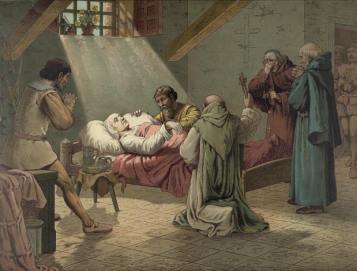
On May 20, 1506, the Vigil of the Ascension, Christopher Columbus lay on his deathbed in his apartment at Valladolid, surrounded by his fellow Franciscans and his sons. As the friars chanted Compline, his last words echoed those of Christ on the cross: In manus tuas, Domine, commendo spiritum meum. (Into your hands, O Lord, I commend my spirit.)
Notes:
1. Irving, Washington. A history of the life and voyages of Christopher Columbus. Paris: A. and W. Galignani, 1828. 237.
2. Grant, George. The Last Crusader. Wheaton, Illinois: Crossway Books, 1992. 85.
3. Columbus, Ferdinand. The life of the Admiral Christopher Columbus by his son Ferdinand. 1. Madrid: 1892. 14-15.
4. Polo, Marco. The Travels of Marco Polo. Project Gutenberg, 2004. 11-14. http://www. gutenberg.org/cache/epub/10636/pg10636.html.
5. Marckham, Clements Robert, ed. The Journal of Christopher Columbus. London: Chas. J. Clark, 1843. 16-17.
6. Miller, Kevin A. “Why Did Columbus Sail?” Christian History. Oct 1992: 6.
7. Marckham, Clements Robert, ed. The Journal of Christopher Columbus. London: Chas. J. Clark, 1843. 37.
8. Hardon, SJ, John. “Christopher Columbus, the Catholic.” Fr. Hardon Archives. Inter Mirifica, 2003. Web. 27 Jun 2012.
9. Markham, Clements Robert, ed. The Journal of Christopher Columbus. London: Chas. J. Clark, 1843. 139.
10. Grant, George. The Last Crusader. Wheaton, Illinois: Crossway Books, 1992. 67.
11. Grant, George. The Last Crusader. Wheaton, Illinois: Crossway Books, 1992. 69-70.
12. Columbus, Ferdinand. The life of the Admiral Christopher Columbus by his son Ferdinand. Vol. 1. Madrid: 1892. 6.
13. Columbus, Christopher. The first letter of Christopher Columbus to the noble lord Raphael Sanchez announcing the discovery of America. Boston: Trustees of the Boston Public Library, 1891. 16.
Do you want to be happy or be transfigured?
When I was in college I became friends with a young man who was what I describe as a natural Christian, meaning that all the virtues that you and I sometimes work so hard to try to cultivate, to him came naturally. For that reason, it seemed to me such a great incongruity in his personality that, although he was Catholic, he didn’t go to church on Sunday. One day I got the opportunity to talk to him about it and he was very straightforward with me. He told me exactly why he didn’t go to church. He said he used to go when he was younger, but then one day he was sitting in church and he looked around all the people sitting there and he said to himself, “Look at all these people! They have no clue as to why they are here and what’s going on. It’s all such a waste of time!” And so he became very disillusioned by going to Mass and stopped attending. I remember I said several different things to him. First I asked him, “How do you know what’s going on in the minds of the other people who were sitting there in church? Is it possible that what you claimed they were feeling was really what you were feeling and that you were projecting your lack of understanding upon them? There are some people that go to church that have a fairly good idea of what’s taking place and truly listen to the Scriptures and are praying and feel like they have encountered the Lord every time they go to Mass. And even if there are people who are not all that sure about why they’re there, why would you let that prevent you from having a good relationship with Christ at Mass?” Then I said to him finally, “Alright, I will agree with you that there probably are some people who come to church that don’t really have any clue as to why they’re there and what it’s all about. But at least they’re there! Nobody has put a gun to their head and forced them to come to church. They may not understand everything that’s happening, but they know there’s something good is going on and that there is a reason they should be attending. They’re looking for God and maybe in time they will find him.”
I reminded him of the story of the transfiguration. I said, “Look what happened when Jesus took Peter, James, and John up the mountain with him. He was transfigured before them: his clothes became white and his face glowed with a radiance they had never seen before. Basically, Jesus showed them a hint of the glory that would be his when he was risen from the dead. It’s as if he took off the veil of his mortal image and let them see his true divinity; he let them see him for whom he was. Then Moses and Elijah appeared talking with him. Moses, the great lawgiver to whom God gave the Ten Commandments and who promised ‘A prophet like me will the Lord raise up from among your kinsman’ and Elijah, the great prophet who was taken to heaven in a whirlwind whom it was believed would precede the coming of the Messiah, and both of them were standing talking with Jesus about what he was going to accomplish in Jerusalem. Any good Jew would recognize the expression, ‘The law and the prophets’. That summarized the entire promise of Israel, everything written in the Hebrew Scriptures, or the Old Testament as we call it. It’s as if all of the promise that God had given from Abraham to that time was now standing there bearing witness to Jesus, saying ‘this is the one! The promise is fulfilled! This is the person you been waiting for!’ Peter sees all this and says, ‘Master, how good it is for us to be here!’ Good, Peter! Great response! But then he says something silly, ‘Let us build three booths here, one for you, one for Moses, and one for Elijah!’ Open mouth, insert foot, close, enjoy your meal Peter, because you just put your foot in your mouth big-time! Mark and Luke even apologize for Peter. They say he really didn’t know what to say because he was so awestruck by what had taken place. When they came down the mountain, Jesus didn’t say to Peter, ‘How could you be so stupid/! Didn’t you see what was going on there?’ Of course not! He knew Peter wasn’t a theologian; he was just a fisherman. He knew it was beyond Peter’s ability to grasp, and he didn’t expect it of him. Peter knew something good was happening there, and even though the significance of it passed him by and he didn’t realize the full ramification of everything he’d seen, he realized he’d seen something good, and that’s all Jesus wanted from him. I explained to my friend that Mass is the same thing. Yes, sometimes people are there and maybe don’t understand the fullness of the mystery, but they’re trying. So don’t sell them short. Give them the opportunity to grow in their understanding.”

Thankfully my friend eventually did return to regular worship. But this story gives us an opportunity to look at our understanding of the Mass. Do we comprehend what’s taking place every time we come to Mass on Sunday? Perhaps sometimes we feel we do or maybe we’d honestly say “I haven’t got a clue!” That’s okay! As long as we’re there and trying to grow, leave your mind open to learning more about the Mass. Don’t be discouraged or disillusioned if it doesn’t make sense to you. After all, can any of us honestly say we truly understand everything that takes place in Mass? St. John Vianney, the patron saint of parish priests, once said that if any priest realized what was actually taking place at his hands while he celebrated Mass he would die of fright for fear of what he was handling! It’s a mystery beyond our ability to fathom! We can’t even begin to comprehend the fullness of what’s taking place at Mass. We can have a basic idea, sure, but if we ever think we’ve gotten to the point that we understand everything perfectly well, were only deluding ourselves.
I like to think of it as when you go to an art museum. If you were to go to the Louvre in Paris or the Uffizi in Florence, even the Metropolitan Museum of Art here in New York, if you go in and don’t know much about art it can be overwhelming! There are thousands of paintings there, and you look around and can be lost. Maybe we look at a picture or two here or there and that helps a little bit, but if you take try to take in the whole thing it can be an absolutely daunting proposition. I don’t think anyone expects anyone to go into a museum and in one day take a look at every single picture and take in everything that each picture has to offer. You just couldn’t do it in one day! So if we have just a few hours to go through museum, we’ll look at the few things that seem to strike us the most, even if it’s only the highlights. In the Louvre everybody goes and looks at Mona Lisa and maybe there are a few others that might strike people’s interest. In the Uffizi gallery, Botticelli’s Birth of Venus is the most famous one. Real devotees of art will go back to the museum over and over again and each time to try to take in another picture and get a little bit more out of each painting than they could at just one glance. Maybe they might go back one day and say “I’m only going into this one room here and only take in the pictures in this room or of this style.” Another day they take in another, and they would quickly discover that the museum is an inexhaustible resource. They could spend their entire lives going into the museum and never take it all in, but I think any curator of a museum would be thrilled if somebody came and even sat and looked at just one painting and took that in to the best of his ability: they’d say he’s gotten something out of his visit to the museum that day. Well, coming to Mass is in many ways just like that. We come Sunday after Sunday to hear a Gospel reading that we probably heard before; in fact, many of them we hear over and over again to the point that we might feel that we’ve got it memorized. But we never exhaust the meaning of that Gospel. We are fed on it, we are nourished by the word, and we discover that we can come back time and time again and be nourished and grow more in the mystery. And of course, most importantly, we come and receive the Lord Jesus in Holy Communion. We take his actual body and blood as our food and that strengthens us and brings us into full union with him. And that’s when we discover what Jesus really want to do for us and the full importance of the Mass, why we come Sunday after Sunday, many people day after day: to receive the Eucharist.
A lot of times I’ll hear people talking about what God wants to do for them and they say, “Well, God just wants me to be happy!” I just shake my head in despair when I hear that. Yes, God wants us to be happy but he wants so much more than that! He has things planned for us that are far greater than anything we could even begin to comprehend, and our happiness is not going to come through the things that we think are going to make us happy, but by what God reveals to us as the true way to happiness. Sometimes people will discover the next step of that and realize that true happiness comes from living an upright moral life, which is a lot more meaningful than simply having the little pleasant things in our lives. Indeed, God wants even more for us than merely being ethical people or being kind to one another, being nice guys and helping us get along better. I’m not for a moment trying to make light of ethical living and of following the moral teachings of the Church and of the Lord. Don’t get me wrong! They are important. But they are only steps along the way to what God really wants to do for us. What does God want to do for us? He wants to deify us! The greatest thing that we can experience is deification – actually becoming part of God himself! The ancient Christians used to say that God became man so that man could become as God. He took on our nature so that we could take on his. He wants to draw us into all beauty, all essence, all goodness, all truth, total joy, total perfection. He wants us to be transfigured just as he was transfigured. Everything that Jesus inherited by his death and resurrection you and I will also inherit! All the glory that he now has in heaven he wants to share with us, and he has far more in store for us than when we often think about when we come to church and pray. Sometimes we pray for things that maybe are a little silly, maybe more serious. but God’s plan for us is always greater them what we have in mind. Maybe all we’re worried about is losing ten pounds to look better in that dress, so that when I go to so-and-so’s wedding, nobody will laugh at me and at how much weight I put on. Well, I have news for you! God is probably laughing at that, because if you think that the most important thing in life is losing ten pounds because otherwise everybody’s going to be staring at you at the wedding, no they’re not! Everybody will be looking at the bride! Probably few people if anybody are actually going to look at you and notice you put on ten pounds since the last time they saw you! Usually that’s one of our own vanities! Sometimes we pray about little more important things. If somebody is ill and we pray for their healing, that’s a good thing to pray for! Certainly, if somebody is out of a job, we pray for them to get work. Maybe sometimes it is a little frivolous: we just want a little more money so we can book a nicer room on our upcoming vacation, and maybe that’s not the most important thing that we should be praying about. It’s not to say that it is wrong to pray for the things we need here and now; but first we have to ask if they really are important – if they really are the things we should be worrying about, and sometimes we have to honestly admit that they’re not – Jesus does say to pray “give us this day our daily bread.” But God wants so much more for us than merely worrying about the things of this life. If we’re only worried about the here and now and not heaven, then were missing what God wants to do for us! He is not saying, “I want you to be comfortable! I want you to have an easy life! I want you to fit in and enjoy yourself!” No, he is saying, “I want to raise you up, I want to elevate you and lift you up to heights you can’t even begin to imagine, so far more important than anything this brief visit on earth has to offer! I have dreams for you that have never even entered into your consciousness!”
If we’re only concerned about the needs in our lives here on earth then were missing everything God wants to do for us. We will never find the joy that we can know when we know the heights of glory to which we are being called by God. And maybe that’s why we don’t follow our faith as strongly as we should and don’t evangelize others, because maybe if we honestly ask ourselves, “Do I really want to worry about heaven?” the answer is, “No! I’m only really worried about here and now. I’m not looking for God to save my soul. I’m not looking for him to make me the best I can be. I’m not looking for God to bring me to great heights. All I want God to do is make my life comfortable here and now. I want him to be Santa Claus and give me all the things I want.” Sometimes people even go so far as wanting God to allow them to believe in and practice things that contradict that call to holiness, that are completely opposed to it, and they want the church to teach that those are good simply because it will make them feel good now, it will make their life easier and help them feel good about themselves, and they end up sacrificing the very call to holiness simply to fit in here on earth. They flee from any talk about challenge, about changing our hearts, about carrying our crosses, about realizing that it takes much prayer and sacrifice in order to reach those heights that God has in store, and instead demand only to be left where they are and told that their lives are perfect, when they know very well they are not.
My brothers and sisters, yes, the Lord does care about our everyday needs, and it’s okay to pray for them, but let’s make sure that’s not the only thing we ever pray for, that were not caught up only in the here and now. Do we ever pray for holiness? Do we ever pray, “Lord, help me to overcome sin! Help me to be righteous!” Do we ever pray, “Lord, change me! lift me up, Lord! Beam me up! Help me to be what you want me to be! Lord, let me worry not about what I want for myself but what you want from me! Transfigure me! give me the holiness and the joy that only you can give!” When we do that, then we will know true happiness, true peace.
Corpus Christi 2017

Yesterday we held our annual Corpus Christi procession. Here is a brief video of the event.
Who knew????
I received this email from one of my parishioners today that was too hysterical and wonderful not to share. The scene was our parish’s sixth session of ChristLife last night. I always come in at the end to greet everyone. As I entered, someone cheered my presence and I “dabbed”. (If you don’t know what that is, ask a teenager!) The writer is Kevin Magee, one of the leaders of ChristLife and a stand-up comedian:
Hello,
It has come to my attention that Father Carrozza has been dabbing! When he walked in last night I thought I saw him dab, but I ignored it the way you pretend to not see people stumble when they are walking on the sidewalk, except my intention to push this from my memory was immediately brought to reality when Lisa at my table asked me, “Did Father just dab?” I turned to her shaking my head to say “yes, I am sorry that I have to confirm this!”
This morning I noticed there was a new student as indicated on our census. When I went to rounds with the doctors and unit staff, it was brought to my attention that this student, who has a number of issues, is being bullied at his school. The same crowd that is bullying this student is the same one that he is trying to break free from. I will call this student “Phil.”
So in class, one of my students, whom I will call “Jeff” is always dabbing. He has been doing this for a few weeks now. So I mentioned to Jeff that my parish priest dabbed last night. Jeff thought it was great. Phil also chimed in asking me if that was a Catholic Church. I affirmed that it was and so he mentioned that he wanted to convert from Protestantism to Catholicism. I was stunned, as the student then asked me how I could go about doing it. I redirected him that I could help but at a different and more appropriate time. (You can get in trouble with things like this). I am very careful not to be Bible thumping my way through a hospital.
So there it is, Freddy teaches Father Carrozza to dab and now I have students that want to be Catholic. Who knew?!?!?
LET’s dab for Christ and bring people home!

The Survivors Network of those Abused by Priest (SNAP) Exposed for its evil intentions.
Any act of sexual abuse of a child is a horror that can never be condoned. When that harm is done by someone who is supposed to protect the child and in whom he places his trust, such as a priest, the sin is even more appalling. We had to endure the scandal of sexual abuse of minors by priests and of some bishops who did not respond to the situations in an appropriate manner. They needed to be brought to justice and to face the music for what they did. But while some were legitimately seeking to bring the guilty to justice and to support victims of clergy sexual abuse, there were others with less honorable intentions who took advantage of the Church in her weakness to advance their own agendas, which had little to do with supporting victims and more to do with bashing the Church. To take advantage of someone else’s suffering to press your own cause is unconscionable. One organization long accused of such underhanded tactics is The Survivors Network of those Abused by Priests (SNAP). They have recently come under investigation, and a lawsuit that is exposing their real motive and which will likely destroy the group has now been filed. The following is an article about SNAP by Bill Donohue, Director of the Catholic League for Religious and Civil Rights.
SNAP IMPLODES
Bill Donohue
The Survivors Network of those Abused by Priests (SNAP) has been sued before, and while it has been hurt by those filings, the latest one suggests the end is near. It can’t come too soon.
The Catholic League has been tracking SNAP for years. From news releases to radio and TV interviews, we have kept the media abreast of just how corrupt the outfit is. We’ve sent people undercover to attend its public conferences; we’ve taken out ads in major newspapers; we’ve issued several lengthy reports; we’ve fielded complaints from its clients; and we’ve consulted with bishops and others. SNAP is a fraud.
The lawsuit by a former employee, Gretchen Rachel Hammond, registe rs several serious accusations against SNAP, all of which are supported by the Catholic League’s own investigations of the group. The two together—an eyewitness account and our research—wholly discredit its reputation and completely disarm its supporters, namely, those in the mainstream media.
Hammond has sued David Clohessy, the executive director, Barbara Blaine, founder and president, and outreach director Barbara Dorris; the case is before the Circuit Court of Cook County, Illinois. Hammond, a transgender person, worked for SNAP as its director of development between mid-2011 and early 2013. In that capacity, Hammond learned the truth about SNAP, and has now unloaded with the details.
Not surprisingly, after confronting SNAP officials about its ethically offensive and legally suspect work, Hammond was subject to retaliatory action. Consequently, the plaintiff suffered from stress and depression, resulting in health problems. Hammond is suing for a loss of wages as well. The lawsuit closes with a grave indictment: “SNAP acted willfully with actual malice, including a wanton disregard for the rights of others such that an award of punitive damages is appropriate.”
Hammond uncovered a whole lot, all of which will be discussed. Most seriously, the lawsuit says that “SNAP routinely accepts financial kickbacks from attorneys in the form of ‘donations,’” and in return SNAP “refers survivors as potential clients to attorneys, who then file lawsuits on behalf of the survivors against the Catholic Church. These cases often settle to the financial benefit of the attorneys and, at times, to the financial health of SNAP, which has received direct payments from survivors’ settlements.”
Anti-Catholicism Drives SNAP
Before addressing the legal issues involved, it is important to understand what makes SNAP tick. Hammond learned first-hand what the Catholic League has been saying for decades: SNAP is driven by a pathological hatred of the Catholic Church, not a concern for the welfare of victims.
“While SNAP claims that it is motivated by the interests of survivors, in fact,” the lawsuit says, “SNAP is motivated largely by the personal animus of its directors and officers against the Catholic Church.”
For example, Clohessy recommended that an alleged victim pursue a claim against the Archdiocese of Milwaukee, saying that every nickel it doesn’t have is money that can’t be spent on “defense lawyers, PR staff, gay-bashing, women-hating, contraceptive-battling, etc.” He then offered to refer the person to one of his lawyer friends.
The Catholic League is in an even better position than Hammond to identify SNAP’s hatred of the Catholic Church.
On July 8-10, 2011 SNAP held a national conference, open to the public, near the airport in Washington, D.C. There were approximately 110-130 people in attendance, all white, mostly female, aged 40-75 (mostly seniors or near seniors). They came from only a few states.
We know this, and much more, because I paid for two persons to attend the conference and report back. I subsequently published the findings online in a report, “SNAP EXPOSED: Unmasking the Survivors Network of those Abused by Priests.” Copies were sent to all the bishops.
Here is how one of our confederates summed up his experience. “The recurring theme of the conference was the evil nature of the Catholic Church. The word ‘evil’ was used repeatedly to describe ‘the institution.’ There was no presumption of innocence: accused priests were spoken of as if they were guilty, and this was true of all the speakers, including the attorneys.”
It was no surprise that Jeffrey Anderson was one of the speakers. No one has ripped off the Catholic Church more than this diminutive lawyer from Minnesota. A former hippie and recovering alcoholic, in one settlement alone he netted half a billion dollars. He once described himself as a “dedicated atheist.” His goal, he plainly admits, is to “sue the s*** out of them [the Catholic Church].” His hatred runs deep: He has sued the Vatican on several occasions, trying to hold the pope responsible for priestly misconduct from Boston to Bombay. He has never won.
Father Thomas Doyle, a Dominican, is another recovering alcoholic who has big problems with the Catholic Church. He blasted the Church for promoting “fear, power, and guilt,” saying that Constantine, not Jesus Christ, founded the Church.
Another speaker, Terence McKiernan, founder and president of BishopAccountability, told the small gathering of Catholic haters that he would like to “stick it to” New York Archbishop Timothy Dolan. He also accused him of “keeping the lid on 55 names” of predator priests. On several occasions, I personally asked McKiernan to provide me with his list of names, but he never responds. It’s a lie, and he knows it.
Richard Sipe, a former Benedictine monk, told the seniors, “The Church is corrupt,” and proceeded to make many unsupported accusations. He knew no one would challenge him because they all came to hear horror stories.
It would be a serious mistake to assume that this is just venting, idle banter coming from some malcontents. No, this is the mindset that drives SNAP to plunder the rights of priests. Take SNAP president Barbara Blaine. She has justified raids made by Belgian police on Catholic churches, and is adamant in her conviction, expressed at the conference, that while accused priests may have a legal right to countersue, they have no moral right to do so.
Clohessy was once asked about the rights of priests, and when pressed about what he means by pursuing “credibly accused” priests, he could not provide a clear answer, saying only that “there’s all kinds of criteria” determining what that means. In practice, SNAP makes no distinction between an accusation and one that has been substantiated.
The contempt that SNAP has for the rights of priests is bad enough, but it pales in significance compared to its own conspiratorial savaging of innocent priests. Take the case of Father Joseph Jiang. SNAP accused him of sexually abusing minors.
SNAP said it knew who the victims were, but when pressed it could not name a single person. When ordered by a federal court to provide evidence, it refused to do so, resulting in sanctions. This was one reason why U.S. District Court Judge Carol E. Jackson accused SNAP of defaming Father Jiang. The Hammond lawsuit was right to seize on the judge’s ruling.
The court declared that “it has been established that the SNAP defendants conspired with one another and others to obtain plaintiff’s conviction on sexual abuse charges and that they entered into this conspiracy due to discriminatory animus against plaintiff based on his religion, religious vocation, race and national origin.” Moreover, the court ruled that “the SNAP defendants’ public statements about plaintiff were false and that they did not conduct any inquiry into the truth or falsity of these public statements, but instead made these statements negligently and with reckless disregard for the truth.”
That’s quite an indictment. SNAP officials conspired to make false charges against an innocent priest and did so because they hate the Catholic Church.
What makes this even more sickening is the fact that when SNAP learns of real sexual abuse, it does nothing about it. To be specific, David Clohessy is quick to condemn bishops for not reporting suspected priests, yet he never called the cops in the 1990s on his priest brother, Kevin, after learning that he abused a minor.
Kickbacks
Hammond’s lawsuit lists one “donation” after another being made by plaintiff attorneys to SNAP. These SNAP-greasing lawyers make up the lion’s share of funds collected by Clohessy and company in any given year. For example, in 2008, “a Minnesota lawyer” contributed 55 percent—$414,140—of SNAP’s total donations for the year; three years later he contributed over 40 percent of total revenue. The lawyers, of course, love to write SNAP a check because that’s how they get many of their clients.
SNAP is so thoroughly corrupt that it has even laundered money to itself via dummy organizations. “Tellingly, at one time during 2011 and 2012,” the lawsuit says, “SNAP even concocted a scheme to have attorneys make donations to a front foundation, styled the ‘Minnesota Center for Philanthropy,’ and then have the Minnesota Center for Philanthropy make a grant to SNAP in order to provide a subterfuge for, and to otherwise conceal, the plaintiff’s attorneys’ kickbacks to SNAP.”
Keep in mind that this is just what we know from the short time Hammond was working there. God only knows how many other rip-off schemes SNAP has been involved in over the years.
When Clohessy was deposed in 2012, in a case involving a priest in the Diocese of Kansas City-St. Joseph, he was asked to disclose his source of funding. He refused. When asked specifically about monies SNAP receives from lawyers, he once again refused to answer. What really set him off was the question, “Does SNAP have any agreements with attorneys regarding referral of victims to those attorneys?” He never answered the question, saying only that he was “offended” by it.
At the 2011 SNAP conference, Anderson shamelessly conducted a fundraising appeal on the spot, matching dollar for dollar any donation made by an attendee. But he made it clear he would not match a $10,000 donation by fellow attorney Jeffrey Herman. All total, $30,000 was raised. So if Herman gave $10,000, and Anderson matched all donations save for Herman’s contribution, that means the attendees dished out $10,000. In other words, two steeple-chasing attorneys accounted for two-thirds of the all the money raised. Without their input, SNAP would have folded years ago.
Corruption Abounds
SNAP’s unseemly relationship with lawyers is not confined to funding. For example, according to the lawsuit, it “regularly communicates with attorneys about their lawsuits on behalf of survivors, receiving drafts of pleadings and other privileged information. The attorneys and SNAP work together in developing the legal theories and strategies of survivors’ lawsuits.” It’s what they do with this information that matters most. “Attorneys and SNAP base their strategy not on the best interests of the survivor, but on what will generate the most publicity and fundraising opportunities for SNAP.”
Hammond’s account raises serious ethical and legal questions about the way SNAP operates. Attorneys would give Clohessy, Blaine, and Dorris “drafts of complaints and other pleadings prior to filing, along with other privileged information,” and then they would “use those drafts to generate sensational press releases on the survivors’ lawsuits.” Not surprisingly, they would then issue “press releases to media outlets and schedule a press conference on the day a survivors’ lawsuit was filed.”
What the lawsuit does not say is how this game is played to the disadvantage of the diocese being sued. For instance, after Clohessy completes his press conference speaking about a leaked lawsuit, the media ask the local bishop and his attorneys to comment. Of course, they cannot say anything about a lawsuit they have not seen. This is exactly the point: the Church is made to look bad.
Hammond’s account is further validated by considering what Clohessy said under oath when deposed in 2012. He was asked about a lawsuit that was filed at 2:44 p.m. on October 20, 2011. How could he have had this information before it was filed in court? He used it as the basis of a press conference, blindsiding the Church in the process. Clohessy refused to answer the question.
In another case, a lawsuit had a file stamp of November 8, 2011 at 1:28 p.m. Again, Clohessy was able to post information about this before it was filed with the court. When asked to explain himself, he refused. He is a master of deceit.
Hammond shows how SNAP officials were more concerned about raking in the dough than in serving the interests of their clients. The lawsuit cites an email exchange between SNAP officials discussing a subpoena that was issued to them. The contents reveal much about their character.
One of them asked if they should mention the subpoena in their newsletter. It “may prompt more donations,” the missive said, even though “on the other hand, it’ll also upset more survivors….” Blaine’s answer was vintage SNAP: “My initial response is that we err on the side of using it to raise money.”
There it is in black and white: in a conflict between obtaining money and protecting survivors, take the cash and run. One of Blaine’s colleagues agreed. What came next is priceless. An unidentified employee chimed in, cautioning everyone to be careful “what we put in e-mails, ok?” Too late for that.
The lawsuit also shows how Clohessy relies on attorneys to intimidate his critics. When a Kansas City blogger raised serious questions about the way lawyers grease SNAP, and how SNAP officials ask their clients to share some of the money they’ve won in a lawsuit, Clohessy asked an attorney involved in the case to reply. He said that if the writer were to get a letter from a lawyer, out of “fear” he may become “more temperate in his comments in the future.” In other words, let’s see if we can silence the critic by intimidating him.
What does SNAP do with its money? The officials know how to have a good time. When traveling to The Hague in 2011 to file a lawsuit against Pope Benedict in the International Criminal Court (it went nowhere), they “used the funds raised by Plaintiff to pay for lavish hotels and other extravagant travel expenses for its leadership.” Not only that, but “SNAP also uses funds meant to assist survivors on its own legal troubles.”
SNAP is not an organization the way the Catholic League is. We have a staff that goes to work Monday thru Friday, reporting to our office in New York City. Not SNAP. When Clohessy was deposed, he testified that SNAP has a business address in Chicago. Who works there is a mystery. He didn’t even know the zip code. He works out of his home, but it is not near the Chicago office. It’s in the St. Louis area.
What does Clohessy do for a living? He said he fields phone calls from strangers who “share their pain” with him. So what does he do about their pain? “I console them and I may be on the phone with them for an hour.” He said he doesn’t charge a fee. So generous of him.
Declaring one’s home a place of business raises legal questions. Clohessy was asked whether “at your house do you have an occupational license or a business license to do business out of your house?” He simply said, “No.”
Under oath, Clohessy was asked if SNAP gives a portion of its funds to charity, as required by law. He replied, “I’m not aware of that.” So what does SNAP do with its money? It was revealed that in 2007 it spent a total of $593 on “survivor support.” That was it. The following year it spent $92,000 on travel. This is quite a racket.
How SNAP Exploits Survivors
On the first page of Hammond’s lawsuit, it says “SNAP does not focus on protecting or helping survivors—it exploits them.”
SNAP, the lawsuit says, “callously disregards the real interests of survivors, using them instead as props and tools in furtherance of SNAP’s own commercial fundraising goals. Instead of recommending that survivors pursue what is in their best personal, emotional, and financial interests, SNAP pressures survivors to pursue costly and stressful litigation against the Catholic Church, all in order to further SNAP’s own publicity and fundraising interests.”
The media would have us believe that SNAP is a caring, survivor outreach organization in pursuit of justice. It is anything but.
If SNAP really cared about the victims of sexual abuse, it would employ professional counselors to deal with them. But as the lawsuit says, it “did not have a single grief counselor or rape counselor on its payroll.” Moreover, it “never reached out to, or communicated with, grief counselors or rape counselors for the purpose of providing counseling to survivors through SNAP’s network.”
Worse, SNAP “would even ignore survivors who reached out to them.” When Dorris was told about phone calls from aggrieved parties—persons who shared their traumatic experiences—she told Hammond “to simply not answer phone calls from survivors seeking assistance and counseling.” In other words, just blow them off.
There is one Louisiana psychiatrist who did work for SNAP, Dr. Steve Taylor, but in 2011 he was sentenced to prison. His offense? Possession of child pornography. SNAP defended him! In fact, Blaine wrote to the Louisiana State Board of Medical Examiners pleading with them to cut Taylor some slack. And they have the nerve to pretend that they care about child sexual abuse.
SNAP claims to be a rape crisis center, but it is a lie. The lawsuit correctly references Clohessy’s deposition, citing how the court labeled as “meritless” SNAP’s assertion that it is a rape crisis center.
Clohessy told the court that he didn’t have to comply with a request for internal documents, nor did he have to answer any questions. He cited Missouri law which protects the confidentiality of rape crisis centers. But when asked, point blank, “Did you identify yourself as a rape crisis center?”, he said, “I don’t know.” At a later point, he admitted, “I don’t know under the Missouri statutes exactly what constitutes a rape crisis center.”
Clohessy was asked about his training as a rape crisis center counselor. He admitted that he had no formal education or training in that area. In fact, he is not a licensed counselor, and even admitted he has never taken formal classes in counseling sexual abuse victims. [He has a bachelor’s degree in philosophy and political science.] Yet his lack of expertise did not stop him from falsely presenting himself as a counselor. In fact, no one at SNAP has ever been a licensed counselor.
When Clohessy was asked where his “counseling” sessions took place, he said, “We meet people wherever they want to meet, in Starbucks, at, you know—wherever people feel comfortable, that’s where we meet.” What do they do? He admitted that “the overwhelming bulk of our work is talking to, listening to, supporting sex abuse victims.” He did not say who paid for the coffee in these “clinical” settings.
How SNAP Exploits the Media
The lawsuit charges that SNAP “manipulates and exploits media publicity surrounding survivors’ lawsuits against the church to raise its own publicity and drive fundraising efforts.” In a case involving Father Michael Tierney, et al., the trial judge issued a gag order after SNAP made statements that “seriously jeopardize [the priest’s] ability to receive a fair trial in this case.” That gag order was then violated, leading to a very telling exchange.
Clohessy was put on the spot. “Has SNAP to your knowledge ever issued a press release that contained false information?” He didn’t blink. “Sure.”
Not only does SNAP lie to the media, it has a blueprint for doing so. At the conference, Clohessy gave some tips on how to sucker the media and stick it to the Church. Attendees were instructed that the best way to get the media’s attention is to hold press conferences outside a chancery. That way when the event is over, reporters can quickly seek an interview with some diocesan PR person.
What really works, the gathering was told, is to play on the emotions of reporters. “Display holy childhood photos!” What if no photos are available? “If you don’t have compelling holy childhood photos,” Clohessy said, “we can provide you with photos of other kids that can be held up for the camera.” It doesn’t matter whose kids are in the photo–what counts is that the media be seduced.
Clohessy also instructed attorneys to conduct interviews in front of the parish where the priest was assigned. Why? This is a good way to get clients and entice whistleblowers to come forward when they see the interview on TV.
It is important, Clohessy said, to use “feeling words.” He offered some suggestions. “I was scared. I was suicidal.” He counseled that it is better to come across as sad, not mad; doing so facilitates making an emotional connection with the audience. It was also critical to use the word “kids” as often as possible. That pulls at everyone’s heart strings.
Conclusion
What we know about SNAP, and what is alleged, is startling.
- It accepts kickbacks from attorneys
- It is motivated by a pathological hatred of the Catholic Church
- It has no respect for the rights of accused priests
- It lies about priests
- It lies to survivors
- It lies to judges
- It lies to the media
- It seeks to intimidate and silence its critics
- It blindsides diocesan officials with leaked lawsuits
- It abuses donations
- It exploits survivors by offering unlicensed counseling services
- It spends practically nothing on servicing survivors
- It manipulates the media by staging events
- It retaliates against employees who question its operations
In short, SNAP officials function as borderline gangsters out to destroy innocent persons. It is motivated by hate and exploits the very people it claims to serve. Justice demands that it be shut down by the authorities before it does any more harm.
I’m not perfect, so why aren’t you?
As a pastor I find I have many different types of people to shepherd. Some are proud, and some have no self-esteem. Some are weak, and some are strong. So me are trying very hard to be the best they can be, and some are convinced they are already perfect. It’s not easy. I have to love all of them and shepherd each one as his or her needs require. For some that means offering encouragement and lifting them up. For others, it means awakening in them the realization that they need to change. Some need to face the consequences of their choices, and some need to move beyond them. If I am to be a faithful shepherd, I need to know each sheep individually and what they are dealing with, and the more I know about them, the better I can help them. There is no one magic approach that will heal everyone.
One of the biggest challenges I face is trying my best to see where each person is on that journey and how to help them go further. I must confess that it is not always easy. I am not always sure where someone is on the journey. I can best help my people by knowing who they truly are, warts and all. If I know what is really going on in their hearts, perhaps I can say something specific that will make a difference. Without this knowledge, I can only offer general platitudes.
Some people can be frustrating, especially those who see no need for any further growth. They think they are perfectly fine just where they are. That group includes the two extremes: those who don’t worship God because they think their life is just fine and don’t think they need him, and those who think they have arrived at perfection and have no need for any further growth. I find both of those groups difficult because they will not be guided; they don’t need any help. The people in between are where the real graces happen, with those who see the need for growth and want to be helped. Their weaknesses and needs may be as far apart as the tundra is from the tropics, but as long as they want to be better, there will be growth toward God.
Lately I have come across a trend, especially in newcomers to the faith and in people who have become painfully aware of their sinfulness: even if they have been forgiven in the Sacrament of Reconciliation, they still tend to view those who have been there before them as better than they, and they don’t feel worthy to be counted among them. I can imagine St. Paul going through that when he first met Peter, James, and John. After all, Paul had persecuted the faith and was trying to destroy it until Jesus converted him in dramatic fashion on the way to Damascus. With all of his sinful past, how could he now be counted as equals with the Apostles? But Peter denied Jesus three times, and James and John wanted to sit at Jesus’ right and left in His glory. They were not without sin. Every saint has his past, and every sinner has his future. Jesus has an uncanny ability to see past our weaknesses to the good we can do when we realize He knows all too well our sins and allow Him to work through us in spite of – perhaps even because of – our sinfulness. As St. Paul says, “when I am weak, it is then that I am strong.” (2 Cor. 12:10) An ideal example of this is the recovering drug addict who has been sober for many years and is now running a program to help others with an addiction to overcome them. His awareness of his past and of how Jesus pulled him through gives him the desire and the ability to minister to others who are on that same journey. He might even feel that Jesus allowed him to go down that dangerous path so that he would be able to help many others to leave that road and start out on the right way. It can be the man who was once addicted to pornography who now runs a program to free others from their enslavement. He understands their pain and their weakness, and has a more burning desire for them to be freed from their burden.
I am a human being with my own sins, and sometimes someone confesses something to me that I have personally dealt with in the past or even at present, and I find myself in a good position to offer them advice that I have gleaned from my own struggle with that particular sin. But no one falls prey to every sin possible, and I’ve discovered over the years that I have learned a lot about the sinfulness of the human person from what I have heard in confession, and even if I never myself fell prey to a certain sin, the lessons I have learned from those who have puts me in a better position to understand and guide another. For this reason, I always tell people never to be afraid to bring your worst sins and fears to a priest in confession. We deal with the weaknesses of human nature on a regular basis and can usually appreciate what you’re going through, even if we haven’t been there ourselves. For example, my parents are thankfully still healthy, but I have counseled enough people dealing with invalid parents to know that they can find it frustrating and that they often lose patience with them. Although I am not married, I have dealt with enough people who are tempted to be unfaithful so as to be able to say something constructive to them. I have worked with teenagers for many years, and I know the strange, dumb, and embarrassing things they sometimes do, especially when it comes to sexuality: from the one fighting compulsive masturbation, to the one who took naked selfies and accidentally emailed them to someone, to the one who was caught by their parents in the midst of a sexual act, the list goes on and on. I always tell people the same thing: if there is anyone you should NOT be embarrassed to share your worst sins with it is a priest in confession. Remember that he has the power to offer you the forgiveness of Christ.
Sometimes I discover that people have quite the reverse attitude toward what they think they should appear to be in the eyes of their pastor and what they in fact should do. Perhaps because they respect their priest so much they want Father to think they are holy, and if Father should discover they have any faults or sins they would be mortified and it would ruin his opinion of them. But that would be like so wanting the doctor to believe you’re healthy that you don’t tell him when you are sick! If anyone needs to know your illness it is the doctor. Similarly, if anyone needs to know your weakness and sins it is your priest. My job is not to pretend you are perfect, but to see you as you are, to love you as you are, and to try to help you become perfect.
But sometimes people worry that, if they tell Father their sins and he remembers them, every time he sees them he will be recalling their sins and he’ll be ashamed of them. I can’t speak for every priest, but I can tell you what I feel. What I said above about the pastor needing to know his sheep and tend to them as they are applies here. If I pretended that my parishioners were a gathering of perfect people I’d be sorely deluded. My job is not to judge people nor is it to feel ashamed of them, as if their sin was somehow a reflection upon myself. The more in fact that I know about a person, the better position I am in to be able to respond properly to their needs. If I do in fact remember something someone told me in confession (which, by the way, I can’t even repeat to them), it only serves to help me know them better and respond in a more understanding manner to their needs. I find that the people who receive the most peace of mind are those who tell the full truth about themselves to their priest, trusting that he is there to help them and that he wants to help ease their burden . I will not feel like a failure if you confess your sins to me, nor will I lose respect for you because I know of all the horrible and sordid things you have done; on the contrary, I will feel like a failure if you were afraid to come to me! When I deal with a person and hear his confession on a regular basis, I end up developing a more complete understanding of him and end up loving him all the more. Everyone needs a place where they can divulge their deepest sins and failings. Who better to bring them to than your priest?
A parish is not a gathering of saints but of sinners trying to become saints. While we are all at different stages in our journey to holiness – to being the best version of ourselves that we can be – we will never be perfected until we enter into Heaven.
So don’t be afraid of your pastor or any priest with whom you have a good relationship knowing your faults and weaknesses. Don’t be embarrassed. The more he knows of you the more he can help you, and the more you know he knows of you, the more easily you will be able to share other problems with him, and the better he can help you grow in holiness and peace of mind.
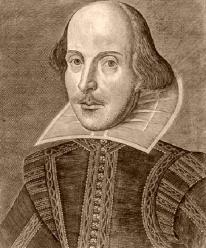
Was William Shakespeare Catholic? The evidence suggests he was.
I’ve come across theories in the past that suggested that Shakespeare was Catholic and that there is evidence of it in his works. This recent article gives strong support to the theory.
The Catholicism of William Shakespeare
Ample evidence supports the claim that the Bard of Avon was a lifelong Catholic
b y Jo s e p h Pe a r c e
This year, we have been commemorating the 400th anniversary of the death of one of the world’s greatest writers, William Shakespeare (1564-1616). For those who have long admired his brilliance and Christian imagination, the evidence that he was a believing Catholic in a time of persecution is very exciting. Broadly speaking, the evidence for Shakespeare’s Catholicism is biographical, historical and textual. The biographical and historical evidence is found in the documented facts of his life and of the turbulent times in which he lived, and his plays and poems offer further, textual evidence of his Catholic convictions.
PASSING ON THE FAITH
Born in 1564 in Stratford-upon-Avon, England, Shakespeare lived at a time when the practice of Catholicism was illegal. In 1534, King Henry VIII had declared that he and his successors would lead a state- controlled church and that only this state-imposed religion would be tolerated. Priests were tortured and put to death, as were those who tried to hide them from the tyrannical government. Recusants — those who refused to attend the services of the state religion — were fined heavily. Shakespeare’s mother’s family, the Ardens, were among the most famous recusants in the whole of England. Shakespeare’s father, John, was fined for his recusancy in 1592 and had retired from his career in politics rather than swear allegiance to the state religion. Several scholars, most notably John Henry de Groot, have detailed the evidence for John Shakespeare’s Catholicism, including the fact that he signed a “testament” to his Catholic faith, which had been written by St. Charles Borromeo and was probably smuggled into England by Jesuit missionaries. As for Shakespeare himself, evidence suggests that he remained a Catholic throughout his life.
During Shakespeare’s youth, the religion of the nation was far from a settled question. In 1568, when he was only 4 years old, Mary, Queen of Scots, fled to England, raising hopes of an eventual Catholic succession. These hopes were then dashed by Mary’s imprisonment on the orders of Queen Elizabeth I. The Northern Rebellion, led by the Duke of Norfolk and the Earl of Northumberland in support of Mary, was crushed ruthlessly the following year. More than 800 rebels — mainly Catholics — were executed. Several scholars have suggested that the Northern Rebellion inspired Shakespeare’s two-part Henry IV.
There has been much scholarly debate about what Shakespeare was doing as a young man between 1578 and 1582, the so-called “lost years” prior to his marriage to Anne Hath- away. According to John Aubrey, one of the earliest sources available, Shakespeare “had been in his younger years a schoolmaster in the country.” Scholars including E.A.J. Honigmann, J. Dover Wilson and Stephen Greenblatt have found evidence that Shakespeare might have spent time at Hoghton Tower, a recusant household in Lancashire. In that case, he would likely have met the Jesuit martyr St. Edmund Campion shortly before Campion’s arrest in June 1581 and subsequent execution. Having returned to Stratford, where he married and had three children with his wife, Anne, it seems that Shakespeare was forced to leave his hometown. Scholars such as Heinrich Mutschmann and Karl Wentersdorf (Shakespeare and Catholicism, 1952) have demonstrated that a vendetta was directed against him by Sir Thomas Lucy, the local lord of the manor. As Queen Elizabeth’s chief Protestant agent in the area, Lucy led searches of local Catholic houses, including very probably Shakespeare’s own home. In May 1606, Shakespeare’s daughter, Susanna, appeared on a list of recusants brought before Stratford’s church court. This fact, discovered in 1964, signifies that Catholicism had been passed from one generation of the family to the next, further suggesting that Shakespeare himself had remained a Catholic throughout his life.
MARTYRS AND ‘GOD’S SPIES’
After his arrival in London, Shakespeare enjoyed the patronage of the Earl of Southampton, a known Catholic who seems to have had Jesuit martyr St. Robert Southwell as his confessor. Shakespeare likely knew the Jesuit priest prior to the latter’s arrest in 1592, the year in which Shakespeare’s father was fined for being a recusant. In fact, there are many allusions to Southwell in Shakespeare’s plays. A thorough discussion of the plentiful textual evidence for Shakespeare’s Catholicism in his plays and poems is not possible in this brief survey. Here are just a couple examples. Southwell wrote a poem titled Decease Release about the execution of Mary, Queen of Scots, whom many Catholics believed to be a martyr for the faith. In the poem, written from the queen’s viewpoint, Southwell casts her as “pounded spice,” the fragrance of which ascends to heaven: “God’s spice I was and pounding was my due.” Although the poem was clearly Southwell’s tribute to the executed queen, its first-person voice gave it added potency following Southwell’s own martyrdom in 1595, toward the beginning of Shakespeare’s career. Like the queen of whom he wrote, Southwell was also “pounded spice” or “God’s spice,” whose essence is more pleasing and valued for being crushed. In King Lear (1605), the title character’s use of the phrase “God’s spies” is a clear punning reference to “God’s spice.” It is also a veiled reference to Jesuits, such as Southwell, who though “traitors” in the eyes of the Elizabethan and Jacobean state were “God’s spies.” They, too, became “God’s spice,” ground to death that they might receive their martyr’s reward in heaven. “Upon such sacrifices,” Lear tells Cordelia, “the gods themselves throw incense.”
Romeo and Juliet and The Merchant of Venice were written in the same year in which Southwell was martyred, and both plays contain symbolically charged references to the Jesuit’s life and work. In the latter play, for instance, several scholars have suggested that Antonio is a thinly-veiled personification of a Jesuit. This adds a crucial allegorical dimension to the courtroom scene in which Shakespeare effectively recreates Southwell’s trial. From the vantage point of Catholicism, the very “justice” emanded by Shylock becomes uncannily close to the “justice” meted out by Elizabeth’s court to Southwell. Shylock demands that, according to the law, he has a right to cut a pound of flesh nearest to the heart of Antonio. In Southwell’s case, the law demanded that Jesuit “traitors” should be hanged, drawn and quartered. The prosecutors not only demanded a pound of their victim’s flesh, nearest his heart, but they actually obtained it, physically removing the heart and casting it into the fire. As Southwell’s ghostly presence can be observed through- out The Merchant of Venice, one can read Portia’s beautiful “quality of mercy” speech as a plea to Queen Elizabeth to show the Jesuits mercy.
THE ‘NOTORIOUS’ GATEHOUSE
The most convincing biographical evidence for Shakespeare’s Catholicism is one of his final acts in London before retiring home to Stratford: his purchase of the Blackfriars Gatehouse in 1613. The history of this property reveals that it was, as Mutschmann and Wentersdorf described it, “a notorious center of Catholic activities.” As its name indicates, the Dominican Order owned it until the dissolution of the monasteries under Henry VIII. It was inherited by Mary Blackwell, a relative of St. Edmund Campion. Other tenants included Mary Bannister, the sister of St. Robert Southwell, and Katherine Carus, the widow of a defiantly recusant judge. According to a contemporary report sent to Lord Burghley, Carus died there “in all her pride and popery.” In 1585, around the time that Shakespeare first arrived in London, Mary Blackwell was accused of recusancy. The following year, a government informer reported his suspicions that the house had become a center for secret Catholic activity: “It has sundry backdoors and bye-ways, and many secret vaults and corners. It has been in time past suspected, and searched for papists, but no good done for want of knowledge of the backdoors and bye-ways of the dark corners.” In 1598, acting on another report that the gatehouse was a hive of recusant activity, the authorities raided the house. Jesuit Father Oswald Tesimond (alias Greenway) stated in his autobiography that he paid a surreptitious visit to the gatehouse on the day after the raid, being informed that priests had remained undiscovered in the house during the search. In 1605, during the Gunpowder Plot to blow up the House of Lords, Jesuit Father John Gerard asked if he could use the gatehouse as a “safe-house” for the plotters to meet in secret. After the plan was discovered, Father Gerard, now the most wanted man in England, appeared in desperation at the gatehouse, disguised with a false beard and hair and stating that he did not know where else to hide. Unlike many of his Jesuit confrères, Father Gerard escaped his pursuers and slipped out of the country in disguise. Shakespeare leased the Blackfriars Gatehouse to John Robinson, son of a Catholic gentleman of the same name. It was reported in 1599 that John Robinson senior sheltered a priest, Father Richard Dudley. By 1613, the other Robinson son, Edward, entered the English College at Rome to become a priest. It is clear that Shakespeare knew that he was leasing the gatehouse to a recusant Catholic. As Ian Wilson surmised in Shakespeare: The Evidence, Robinson was “not so much Shakespeare’s tenant in the gatehouse, as his appointed guardian of one of London’s best places of refuge for Catholic priests.” Furthermore, John Robinson was not merely a tenant but also a valued friend. He visited Shakespeare in Stratford during the poet’s retirement and was seemingly the only one of the Bard’s London friends present during his final illness, signing his will as a witness. Shakespeare died on St. George’s Day, April 23, 1616, leaving the bulk of his wealth to his daughter Susanna. Other beneficiaries included several friends who, like Susanna, were known to be recusant Catholics. These legacies support the Anglican clergyman Richard Davies’ lament, in the late 1600s, that Shakespeare “dyed a papist.” It is equally clear that he lived as a papist, providing Catholics even greater reason to commemorate his life and work.
JOSEPH PEARCE is director of the Center for Faith & Culture at Aquinas College in Nashville, Tenn., and a member of Msgr. Andrew K. Gwynn Council 1668 in Greenville, S.C. His books include The Quest for Shakespeare (2008), Through Shakespeare’s Eyes (2010) and Shakespeare on Love (2013).
Finding common ground in the abortion debate
There is almost certainly no issue that evokes more anger than the topic of abortion. People on both sides of the issue frequently resort to name-calling and valueless retorts that are meant more to put the other person down rather than to reach any common understanding. When we resort to this path, nothing constructive happens. Instead, we need to look for some common ground and discuss matters c almly and respectfully. I had an example of that very recently. I was in a discussion on Facebook with a woman who was obviously very much pro-abortion and she started out by using many of the well-rehearsed soundbites that are meant only to disparage and not to lead to constructive argumentation. After some back and forth where I refused to follow suit and kept responding to her attacks with calm argumentation, we did end up reaching some common ground. She mentioned how men who take the time to father a child have to also be there for the child once the baby is born. Many times men get a woman pregnant and then run to the hills. I absolutely agree with her on that! Certainly, if you’re going to father a child you better be there to take care of the child as well. I told her I understand that a woman whose baby’s father will not be there for her is in a difficult situation, but when the solution we come up with is to kill the baby, we have to say “Stop! That is not an acceptable solution! find another!” Sadly, the woman chose to end the discussion there, but we were at least on amicable terms by the end. If the conversation had been able to continue I would have wanted to say the following to her: it is certainly true that men have to take responsibility for their actions, but so do women. In the overwhelming majority of abortion situations we are not talking about a woman who was abused or raped or became pregnant after being in involved in sexual activity that was against her will. Most of the time the women were willing participants in the sexual act and thus they must take equal responsibility for what happened. If you’re going to engage in the act that leads to the conception of the new life then you better be willing and ready to accept the ramifications of that decision, which is that you may become pregnant, and if you do become pregnant and did not want to be, then either you raise the baby your choice brought into existence or you give it to someone who will raise it, but the baby should not be asked to pay the ultimate price by giving up its life so that the mother can have an easy solution to her misdeed. I don’t know if she would have agreed with me, but I know that she would at least have been open to hearing me out.
In the above case the woman was pro-abortion for ideological reasons. Other times it is more personal. Let me share with you a conversation I had many years ago with a young woman while I was in college. I had written a letter to the school newspaper against abortion and that evening in my room I received a phone call from a very irate collegiate who was screaming into the phone with venomous comments about all the horrible things I allegedly thought of women simply because I was against abortion. Within a minute or two a friend of hers got on the phone and was a little more levelheaded. She apologized for her friend’s behavior and at least attempted to discuss the issue calmly and rationally. She said to me, “Let’s imagine you go to a party in school and you are drinking and you do some drugs, you end up having sex with a boy and you get pregnant. Do you expect the girl to have that baby?” I said “Absolutely!” She asked, “Why? She didn’t realize what she was doing.” I replied by saying, “There was an awful lot of irresponsible behavior going on there. If you go to a party and you drink and do drugs and you can’t control yourself, you’re responsible for what happens to you in those situations, and asking a child to give up its life just because you were careless one night is totally unacceptable.” She then asked me if I had a girlfriend. “Yes” I responded. “Well suppose you got your girlfriend pregnant, wouldn’t you want her to have an abortion?” I said to her “Well that would never happen because my girlfriend and I are not sexually active. We both believe that the sexual act is the seal of the covenant of marriage and we choose to abstain from sex until we are married.” She then responded “Well then suppose you are married and you wife got pregnant and you didn’t want to have a baby?” I answered “I would never get married if I did not think I could welcome a child, because one of the reasons for marriage is to raise children and have a family. And if I was ever worried about taking care of another baby, I would do whatever it takes to provide for my child, and if I reached the conclusion that I could never be able to provide for it properly, I would give it up for adoption, but I would never kill it!” She then said “Wow! If everyone believed what you believe there would be no need for abortion!”
I had awakened in her the understanding of taking responsibility for your actions, but she still was not convinced that abortion was wrong. We then continued the conversation with other things and she tried to use the arguments that the fetus is not a human life yet, so therefore abortion is okay. I responded to her “Well, we could argue back and forth as to when life begins and neither one would probably be able to prove the point. But even if I were to grant your point or it could be proven definitively that the fetus is not yet a human life, do you agree that, left to run the course that is already in action, the fetus eventually will become one?” “Certainly!” She responded. I said, “So whether the child is already alive or is in the process of becoming alive, haven’t you taken the child’s life either way?” I then said to her, “Imagine this example: somebody is running in a track meet and they won. They are awarded the medal. But you are not happy that she won the medal and so you come up with a fake reason to have the person disqualified that the judges believe, and she has lost her prize. In another situation the person is running to the finish line and you trip them before they get there so that someone else crosses the finish line first and they don’t win. Either way you have made them lose their prize. Does it really matter much whether the person had already won the prize and you took it away or if you stop the person before they got to the finish line? Either way they’ve lost.” The woman responded “But that person can always get up and run in another race.” I answered “Yes, but the child cannot! That was the only chance the child had at life and you took it away from her.” Afterward she confided in me “Wow I see I see your point.” She then said “Well the reason I gave you that example about somebody doing drugs and drinking is because that’s what happened to me. I did that and got pregnant and I had an abortion.” Gulp! If I’d have known beforehand that she was speaking from her own experience I might have tried to soften my point. Anyway, I found out she was Catholic and told her to speak to our college chaplain who was very compassionate and understanding. I told her he could help give her some peace with her decision. She thanked me and said she was going to. I never spoke with her again but we ended the conversation on very friendly terms and when we avoided the name-calling and the sound byte catchphrases that her friend had used we were actually able to make progress. Perhaps I even changed her mind about abortion, and even if I inadvertently exposed her guilt, she could find healing, which she couldn’t do by yelling worn-out slogans.
 No matter what the issue may be, I always urge people to avoid using expressions that are meant only to ridicule and silence discussion and instead engage in constructive dialogue that will help the parties understand each other. We may not come to an agreement and we may not change someone else’s mind, but we will always have a greater understanding of what the person’s concerns are and perhaps be able to address them in a way that may leave room for future progress. Respectful constructive dialogue always leads to a better understanding and increased respect, and maybe will change the other person’s mind . Name-calling and flinging mud never does.

