Since he became Pope, the press has been trying very hard to paint Pope Francis as a liberal who will change Church teachings. Numerous false stories have arisen about what the Pope is alleged to have said. The following article from December 2014 is an eye-opening example of how the press create stories and run with them often without checking their facts. Please be very suspicious of anything Pope Francis is alleged to have said, and always check official sources before you accept a news story as truth.
David Gibson, Religion News Service12:12 p.m. EST December 13, 2014
Stories swirled this week that Pope Francis said animals can go to heaven, warming the hearts of pet lovers the world over. Unfortunately, none of that appears to be true.
“Paradise is open to all of God’s creatures,” Francis was reported to have said to comfort a distraught boy whose dog had died.
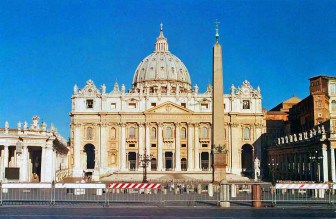
If true, the story would have been a sparkling moment on a rainy November day, and the setting in St. Peter’s Square would only have burnished Francis’ reputation as a kindly “people’s pope.” The story naturally lit up social media, became instant promotional material for vegetarians and animal rights groups, and on Friday even made it to the front page of The New York Times.
Yes, a version of that quotation was uttered by a pope, but it was said decades ago by Paul VI, who died in 1978. There is no evidence that Francis repeated the words during his public audience on Nov. 26, as has been widely reported, nor was there was a boy mourning his dead dog.
So how could such a fable so quickly become taken as fact?
Part of the answer may be the topic of the pope’s talk to the crowd that day, which centered on the End Times and the transformation of all creation into a “new heaven” and a “new earth.” Citing St. Paul in the New Testament, Francis said that is not “the annihilation of the cosmos and of everything around us, but the bringing of all things into the fullness of being.”
The trail of digital bread crumbs then appears to lead to an Italian news report that extended Francis’ discussion of a renewed creation to the question of whether animals too will go to heaven.
“One day we will see our pets in the eternity of Christ,” the report quoted Paul VI as telling a disconsolate boy years ago.
The story was titled, somewhat misleadingly: “Paradise for animals? The Pope doesn’t rule it out.” It wasn’t clear which pope the writer meant, however.
The next day, Nov. 27, a story in the Italian daily Corriere della Sera by veteran Vaticanista Gian Guido Vecchi pushed the headline further: “The Pope and pets: Paradise is open to all creatures.”
Vecchi faithfully recounted the pope’s talk about a new creation, and also cited Paul VI’s remark.
According to The New York Times, which issued a massive correction to its story Friday, Pope Francis actually said: “Holy Scripture teaches us that the fulfillment of this wonderful design also affects everything around us.” The writer of the article concluded those remarks meant Francis believed animals have a place in the afterlife.
But the headline put Paul VI’s words in Francis’ mouth, and that became the story.
The Italian version of the Huffington Post picked it up next and ran an article quoting Francis as saying “We will go to heaven with the animals” and contending that the pope was quoting St. Paul — not Pope Paul — as making that statement to console a boy who lost his dog. (That story, by the way, is nowhere in the Bible.)
The urban legend became unstoppable a week later when it was translated into English and picked up by the British press, which cited St. Paul as saying that “One day we will see our animals again in (the) eternity of Christ,” while it has Francis adding the phrase: “Paradise is open to all God’s creatures.”
When The New York Times went with the story, along with input from ethicists and theologians, it became gospel truth.
Television programs discussed the pope’s theological breakthrough, news outlets created photo galleries of popes with cute animals, and others used it as a jumping off point to discuss what other religions think about animals and the afterlife. At America magazine, the Rev. James Martin wrote an essay discussing the theological implications of Francis’ statements and what level of authority they may have. It was all very interesting and illuminating, but based on a misunderstanding.
A number of factors probably contributed to this journalistic train wreck:
- The story had so much going for it: Francis took his papal name from St. Francis of Assisi, the patron saint of environmentalism who famously greeted animals as brothers and sisters.
- Pope Francis is also preparing a major teaching document on the environment, and almost since the day he was elected in 2013 he has stressed the Christian duty to care for creation.
- Francis also blessed a blind man’s guide dog shortly after he was elected, an affecting image that was often used in connection with these latest reports of his concern for animals.
- Moreover, the media and the public are so primed for Francis to say novel things and disregard staid customs that the story was too good to check out; it fit with the pattern.
In most accounts, Francis’ comments were also set against statements by his predecessor, Benedict XVI, who insisted that animals did not have souls. That apparent contrast fit a common narrative pitting the more conservative Benedict against the ostensibly liberal Francis.
That may be true in some areas, but probably not when it comes to animals.
Adding insult to injury, the Times article cited St. John Paul II as saying in 1990 that animals have souls and are “as near to God as men are.” But that, too, was a misquote, as media critic Dawn Eden explained at the website GetReligion.
There should have been warnings signs: Francis has frowned at the modern tendency to favor pets over people, and he has criticized the vast amounts of money spent by wealthy societies on animals even as children go hungry.
Contributing: Katharine Lackey, USA TODAY
 Last week at our teen club meeting I asked a question of the teenagers, and I was a little surprised at the answers I got. I asked the question, “What is the purpose of the Church?” I got back a variety of comments such as to help people, to show people goodness, to teach the gospel, to show people to follow Jesus, but only eventually did I get the answer I was looking for: to lead people to heaven; to save souls. That is the purpose of the Church, and when I said it of course the kids agreed, but it wasn’t what they first thought, and it occurred to me that maybe that is the cause of many of the problems that we have today with people who either do not embrace the Church, do not follow it as fully as they should, or do not understand why we hold the positions we do. Because they don’t understand what the Church is all about, they don’t understand our insistence on certain teachings. This is not the first time that I’ve come across this.
 If you want to have a healthy body, you know that you can’t eat junk food. Well, imagine if people were to say “We like junk food; therefore, we think we should be allowed to eat all the junk food we want!” Nutritionists are simply going to tell you you’re wrong, that junk food doesn’t make you healthy. They tell you you have to severely limit your intake of it, perhaps even avoid it all together. You don’t like it. You want to be able to eat all the junk food you want and still be healthy, but your opinion or desire doesn’t change the fact that junk food is not healthy. Even if nutritionists should decide to appease people and tell them, “Okay. Since you believe there’s nothing wrong with junk food and a majority of you feel that way, then we’ll now declare that junk food is good for you,” does that now make junk food healthy? Your opinion can’t change the truth. In just the same way, when God reveals that something such as gay marriage, contraception, abortion, whatever it may be, is not healthy for your soul and does not lead us into union with him, all the opinion to the contrary doesn’t change the truth that these activities do not make us healthy but are harmful to that union with God, which is the definition of a sin.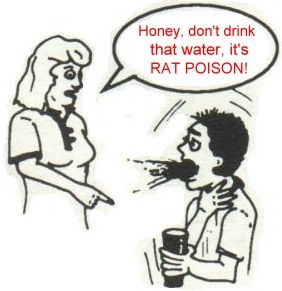


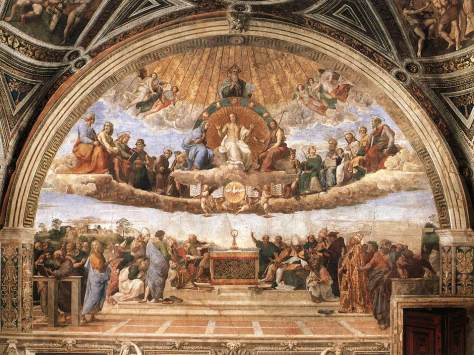
 A comment we all frequently hear from people is that lots of people don’t accept the Church’s teaching on certain issues, therefore the Church should change them so that people will come to church again. They will claim, “This is 2014! The Church has to get with the times and change its teachings or more people will continue to leave!” We don’t at all like the idea that people are leaving, but what would it profit us to change the teachings just to keep people in church on Sunday? Recall what happened when Jesus revealed his teaching on the Eucharist and many people found it too hard to accept and no longer followed him (cf John 6). What didJesus do? Did he call out after them and say, “Wait a minute! Come back! You don’t like that teaching? Okay, I’ll change it. What do you want me to teach? Just tell me and I’ll teach that, as long as you stay with me!” No. Instead, with a heavy heart, he let them go. He was not happy that they would no longer follow him, but he could not change his message and the call to unity with himself and the truth he had come to reveal simply because people didn’t like it. Neither can the Church change a teaching just because it is not popular.


