What did Pope Francis mean by giving all priests the right to forgive abortion? A priest forgave me that a long time ago. Was I in fact forgiven?

This post is by special request from one of my readers.

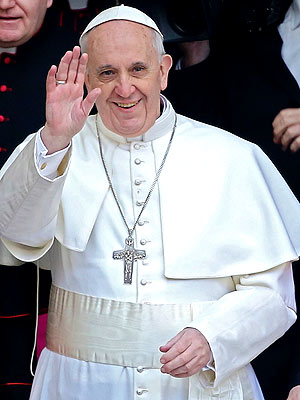
A lot of information – and misinformation – has been going on about Pope Francis’ decision to continue giving individual priests the right to resolve someone from the sin of abortion without having to refer the issue to the Bishop. Let me explain what the situation is:pope-francis-2-300

According to Canon law, bishops have the right to withhold forgiveness for certain sins to themselves. Usually the rationale for this would be to discourage people from committing the sin, knowing that forgiveness would require a communication with the Bishop and might make them second-think committing that sin. In some dioceses in the world the bishops have exercised this right concerning the sin of abortion and have withheld that permission from priests and retained it for themselves. That is not the case in almost all of the dioceses of the United States. Here in the Archdiocese of New York I have always had the right to forgive the sin of abortion in confession, so for us it’s a moot point. Last year during the year of grace, Pope Francis, in a gesture of mercy, exercised his authority to override the bishops and extended that right to all priests for one year. Apparently, he found the results of that favorable and has chosen to extend that privilege. The media coverage, however, has often failed to mention that most priests in the United States have had that right all along, and there were many people who had confessed abortion to a priest who were now wondering if in fact they had been forgiven. The answer is, yes you were! If the priest forgave you, it meant he had the right to do so. If he did not have the right he would’ve had to petition the Bishop for forgiveness for you, so don’t worry! If the priest forgave you, you were forgiven!

Another question I was asked was to comment on a response somebody had made saying that the priest’s forgiveness is only in the name of the church and not in the name of God, since no priest can forgive sins in the name of God. That is false. All one has to do is read John 20:22-23. The scene is the upper room where the Last Supper took place. The time is the evening of the resurrection. Jesus is appearing to the apostles for the first time on Easter night after his resurrection: “Then he breathed on them and said, ‘receive the Holy Spirit. Whose sins you forgive are forgiven them; whose sins you retain are retained.’” (John 20:22-23) The priest does in fact have the authority to forgive sins in the name of God. Jesus gave the church and the priests that authority at his appearance to the apostles, the first priests. Notice that the Sacrament of Reconciliation was the first gift Jesus gave the church after his resurrection. Now that he had died to take away our sins he gave priests the authority to take them away in his name. So anyone who is trying to use the rationale that they don’t have to go to a priest for forgiveness because only God can forgive sins needs to reread the Gospel according to John. They are very much mistaken. In fact, anyone who has faithfully participated in the Sacrament of Reconciliation knows the peace that comes from the moment and will understand why Jesus in fact gave that authority to men. Just last week I was hearing the confessions of our third through fifth grade children in our Religious Education program, and after we finished, while I was talking with the children in the hallway, one of the boys said to me “I feel so good now! I feel like a weight has been lifted off me!” The other children all agreed. I told them that was the proof that they had made a worthy confession. Jesus gave this sacrament to us through the ministry of priests because he knows how important it is for us to have a human being tell us we are forgiven and not merely assume that because we knelt in church and asked God to forgive us that we are forgiven. I have a previous blog on this issue that goes into this topic in further depth. If you’d like to read that information, please click the following link:5 fears about going to confession, and how to overcome them.

So do not be afraid! If a priest for gave you the sin of abortion you were forgiven, and do not be afraid to go to a priest. Christ is in fact forgiving you through the ministry of the priest.

I don’t like my parish! Should I leave and find another?


This slideshow requires JavaScript.

Every once in a while I find myself sitting down with someone who wants to talk to me about a problem they have with their church. They don’t like their parish and they want to know whether or not they should start going somewhere else for Sunday Mass. I rarely give them a “yes” or “no” answer. What I try to do is to guide them through their feelings and to see if their transfer is warranted. Let’s look at just a few of the common reasons people use:

1. “I don’t like our pastor.” That’s a very common reason. Fair enough. My first question is always, “What is your reason for not liking him?” Was it because of something he did that wasn’t wrong but with which you were not in agreement? Seven years ago here at St. Ann’s we repainted the church and reappointed it with tile flooring, chandeliers, new paintings, new furniture, and recently a new memorial piazza in front of the church and chapel where people may purchase bricks in memory of loved ones or for special events. Before beginning the work, I shared my plans with the Parish Council and sought their opinion. I did nothing without consulting them and the people beforehand. While the response to our efforts was overwhelmingly positive and I received tons of accolades over the end results, nevertheless, there were some people who didn’t like it and even left the parish over it. No priest is ever going to get 100% agreement on any project and there’s always going to be someone who doesn’t like it. That’s just a part of life! (Actually, we did get 100% approval on one thing: when we first did a feasibility study to find out if the people of the parish agreed that there was a need to replace our leaking roofs, the responses to the survey were unanimous! 100% of respondents agreed that the roofs on the church & rectory needed to be replaced, and only one person did not agree that the same was true of the school roof!) Sometimes pastors need to make decisions for the well-being of the parish, and not everyone will agree with him. If your pastor made changes you don’t like, my advice is to accept it and move on without ruminating over it and letting it eat away at you. Maybe the next pastor will make changes you will like!

Is your dislike of the pastor due to something you yourself experienced or from a story you heard from another? Before you form an opinion, make sure you have your facts straight. I have had people not like me for reasons that were totally untrue. Sometimes they heard gossip or rumors that took a kernel of truth and so distorted it to make it sound like something horrible which was in fact quite innocent. For example, I once mentioned at a funeral that when news first broke of a particular person’s death, the phone began ringing off the hook with people wanting to know the arrangements. The point I was making was that the man had obviously been loved by many people who wanted to come and pay their respects, and I told the widow from the pulpit that I regretted not ever having met him, as I seemed to have missed meeting a very special person. Well, someone with a grudge against me twisted what I said and began telling people that in my homily I complained to the widow that when I got the phone call about his funeral, “the phone was ringing off the hook” with so many other demands that I was annoyed that I had to do his funeral! (I’m not making this up! This REALLY HAPPENED!)  Sadly, there are even some people who are also not opposed to stooping so low as to create conflicts that never in fact took place. One person once actually accused me of stopping the Mass and publicly chastising a lector for mispronouncing a word in the reading. I assure you that never happened! Other times stories are told in a manner that, while in their core are true, are missing critical information that changes the whole nature of an account. I remember a woman once complaining to me about the neighboring pastor who “refused to do her daughter’s wedding and threw her out of the rectory.” Since that didn’t sound like something that priest would ever do, I asked him about it. What happened was that the priest informed her daughter that her fiancé needed an annulment before she could validly marry him and that he could not perform the wedding without it. According to the priest, the woman’s daughter got angry at him and the Church for their “stupid rules” and stormed out of the rectory. Big difference! While some criticisms of priests are spot on and the priest did in fact act badly in a certain situation, make sure you have all the facts before deciding you don’t like someone. You could be reacting to faulty information and turning against someone unjustly. Remember also that priests are human and we too have our bad days. I’ve had to apologize on occasion for being a little short with someone, so one bad day should never be used to mar the otherwise stellar reputation of a very compassionate priest. Would any of us want to be judged by our behavior on our worst day?

But let’s not be naïve: there are some nasty priests out there. I am appalled by the behavior I have at times experienced from pastors and parochial vicars with whom I have worked, who often behave that way on a regular basis. I feel sorry for good people who have to endure the rants of an angry curmudgeon or of an insecure pastor whose only method of dealing with people seems to be to intimidate them so terribly that they will fear to ever question him. What do you do then? Well, some people respond by saying, “Hey! I’ve been here for thirty years and he’s not chasing me out of the parish I love!” They decide they can endure his term, knowing he will eventually leave and perhaps be replaced by a more kindly soul. Others find his very presence an obstacle to their ability to pray and worship effectively, and they decide it’s time to change parishes. If your parish has a nasty pastor, can you withstand him, or do you need to leave in order to encounter Christ? Only you can make that decision.

2. “I don’t like what my priest/pastor preaches.” My response to this statement is always the same: “What does he say that you don’t like?” Is he preaching heresy? Then you have a valid gripe. You have a right to hear – and the priest has a duty to preach – the authentic Gospel of Jesus Christ as revealed through the Church and nothing else. So if you are certain that the priest is preaching heresy or his own personal view of what he’d like the Church to teach; if he preaches that the Church is wrong in its position on moral issues, flee! He is a false prophet and he will have to answer to Christ as he stands before the Lord in judgment as to why he dared to preach as the Gospel something other than what Christ has revealed through His Church. As St. Paul said, “But even if we or an angel from heaven should preach a gospel other than the one we preached to you, let them be under God’s curse!” (Galatians 1:8)

But how about if what he’s preaching is the Gospel and authentic Catholic teaching but you don’t like hearing it? Now the situation is different! Father has a duty to preach the Gospel and to not withhold the truth just because some people don’t like it. As St. Paul wrote to Timothy, “I charge you in the presence of God and of Christ Jesus…proclaim the word; be persistent whether it is convenient or inconvenient; convince, reprimand, encourage through all patience and teaching. For the time will come when people will not tolerate sound doctrine but, following their own desires and insatiable curiosity, will accumulate teachers and will stop listening to the truth and will be diverted to myths. But you, be self-possessed in all circumstances; put up with hardship; perform the work of an evangelist; fulfill your ministry.” (2 Timothy 4:1-5) So if you leave your parish because you only want your priest to speak “sweet nothings” and what I call “marshmallow theology” – nice and sweet and fluffy but no nutritional value whatsoever – then you have a serious problem! Your argument is not with your pastor but with Christ! You are looking for a priest who will not tell you the truth for fear of offending you and who will never say anything you don’t want to hear. That would be like going to a doctor and telling him never to tell you that you are sick or that you can’t eat certain foods. “I want you to tell me I can eat all the junk food I want and not exercise and still lose weight and be healthy!” Well, if the doctor tells you that just because that’s what you want to hear, he’s not doing you any good at all; on the contrary, he’s harming you. The doctor’s job is to tell you the truth about what you need to do to be healthy even if you don’t like it. The same is true of a priest. I’m not saying a priest has to beat people over the head with moral teachings constantly (he has to be sensitive and give the truth in appropriate doses), but any priest who is afraid to say something the people will not like is not fulfilling his duty before the Lord. Whenever I find out that someone has left my parish because I spoke the truth of the faith, especially if they’re bad-mouthing me, unless I know I was unduly harsh in my delivery of the truth, I rejoice! As Jesus says in the Beatitudes, “Blessed are you when they insult you and persecute you and utter every kind of evil against you because of me. Rejoice and be glad, for your reward will be great in heaven. Thus they persecuted the prophets who were before you.” (Matthew 5:11-12) So be very careful when criticizing a priest’s preaching. Ask yourself honestly if he was wrong or if he is right but you just don’t want to accept it.

3. “There’s no life in my parish.” That may be true. While sometimes I’ve discovered that people claim there is nothing going on in their parish when in fact it’s a hopping place, some parishes do lack activities. Have you suggested anything to your pastor? Are you willing to work on the project? Lots of times people are full of ideas but no one wants to help out. If the pastor were to say yes to everything without anyone helping him out he’d be burned out very quickly! He can’t do it without volunteers. If you’re eager to belong to a group or an activity that your parish doesn’t or cannot provide, see if a nearby parish does. There’s usually no rule that says you must be a parishioner in that parish in order to participate, and you don’t always have to leave your parish just because a nearby parish is more active.

On the whole I try to encourage people not to leave their parish but to try to do something to make a difference. Sometimes we exaggerate the problems in a parish, and other times we give up too easily and don’t attempt to do things that are well within our power to change. Don’t think that by leaving you are spiting the pastor. He may not even know you’ve left! If you feel you must leave, don’t leave for his sake; leave for your own! Try and see if you can make a positive difference. Have you talked to the pastor about your complaint? Many times people gripe, complain, and leave, but never once speak with the pastor. Maybe he will listen to you. If, however, you have tried your best or things are beyond your ability to change, you feel a warmer connection with another parish where the Gospel is more faithfully proclaimed, where the Mass is celebrated with greater dignity, where’s there’s a greater spirit of family and a Catholic life about this parish, then I would think in good faith you should not hesitate to join that parish and become an active part of it.

A Little Halloween fun with the Teen Club

Here’s the teen club fun activity we did tonight. We followed with a very powerful discussion on forgiveness, but this gets them gathered for the meeting. Enjoy!

Will Fr. Carrozza vote for Hillary Clinton or Donald Trump?

pickyourpoisonPresidential elections are always contentious, and mudslinging and name-calling go with the territory. This year’s election however, is taking this characteristic to an extreme. There has also probably never been an election where more is at stake than this year’s presidential election. We have two candidates running for office that are of absolutely completely different viewpoints on the direction in which they wish to take America. To top things off, we also seem to have the two most unlikable people in America running for president, and one of them will win. How we got to this point is not my current concern. The reality is that either Donald Trump or Hillary Clinton will be the next president of the United States, and their view for the country will be guiding us for the next four years, perhaps longer. While sometimes we feel really sure of one candidate or another and truly like him, that is not always the case, and sometimes we have to vote for the lesser of two evils. This year appears to be one of those times. Sadly, many people vote for a candidate based on his or her likability. I have heard people tell me they will not vote for one person because “I don’t like his voice,” or “he looks creepy to me.” I have never found this an appropriate way to make such an important decision as to whom I will be casting my vote for President. Somebody can be very charming and pleasant but their beliefs can be absolutely diabolical. Similarly, I’ve heard people at times mention that this person or that should be elected because he is a good motivational speaker and knows how to inspire people. This too, is a danger. Who was a greater motivational speaker than Adolf Hitler?! At this point in the 2016 election, the likability factor is totally out the window. As I write this, allegations are coming forward about Donald Trump groping women, which he flatly denies, and which he claims are deliberately fabricated by the Clinton campaign. I certainly do not know how these allegations will end. I personally find the timing of these allegations very questionable, that actions that reportedly occurred years ago are all of a sudden y coming to light just three weeks before the election makes you question the truth of the allegations. If they are in fact true, then they tell us something important about Donald Trump. If, however, they are false accusations fabricated by Hillary Clinton and her campaign, then that tells us something extremely important about Hillary Clinton. The truth behind these is bound to be damaging to one or the other candidate. Will they affect our vote? For me, I have decided as I always do that it is all the more important this year that we vote for the candidate who most represents my vision for America and whom I think will lead us in the direction in which I want to see our nation go. I find it critical at this point that we pay attention not to the mudslinging and the accusations against candidates but what they stand for and what they advocate. Every American needs to figure out which issues are the most important in his or her life and are the most critical for casting their vote, and then choose the candidate that best represents their views. I would now like to take you through my own thought process as to how I have come to the decision of the person for whom I will vote.

I am not registered in any political party. I do this specifically so I can feel free from party allegiance and cannot accuse myself of blindly supporting my party’s nominee. I make any choice I make based upon the Gospel of Christ. Jesus is my truth, and I am convinced that fidelity to His teachings will lead us to a happy and prosperous nation and ultimately salvation. I am further convinced that all the world needs to follow Christ and espouse what he teaches, even if it’s not popular or politically correct. I therefore weigh all the issues in relationship to the Gospel and try to prioritize them as to which ones are most important. I rarely find a candidate that agrees 100% with everything that I as a Christian believe, but sometimes I can find one candidate that supports more of my beliefs than the other and whose direction is more intrinsically in line with the Gospel of Christ than the other. This year I have been able to prayerfully conclude that one of the two major candidates can morally receive my vote.

While there are many pressing issues that people will discuss, everything from global warming to ISIS to the economy, for me the most important issue I see is the moral decay of our nation. We are morally bankrupting ourselves, and if we continue down this path we will destroy ourselves long before ISIS or global warming gets around to it. We have increasingly become a nation that is seeing God as obsolete, and every year things seem to get worse. When I was a boy the prevailing sentiment was that Catholic teaching is archaic or antiquated. “This is 1975!” was the mantra I remember hearing over and over again, and that the church had to modernize and change her teachings to be more popular. Of course I reject that view. But today things have gotten even worse. God’s laws have ceased to be seen as antiquated and have now come to be seen as hostile, as discriminatory, and as hate filled. Decisions by our Supreme Court that have legalized same-sex marriage as well as policies by the current administration encouraging people to choose to be whatever gender they wish – as if being male or female is up to my opinion as opposed to biological fact – leave me extremely worried about our future. We have developed a world that sees the foundation of truth in personal opinion. Opinion, however, is not the source of truth. How many times have we discovered later that we were wrong about what we previously felt or thought? This also is precisely what Original Sin was all about. Adam and Eve were tempted by Satan to eat the fruit of the tree of the knowledge of good and evil, which is a nice poetic way of saying they tried to decide for themselves what was right and wrong rather than listening to what God had revealed to them, and the results of that were disastrous! Year-by-year I see us further and further alienating God and deciding that we as Americans can choose our own destiny and our own truth rather than listening to what God reveals to us, yet when we do that things don’t improve; on the contrary, they only get worse. When was the last time you heard somebody say they really like the direction in which America is heading and that everything is wonderful? Virtually everyone agrees that our country is not doing well and we need a radical change, yet it seems that the further away from God we get the worst things get, and the more we continue to think we don’t need God. God provides the moral foundation upon which a stable and healthy society is created and I find it imperative that we reestablish God and his sovereignty over our lives. When we take things into our own hands we only reap disaster. That was the whole message we read through the Old Testament. When people followed God things went well for them, but when they abandoned God things were a disaster until they finally turned to God again and followed him. Only then did they improve. The same is true for us today.

Presidents will often make decisions that we don’t like and sometimes we are under the effects of their policies for four or perhaps eight years. Then a new administration comes in and they often change some of those policies, and they no longer bind us. Economies ebb and flow often from external factors that have nothing to do with the president’s policies. But one legacy a president leaves behind is whom he or she appoints to the Supreme Court. Supreme Court justices can last for decades. The next president of the United States may have the ability to appoint as many as four new justices to the Supreme Court. This will shape the moral direction of our nation for better or for worse, and whom they nominate for the Supreme Court will affect us for decades to come. Therefore, for me, the single most important issue facing us as Americans in the 2016 presidential election is the next president’s nominees for the Supreme Court.

I don’t like the direction in which the Supreme Court is currently taking us. Recent decisions by the court seem to be politically motivated and what I call “the bandwagon effect”, meaning that they seem to jump on the bandwagon of what is currently popular just to please people. Any new idea that comes along is too quickly embraced without looking through the ramifications of where this will lead down the line. Any objection, even if based on millennia of human understanding and reason, is quickly dismissed as “discrimination” and “hate speech.” I do not support the 1973 Roe vs Wade decision, nor do I support last year’s equality in marriage declaration. I firmly believe these two need to be revoked, as they put us down a dangerous path. Hillary Clinton has publicly affirmed Roe vs. Wade and the marriage equality act, and she has promised that she will only nominate for the Supreme Court justices who will defend Roe vs. Wade as the law of the land and continue to advocate so-called “marriage equality”. For this reason alone, I cannot vote for Hillary Clinton. For me, to vote for Hillary Clinton would be to vote for somebody who is espousing everything that I feel is offensive to God and is taking us away from him and in the completely opposite direction of where I want to see America go; therefore, I will not be voting for Hillary Clinton.

The next question then becomes, can I vote for Donald Trump? Personally, I do not like either Hillary Clinton or Donald Trump. Both are arrogant in my eyes. Hillary Clinton tends to blame other people for her mistakes and does not take responsibility for her own actions, plus she has been caught in so many lies that that makes me question whether or not I can truly believe anything she tells me. Donald Trump has a habit of opening his mouth and saying nasty things to and about people that grate on my conscience, and there is an arrogance about him that I personally do not like, and I probably would never want to find myself playing golf with him or sitting with him at dinner. That being said, following my own rules from the beginning of this post, I must put those personal feelings aside and look at the issues. I don’t agree with everything Donald Trump says. For example, I find the NRA to be gun-happy, and I do believe there have to be some restrictions on gun sales and stronger controls over who may legally purchase a gun. While I certainly respect the legal rights of hunters (even though I could never go hunting myself) and I support people owning rifles for hunting, as well as responsible people owning handguns in areas where people feel the legitimate need to protect themselves and their loved ones; nevertheless, I don’t see why anyone needs to own a semiautomatic rifle or submachine gun! But I do agree with Donald Trump on many other issues. As concerns our fight against Islamic terrorists, I do believe, as Pope Benedict once said, that nations have the right to secure their borders and cannot be expected just to open them to everyone. Hillary Clinton’s desire for open borders with Mexico is a danger in my mind and I do believe there have to be some legitimate means of vetting out those who would be here not to become part of the American system and the American dream but to destroy us. While the refugee situation is certainly of critical importance, and we have a Christian duty to take care of the legitimate needs of refugees from foreign wars; nevertheless, we have to make sure that our enemies are not deliberately sneaking terrorists into the United States by passing them through disguised as innocent refugees. I agree with the analogy that blindly accepting all immigrants into the country is like welcoming the Trojan Horse. We do have to make sure that the people we are accepting across our borders are not here to harm us but are here to take part in the American life, and that they will support the laws of this nation. I personally would have no trouble refusing admission to anyone who thinks that America has to be run by Sharia law. If they do not agree to abide by the Constitution of the United States, then we have no moral obligation to accept them. But most importantly for me, Donald Trump has stated that he wants to recover traditional Christian values, especially among people he appoints to the Supreme Court. I personally don’t like the idea of litmus tests for justices. I would like to know why presidents can’t say they will choose people who will put their personal feelings aside and will interpret the Constitution as it is written rather than promising to place people on the Supreme Court who will already interpret the Constitution the way they want to see it interpreted, as I believe Hillary Clinton has done. But since that is not the case in America today, I must side with the candidate who shares my view on the moral direction of our nation and who will appoint nominees to the Supreme Court who will restore the Court to one that respects the sovereignty of God. Donald Trump sufficiently shares that view with me, and therefore, after prayerful consideration of both candidates I have decided that I will be casting my vote for Donald Trump.

Let me make it perfectly clear, because I know some people will respond to me by saying my decision to vote for Donald Trump automatically means I approve of everything he says. This is simply not true. I repeat: I do not agree with every opinion of Donald Trump nor do I like his attitude, so please kindly refrain from posting anything in response to this blog post saying that if I support Donald Trump I must obviously then support his belief in “such and such” or that I “enjoy seeing women mistreated”. That is simply not true. The only other option would be if I felt Donald Trump did not sufficiently support anything of what I believe, leading me to feel it would be equally sinful to vote for him as I feel it would be to vote for Hillary Clinton. If that were the case, then I would have an obligation to look at one of the minor party candidates or write myself in for president. But again, while I do not like Donald Trump’s character or the way he speaks to people, and I don’t necessarily want to be his friend and have dinner with him, when I look at the issues, I cannot in good conscience vote for Hillary Clinton, and I can find enough in line with Donald Trump to justify my voting for him. And especially since the alternative of giving my vote to a minor party candidate would be further ensuring a victory by Hillary Clinton – which I believe would be disastrous for the United States – I feel I in good conscience can cast my vote on November 8th for Donald Trump, and if you agree with our Catholic moral beliefs I urge you to do the same.
Artificial Contraception: Pandora’s Moral Box

I recently came across this blog post about the effects of contraception on our society. It is well-written and deserves to be seriously pondered by all.

Discipline and Contraception: A Cause for Joy

Discipline and Contraception: A Cause for Joy

A few nights ago, well after our darling little three year old should have been asleep, she came running into our room crying hysterically. Something about her night light and a noise and now it wasn’t working.

Upon investigation, we found this:

Turns out, she was playing with a penny and placed it on the metal prongs of the plugged-in night light which caused the explosion, the noises, and the scariness. We are thankful that she is okay, and she cried over and over again that would, “never ever do that ever again.” We used the opportunity to reinforce why she isn’t supposed to be playing with coins in her bed  (we’ve already had to explain the choking hazards), and why she should not play with her night-lights or outlets in general. The next step is taking her coins away completely, because discipline requires consequences for behavior. It is because we love her that we want to discipline her so that she remains safe.

I started thinking about this incident again when I was reading about the Wijngaards Statement to the UN, encouraging the Catholic Church to change its stance on contraception.

Back when Humanae Vitae was written, Pope Paul VI warned that if we went down the road of widespread acceptance of contraception, we would see in our culture a lowering of morality, increased infidelity, less respect for women, and government coercion of reproductive technologies. He, like a loving father, warned us that if we were going to play with pennies in an electrical outlet, we were going to get burnt.

But for the most part we didn’t listen, and now look around you. Religious groups are suing the government over the HHS mandate, some countries forcibly abort babies past the second child, the Ashley Madison leak revealed thousands of names of men being unfaithful for their wives, pornography is a billion dollar industry and fuels sex trafficking, and we all know someone affected by divorce or infidelity.

We are experiencing the consequences of our actions, and I think many in the younger generation are now desiring the safety of discipline. You can tell us “no” to contraception because we have experienced the devastating effects of divorce, pornography, rape, and infidelity in our own families. I think deep down, like children, we want to obey and be protected from the harmful effects of going against the plan God has for us.

A group of 500 scholars have come out with a statement (and signed by hundreds of more with doctorates) denouncing the Wijngaard position and affirming all the Popes’ teachings on the inseparable unitive and procreative meanings of sex, as well as the language of the body as self-gift in the marital act, and how contraception distorts that meaning. You can read the “Affirmation of the Church’s Teaching on the Gift of Sexuality” and read all the signatures here.

Now back to discipline. Some of the Church teachings can seem hard at times. I see couples wrestle with these hard teachings during marriage prep all the time. I have wrestled with them myself. Even disciples in the bible struggled with accepting hard teachings. And then I see my kids struggle to put their clothes away when I ask, or clean up the toys in the basement, and I know that we all struggle with accepting doing the hard things. Still, it’s good for us to learn to obey and learn the value of discipline.  There is the fruit of joy in peaceful, loving families with faithful spouses and respect for all life. This fruit can only happen when we reject the rebellion of contraception and accept the sometimes-difficult way that is open to life.

“Endure your trials as ‘discipline’; God treats you as sons. For what “son” is there whom his father does not discipline? . . . At the time, all discipline seems a cause not for joy but for pain, yet later it brings the peaceful fruit of righteousness to those who are trained by it.” Hebrews 12:7-11

Does Satanic worship that mocks Catholic beliefs enjoy the protection of law?

For the past several years a group known as Dakhma of Angra Mainyu has been offering satanic rituals in various venues. Several attempts to hold them at college campuses resulted in angry protests which caused the services to be canceled. In Oklahoma City, however, they have had success. The powers that be there have determined that satanic worship is protected by the First Amendment, thus they permit the service, and will be holding another one this Monday, August 15th, the same day as the Catholic Church celebrates the 1c - satan-widescreen-hd-wallpaper-backgroundSolemnity of the Assumption of the Blessed Virgin Mary.
I know many people who don’t like satanic worship will nonetheless believe it is defended by the First Amendment and will criticize any attempt to stop it. Whi
le that certainly seems reasonable, I do not agree.

I believe we can make a strong argument that the Freedom of Religion established by the First Amendment was intended to protect the rights of those looking to worship God as they understand him and not Satan. Absolute tolerance is never possible; there are always inherent limits to any freedom, and none of our freedoms is absolutely unrestrictable. For example, Freedom of Speech does not protect the right to libel or slander, nor does it protect the right to yell “fire!” in a crowded theater. Similarly, any religion that seeks to worship not God but Satan and advocates obscenity (check out the Dakhma of Angra Mainyu website – it will shock and disgust you) does not, I believe, enjoy the protection of the First Amendment. Similarly, the so-called “Separation of Church and State” that so many people invoke to prohibit prayer in public places and to prevent religious organizations from using public facilities cuts both ways. This satanic worship does not merely worship Satan. Rather, it blatantly mocks Catholicism. Consider this:

During their service ojesusn August 15th, they will hold what they are calling the “Consumption” of the Blessed Virgin Mary. They will decapitate a statue of the Blessed Mother, remove a previously-placed pig heart from it, and eat it. This, they claim, symbolizes the Blessed Mother being cast into hell! Of course, it coincides with our feast of the Assumption of Mary. The timing of this insult for the same day and using a parody of the name of our feast is no accident. Neither was it an accident when the last one mocking Mary was held on Christmas Eve. This is not freedom of worship but hate speech. If public facilities cannot be used to support religion, then neither should they be used to mock it.

In solidarity with Archbishop Coakley of Oklahoma City and his request for all people of good will to join in a day of prayer and fasting in reparation for this horror, here at St. Ann’s we will hold Adoration of the Blessed Sacrament from 9:00 AM until 8:00 PM in the chapel. A Holy Hour with recitation of the rosary will be held at 7:00 PM.

I urge all people of good will of whatever religion or of none whatsoever to join in solidarity with Catholics whose beliefs are being mocked and desecrated. An attack on one religion is an attack on all!


Finally! The Press gave attention to someone in the African-American Community that sees through Planned Parenthood’s secret agenda!!

This article is copied from MSN Sports as reported on August 6, 2016 

Ravens tight end Benjamin Watson has not hesitated to speak out on the state of race relations in the United States, but he’s drawing both criticism and praise for claiming that Planned Parenthood was created to “exterminate blacks” and that “it’s working.”BBvjTTb-1

In an interview with the Turning Point Pregnancy Resource Center, Watson, a devout Christian, said that he’s puzzled by why so many blacks support Planned Parenthood.

“I do know that blacks kind of represent a large portion of the abortions, and I do know that honestly the whole idea with Planned Parenthood and (group founder Margaret) Sanger in the past was to exterminate blacks, and it’s kind of ironic that it’s working,” Watson said.

“We (as minorities) support candidates, and overwhelmingly support the idea of having Planned Parenthood and the like, and yet, that is why she created it. We are buying it hook, line, and sinker, like it’s a great thing. It’s just amazing to me and abortion saddens me, period, but it seems to be something that is really pushed on minorities and provided to minorities especially as something that they should do.

“In the public, it seems to be painted that when minorities get pregnant they need to get abortions, especially when it comes to teen pregnancy. It’s like when black girls are pregnant, it’s like a statistic, but when white girls get pregnant, they get a TV show.”

Watson continued his criticism, saying blacks are “killing our children.”

“We sit here and talk about advancing the black agenda, whatever that means, we talk about our interests, and what’s important to us — like having political power and advancement and all those things — and then we are turning around and we are killing our children,” Watson said. “And we are buying the lie that it’s our personal decision to make.”

Watson also posted a link to his Facebook page about a story on his comments, adding that, (A) lot of the women wouldn’t be having abortions if the men would step up and be a part of what they are already biologically a part of.”

Watson’s incendiary comments on such a controversial issue have drawn a predictable mix of praise and criticism in social media. Just check out the comments on his Facebook page.

Watson is certainly not the first person to point out Sanger’s racist views, which were unfortunately common in American society in the early 20th century. But as a popular NFL star sharing the message on social media, that history might find a new audience unaware of Planned Parenthood’s origins.

The 35-year-old Watson signed a two-year, $7 million deal with the Ravens in the off season. 

Political Conventions and Church: What They Have in Common.

Last month both political parties held their conventions to nominate their candidate for president. There have been news stories that talked about how much money each convention cost, plus the cost to the host city in police protection, cleanup, etc. In this day and age with modern means of communication including Skype and email, one might be tempted to ask why the candidates didn’t just type up their proposals and email them to everyone, have a live video feed nomination, and save a ton of money. I doubt if anyone would take such a suggestion seriously. Nothing electronic can replace human contact. Both parties were dealing with internal fights and divisions, and the stated goal for both conventions was to unify the party. In addition to participating in the formal process of nominating a candidate, the delegates were able to meet GOP+Demswith each other, support one another, solidify their positions on issues, and bring about a unity that helped them feel more proud of their party and their candidate. This would never have been possible if everything were done at home through the internet. As human beings we are naturally social creatures, and when there is a strong need to bond together we must do so in person.

But while no one would suggest they could actively participate in the convention at home, some people make the illogical mistake of thinking they can worship God at home and don’t need to come to church to do so. There are similarities between the reasons we go to church-clip-art-church-clip-art-picturesconventions and the reasons we go to church. Paramount, of course, is to participate in the Holy Sacrifice of the Mass and receive Holy Communion so that we can be one with Christ in His suffering, death, and resurrection and thus have all of our (venial) sins forgiven. But in addition to that, the human element is of great importance. Being in a gathering with others who share our beliefs strengthens us in our identity as members of the Church and in our commitment to follow Jesus, which does not happen sitting home alone. Sure, we could read a good spiritual book at home, pray with the Bible, read the Pope’s comments in L’Osservatore Romano, and say private prayers, but we’d be lacking the communal gathering element that is essential to our well-being.
We as humans are social creatures, and we need to connect with others. One of the worst prison punishments is solitary confinement, prohibiting one from any contact with another human being, because it violates our human nature and our dignity. So why would we want for a moment to practice religious solitary confinement? Yes, we all need alone time when we can pray by ourselves, but we also need social prayer time when we join with others to pray together as a people and support each other in our devotion to the Lord. So just as a political convention builds up identity as a member of a political party, so our common worship at church builds us up in our identity as followers of Jesus and inspires us to be His messengers in our daily lives and in the world. So let’s here no more of this “I-don’t-need-to-go-to-church-to-pray” nonsense. Yes we do! We’re social beings! We need to be with each other, especially before God.


My doctor says I’m sick, so I’m going to find a doctor who tells me I’m okay!

Imagine someone were to go to the doctor and attempt to tell the doctor everything that is wrong with him and every cure that the doctor needs to give him in order to be well again. I think we can all realize that this would be a big mistake. We go to the doctor precisely because we don’t know medicine as well as he does, and we want him to use his expertise to show us how to be as healthy as we can be. Suppose you got angry because the doctor would not give you the medicine you are convinced would be good for you and decided never to go to the doctor again. Whom would you be hurting? You’d only be hurting yourself. The same thing is true of God. Sometimes we make the mistake of going to God with a predetermined diagnosis for dr-jesus1what we need in life and if God says no or doesn’t grant us what we’re looking for we decide we’re not going to worship him anymore. But whom are we hurting? Only ourselves! Sometimes it’s helpful for us to step back and look at exactly what God wants to do for us.

Take, for example, the gospel parable Jesus tells about the man who had a great harvest and decided to build extra barns and store all of his goods there. He then says he can relax and take it easy because now he has everything stored for the rest of his life, and Jesus says of him “you fool! This very night your life will be demanded of you, and to whom will all these piled up goods go?” Jesus is showing us something critical for our lives in this little parable. Why did he call the man a fool? It was not because the man had a good harvest and had done well and was wealthy. The problem was that the man thought that as long as he had money in the bank he was good to go and he needed nothing else. And that’s why Jesus said called him a fool because he said that very night he would die and what good would all of that saved up grain do for him? So the Lord is not saying that we should not pray for the goods of earth but that we should not make them our priority. Certainly the Lord’s prayer teaches us to pray “give us this day our daily bread”, and it’s certainly fine if we’re financially strapped or somebody is ill and we pray for healing for more money whatever the situation may be, but our primary focus must always be getting to heaven. We call Jesus our Savior. But from what did he come to save us? from poverty? No! He was born and laid in a manger. To save us from ill health? No! He was in terribly poor health as he hung on the cross and eventually died. To save us from lack of popularity? No! His friends all abandoned him. To save us from false judgment? No! He was falsely accused of being the devil himself and when he was crucified those who killed him thought they were doing the will of God. No, Jesus came to save us from sin. But sometimes sin seems to be the last thing we worry about and maybe we don’t even worry about it at all! Sometimes I even hear people joking about sin, making fun of it as if it’s an antiquated notion that we’ve wisely outgrown. Nothing could be further from the truth! Sin is indeed something very deadly. Remember that Original Sin, Adam and Eve turning against God and deciding they could choose for themselves what’s right and wrong and not have to listen to God, is what brought all the evil into the world from which we suffer each and every day. And more importantly Original Sin closed the gates of heaven to us. You and I could try to be perfect and maybe we could live without committing any sin, but even with that we could not get to heaven and we would be condemned to hell for all eternity, because heaven was close to us thanks to the sin of Adam and Eve. There was no human being who could do anything about it, because in order to adequately pay the price – the ransom – for sin one would have to be perfect, and since there was no perfect human being, there was not a single human being who could change anything. We were doomed! Only God – the perfect one – could save us, and that’s what he did: by taking on flesh, suffering and dying on the cross, and rising from the dead. When he rose from the dead he destroyed the power of death and now turned death around completely, so that it is no longer our entrance into condemnation – into hell – but is now our entrance into salvation – into heaven! Jesus now teaches us through the Church how to follow him, to avoid sin, and stay on the path to heaven, to avoid all the pitfalls of this earth which is Satan still trying to lead us back into his clutches. Yet again, sometimes we just don’t seem to care about that and we approach God with the answer already in our minds of what God has to allow us to do. This becomes especially a problem when something that God teaches us through the Scriptures or the Church we don’t want to accept. Instead of accepting it, we either invoke the opinion of society and decide, “well, society accepts it now and so must the Church” or we give ourselves an excuse as to why that teaching doesn’t apply to us. Sometimes people even go further by demanding of God and of the Church that he change things that he’s teaching are sinful and that are harmful to us and tell us it’s good for us, and if the Church won’t tell us what we want to hear, then we search out a denomination of Christianity that will do so. But is that really helping at all?

Going back to our example of the doctor, imagine if someone decided they want to be perfectly healthy except they don’t want to have to exercise or eat properly. They go to the doctor and tell the doctor they want to be able to sleep as much as they want sit on the couch and eat all the rich and fatty foods they want and still be healthy. Obviously the doctor tells the person he cannot do that, that if he wants to be healthy he has to exercise and eat properly. But the person doesn’t like that so he says, “Fine! I’ll find another doctor will tell me it’s okay to do so! And maybe he comes across a doctor who has very few patients – for obvious reasons, that he’s a bad doctor – but this doctor, eager to keep patients, tells him whatever he wants to hear. “Sure! It’s perfectly fine for you to sit on the couch all day eat all the potato chips and junk food you want, and don’t worry about exercising; you’ll still be perfectly healthy!” The patient says to himself, “Great! I finally found a doctor who sees the truth, a doctor who understands my needs and my feelings. This is exactly what I was looking for!” Well, what happens to that person when he follows this doctor’s advice? You know the answer: he gets very sick! The same is true of Christians who look for denominations of Christianity that will tell them that whatever they want to believe is fine just as long as they stay with them, or with Christians who turn to God and say, “Hey God, if you don’t give me what I want I’m not going to church anymore!” Well they’re not hurting God, they’re only hurting themselves!”

Remember that God is not here to give us the life of Riley and he is not Santa Claus, the one who gives us presents if we are good. I know I’ve said this in previous blog posts, but it’s worth repeating. God never said “come follow me and I’ll give you a bed of roses!” He never said that! In fact, he said if we want to follow him we must deny ourselves take up our cross each day and follow in his footsteps. In other words, there will be challenges as we follow the Lord in this world. There are going to be times when we have to go against the flow, where we cannot follow what society says is right and instead must remain faithful to the Lord even if it means going against what is currently socially acceptable. Jesus is not here to make our lives easy and to give us whatever we want. He came to show us the way to heaven, and we should be willing to reject anything in this world – no matter how difficult it may be for us – if it’s going to mean losing our eternal salvation.

And so my friends, when you go to God in prayer don’t go with a preconceived notion that you already know what God should do for you and figure were going to manipulate him and do anything possible to get God to give us what we want. Don’t pre-form your mind as to what you believe is right for you and then just look for the church or denomination that teaches what you want to believe, nor should you decide that that’s okay not to follow God because you don’t like what he’s saying. There’s only one thing for us to do: follow God with all of your heart. Turn to him and say, as St. Francis of Assisi said, “Lord what do you want me to do?” God is not here to give us what we want but to lead us to heaven. May we never forget this truth, and may we always remember that we are only here temporarily, just passing through this world on a journey to heaven, which is our true home. May we never sacrifice the glory of heaven and our true home for any comfort or convenience or pleasure here on earth!

“If you disagree with me you’re hate-filled!” – the new American mantra

If you’ve been following my blog and the articles on the Journal News regarding my May 19th post about transgenderism and the “bathroom wars” you will notice that the responses were all over the place.  Here’s my reaction to what people wrote.

First of all, I am disappointed that so many people resorted merely to name-calling rather than offering evidence to support their opposing view. I am especially amazed by the number of people who used hate-filled language to call me hate-filled. Sadly, it seems to have become a common reaction to call anyone who disagrees with you “hate-filled.” Whatever happened to respectfully disagreeing? I a26eb437e7180c8268f569f77f2395fcwill not respond specifically to any such accusations other than to tell the person to reread my article. There was nothing hate-filled in it and I made no derogatory comments about transgender individuals. I have a good friend who is currently addressing this issue with his daughter and I am well aware that the issue is painful and complex. I merely offered an alternative approach that I still support as being more compassionate in the long run, one which was stated by Pope Francis in his apostolic exhortation Amoris Laetitiae. I was also well aware that some people would find offense in my chicken analogy, and I prefaced my argument by stating I intended no insult to anyone. I like to argue by analogy. So if you were offended by the chicken analogy, let’s use a human one: suppose a 16-year-old feels he identifies more as a 21-year-old? Should he now be allowed to purchase alcohol? Or suppose a man in his forties feels more like a senior citizen? Will we allow him senior citizen discounts at stores and the right to collect Social Security? The point is simple: basing rights merely on people’s feelings does no good for anyone. Only addressing reality truly helps them.

One of the few writers who offered any concrete information was published in The Journal News on June 5th. (read letter here) Jeffrey Hoffman introduced into the discussion the topic of intersex genetic karyrotypes. His point was that gender identity is far more complex than what genitals one carries. I researched his assertion and found his summary erroneous. Allow me to quote an article on the website of the Intersex Society of North America (ISNA):

“ISNA is working to create a world free of shame, secrecy, and unwanted sexual surgeries for children born with anatomy that someone decided is not standard male or female. This is different from, for example, having a feeling that your identity is different from most women (or men). (Emphasis mine.) People with intersex conditions generally don’t have to search for evidence that they are intersexed; the evidence is in their own bodies. For instance, women who do not have ovaries, men who don’t have testes, women who have no clitoris or inner labia, people who remember multiple genital surgeries during childhood and scars in their genital area and abdomen, people who have ambiguous genitalia….

Many people confuse transgender and transsexual people with people with intersex conditions because they see two groups of people who would like to choose their own gender identity and sometimes those choices require hormonal treatments and/or surgery. These are similarities… {but} In spite of these similarities, these two groups should not be and cannot be thought of as one. The truth is that the vast majority of people with intersex conditions identify as male or female rather than transgender or transsexual. Thus, where all people who identify as transgender or transsexual experience problems with their gender identity, only a small portion of intersex people experience these problems.

It’s also important to understand the differences between these two groups because in spite of some similarities they face many different struggles, including different forms of discrimination. The differences between transgender and transsexual and intersex have been understood by lawmakers in countries such as Australia where lawmakers have publicly acknowledged that people with intersex conditiospeaking the truth inspirational quotens have distinct needs from people who identify as transgender or transsexual.”

The cases of gender dysphoria being addressed in the “bathrooms war” have nothing to do, with the intersexual condition. The decision by Target and other companies and President Obama’s order that school students be allowed to use whatever bathroom they “feel the identify with” falls prey to the very confusion the ISNA discusses. The issue here is gender dysphoria, not intersex genetic karyrotypes, and the two must not be confused.

I am grateful that for the most part Mr. Hoffman avoided insults, although not completely. Where, for example, in my argument did I at any time claim that transgender Catholics cannot have great contributions to make and cannot have positive influences on others? That was purely an injection on his part. His suggestion that the Church and her priests “embrace the Imago Dei in all its splendid biological variation and to bless the gender-variant Christian” is a misuse of the concept. Embracing the Imago Dei (image of God) means to accept that the Lord is trying to restore to us the holiness of the His image in which we were created but which was damaged by Original Sin. Thus to ignore the perfect image God intended the transgender person to have and merely allow them to embrace the fallen image as if it is okay in itself is to deny them the call to holiness and is therefore an injustice. This must not be misconstrued as judgment of them nor of rejection of their intrinsic human value. We embrace every person as they are, but at the same time we challenge them to strive to live the perfect image of what God created them to be. When speaking of gender dysphoria, I assert it is certainly more difficult but far better to help the person identify with the gender they in fact are rather than encouraging them to pretend to be the gender they are not. In the long run, this is the only truly compassionate solution.