I came across this article on the website “Return to Order’ and was most impressed by it. As a Third degree member of the Knights of Columbus I have been especially upset by the recent demonization of Columbus that has taken place at the hands of revisionist historians. This article sets the record straight.
The Catholic Spirit of Christopher Columbus
As the sun set, the Salve Regina hymn rang out across the Atlantic. Ninety men stood on the decks of three boats, led in prayer by Christopher Columbus, the foreign captain they had come to trust. They had kept the same ritual of evening prayers since they left Spain months ago, but tonight was different.  Tomorrow would be the Feast of Our Lady of the Pillar, Spain’s great patroness. Columbus had promised his men that had they not spotted land by her feast day, he would order the ships to turn back, a promise he intended to keep. He knew Our Lady would not abandon the enterprise he had worked so hard to bring about. The signs that they were near land were increasing by the day.
As Columbus climbed the steps to his cabin, his gaze fell instinctively to the western horizon. Off in the distance, he caught sight of a light, like a candle rising and falling on the waves. Quickly, he called another man, who confirmed the sighting. The crews on all three ships were alerted, each man was on deck, peering out for signs of land nearby. At 2 a.m., the cry came out, “Tierra!” Land! The excitement of the crew was such that they hardly noticed the many hours it took to navigate the treacherous reef that surrounded their new destination. As Columbus knelt on the beach to give thanks, the following prayer rose from his lips: “O Lord, eternal and omnipotent God, Thou hast, by Thy holy word, created the heavens, the earth, and the sea; blessed and glorified be Thy name; praised be Thy majesty, who hast deigned that, by means of Thy unworthy servant, Thy sacred name should be acknowledged and made known in this new quarter of the world.”1
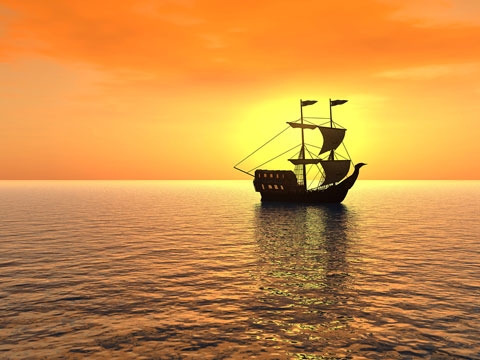
San Salvador
The above prayer, recited in Latin and the first spoken in the Americas, was followed by the chanting of the Credo, the Te Deum, and many other prayers in thanksgiving. As the banners were unfurled, the admiral solemnly proclaimed, “In the name of Our Lord Jesus Christ…” He proceeded to claim the new land for his sovereigns, but not before first claiming it for his Divine Master, giving it the name San Salvador (Holy Savior).
The details in the above account of the first landfall of Europeans in the Americas are rather unknown in modern times. Historians have typically shied away from the Catholic aspects of Columbus’ journeys, either making passing mention or ignoring them entirely. Yet a reading of the writings of Columbus himself, along with the testimonies of his contemporaries, shows that the Catholic spirit permeated all aspects of life and was central to the mission of exploration.
While a detailed retelling of the events of 1492 and afterward is far beyond the scope of this article, we will examine the Catholic inspirations for the discovery, which are essential to understanding Columbus himself. Contrary to the opinion of many modern historians, and far from being a minor aberration, Columbus’ militant Catholic faith was the source of his greatness and influenced his every action.
Catholic Piety
All evidence shows Columbus was a man of deep devotion who took his faith extremely seriously. One of his contemporaries, Bartolome de las Casas, described him as a man of righteousness and deep piety:
“He observed the fasts of the church most faithfully, confessed and made communion often, read the Divine Office like a churchman, hated blasphemy and profane swearing, and was most devoted to Our Lady and to the seraphic father St. Francis. . .”2
These two devotions had many manifestations. The full name of Columbus’ flagship on the first voyage was Santa Maria de la Inmaculada Concepción (Holy Mary of the Immaculate Conception). During the return of the first voyage, when the ships were in danger of sinking, Columbus and his men vowed a pilgrimage to the first Marian church they came to, which they fulfilled in the Azores two weeks later. Upon his return to Spain, Columbus made a pilgrimage to the monastery of Our Lady of Guadalupe in Extremadura as a solemn act of thanksgiving.
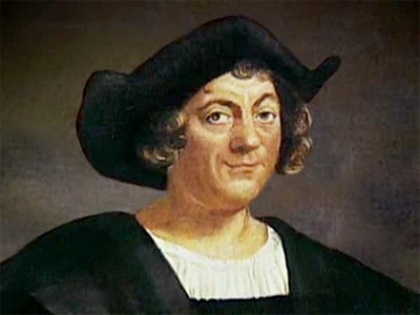 As a Third Order Franciscan, Columbus was often seen wearing the Franciscan habit. As a Third Order Franciscan, Columbus was often seen wearing the Franciscan habit. |
As a Third Order Franciscan, Columbus was often seen wearing the Franciscan habit, particularly when in the presence of clergy or nobility. His close personal association with the Franciscans was instrumental in securing contacts in the royal court, and provided much needed encouragement when it seemed the enterprise would never get the support it required. His son Diego remained in the care of the Franciscans at the monastery of La Rabida near Palos during the first voyage, where the friars took charge of his education. Upon his return to Spain, Columbus spent the summer of 1493 at La Rabida, preparing spiritually for the second voyage later that year.
After Columbus’ death, his second son Fernando would write of his father’s piety:
“In matters of religion he was so strict that for fasting and saying all the canonical offices he might have been taken for a member of a religious order. And when he had to write anything, he would not try the pen without first writing these words, ‘Jesus cum Maria sit nobis in via.’”3
This inscription is found in the majority of Columbus’ letters still extant. The literal meaning, “May Jesus with Mary be with us on the way” is a fitting prayer for an explorer, and could rightly be considered his motto.
Missionary Zeal
Scholars have been quick to point to the influence of Marco Polo’s Book of the Marvels of the World upon Columbus and his contemporaries, and rightly so. Yet the chapter which most influenced Columbus himself was the introduction. In it, we read of Polo’s father and uncle, Niccolò and Maffeo Polo, travelling to the Orient while Marco was still an infant. Their extensive travels eventually put them into contact with Kublai Khan, referred to in the book as the Great Khan. The Great Khan questioned them about life in Western Europe and the Catholic Faith, in which he took an interest. Upon their departure, he entrusted them with a letter to the Pope requesting 100 missionaries to instruct his kingdom in the Catholic faith, along with oil from the lamp at the Holy Sepulcher in Jerusalem. On the return of the Polos to the West in 1268, they discovered Pope Clement IV had died, and the long interregnum which followed prevented the Khan’s requests from being fulfilled.4
In his petitions to Ferdinand and Isabella over a period of 7 years, it was Columbus’ desire to fulfill the Great Khan’s request which finally persuaded the sovereigns to approve the journey. Aboard his flagship was a letter to the Great Khan from the king and queen, and Columbus went to great lengths in order to deliver it. In the prologue to the report on the first voyage, Columbus directly addresses this evangelistic mission:
“I had given [a report] to Your Highnesses about the lands of India and about a prince who is called ‘Grand Khan,’. . .how he had sent to Rome to ask for men learned in our Holy Faith in order that they might instruct him in it, yet the Holy Father had never granted his request, and thus so many people were lost, falling into idolatry and accepting false and harmful religions; and Your Highnesses, as Catholic Christians and Princes, lovers and promoters of the Holy Christian Faith. . . thought of sending me, Cristobal Colon. . . to see how their conversion to our Holy Faith might be undertaken.”5
 “He was extremely zealous for the honor and glory of God; he deeply yearned for “He was extremely zealous for the honor and glory of God; he deeply yearned forthe evangelization of these peoples and for the planting and flourishing everywhere of people’s faith in Jesus Christ.” |
Yet the mission to complete the Khan’s request for missionaries was but one aspect of Columbus’ desire to spread the Gospel. As Bartolome de las Casas wrote, “He was extremely zealous for the honor and glory of God; he deeply yearned for the evangelization of these peoples and for the planting and flourishing everywhere of people’s faith in Jesus Christ.”6 Upon his first encounter with the natives on San Salvador, Columbus concludes, “I recognized that they were people who would be better freed [from error] and converted to our Holy Faith by love than by force.”7
On six separate occasions, Columbus wrote to the Holy Father requesting missionaries be sent to the recently discovered islands, a request which was fulfilled. On January 6, 1494, the Feast of the Epiphany, the first Mass in the Americas was offered by a Benedictine who had accompanied the second voyage.
Five centuries after the fact, American Jesuit Fr. John Hardon would remark, “It is one thing to say that Columbus discovered America. It is something else to realize that he opened the door to the most phenomenal spread of Christianity since the time of St. Paul.”8
Crusader Spirit
A question arises from the modern reader: “What about the quest for gold?” As Columbus makes clear in his log, the finding of gold, spices, and other valuables is central to his mission, but not for the reason most are taught.
On December 26, 1492, Columbus had established a makeshift settlement named La Navidad on the north end of the island of Hispaniola from the wreckage of the Santa Maria, run aground on a reef. Seeing the hand of Divine Providence, he then proceeded to write of his desired result:
“I hope to God that when I come back here from Castile. . . I will find a barrel of gold, for which these people have traded, and that they will have found the gold mine, and the spices, and in such quantities that within three years the Sovereigns will prepare for and undertake the reconquest of the Holy Land. I have already petitioned Your Highnesses to see that all the profits of my enterprise should be spent on the conquest of Jerusalem, and Your Highnesses smiled and said that. . . even without the expedition they had the inclination to do it.”9
Now that Spain was finally free from Muslim domination (Jan. 2, 1492), the great desire to take the fight to the enemy and complete the liberation of the Holy Land could finally be completed. By sailing west, Columbus was aiming to outflank Islam, gaining access to the riches of the East so as to finance the retaking of Jerusalem. Since the fall of Constantinople in 1453, while Columbus was still a child, calls had come from all corners of Europe to renew the Crusade. Columbus saw himself as the instrument to fulfill the longed-for end.
In a letter to Pope Alexander VI, Columbus reiterates the seriousness of his intentions:
“The enterprise must be undertaken in order to spend any profits therein for the redemption of the Sepulcher and the Temple Mount unto Holy Church.”10
Historian George Grant succinctly concludes, “Clearly, the motivations of Columbus were shaped by the eons long conflict between Christendom and Islam. The evidence is inescapable. He sailed, not to discover a new world, but to find a way to recover the old one.”11
Our Great Debt to Columbus
The events of 1492 and afterward could have transpired far differently. The richest nation in the world at the time was China, followed by the Islamic caliphates which stretched from Morocco to the edges of the Far East. Why didn’t the Chinese expand their empire to the east across the Pacific? Why was it not a Muslim who established lasting contact between the continents? For that matter, why was it not an Indian who discovered Europe?
Modern historians are at a loss to answer these questions, and conclude that it was simply by chance that events unfolded as they did. This hardly explains the fact that Spain was the poorest nation in Western Europe at the time, bankrupt from its completion of the Reconquista. Yet not only did Spain successfully go about colonizing and evangelizing the Americas, it also kept the Muslims out of the Americas. Had Islam spread to the Americas in place of Christianity, what we know today as the United States could very well have been the United Emirates.
Columbus believed he was specially chosen by God to bring the Gospel to a people who were living in darkness and the shadow of death. He believed his given name, Christopher, signified the mission he was destined to carry out, as his son Fernando would later explain: “Just as Saint Christopher bore Christ over the waters, so too was he to bear the light of the Gospel over the vast oceans.”12
In conclusion, spreading the Catholic faith and acquiring riches so as to finance the retaking of Jerusalem from the Muslims were at the heart of Columbus’ mission. Any hopes of personal rewards or honors were secondary. In writing the royal treasurer of Spain at the completion of the first journey, he gives the reason all people, present and future, should celebrate what would come to be known as Columbus Day:
“And now ought the King, Queen, Princes, and all their dominions, as well as the whole of Christians, to give thanks to our Savior Jesus Christ who has granted us such a victory and great success. Let processions be ordered, let solemn festivals be celebrated, let the temples be filled with boughs and flowers. Let Christ rejoice upon earth as he does in heaven, to witness the coming salvation of so many people, heretofore given over to perdition. Let us rejoice for the exaltation of our faith, as well as for the augmentation of our temporal prosperity, in which not only Spain but all Christendom shall participate.”13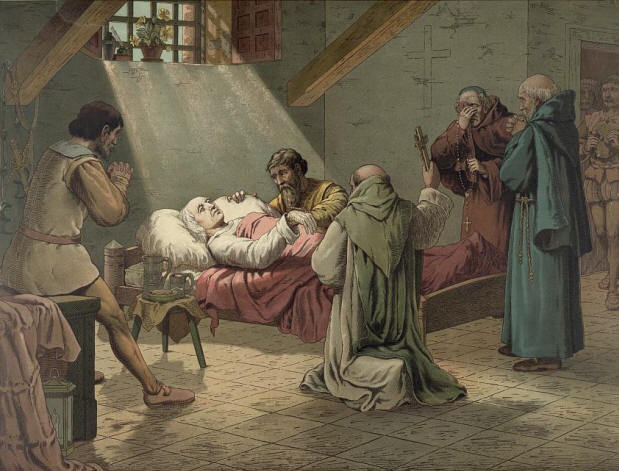
Five Myths About Christopher Columbus
- MYTH: Columbus was sailing to prove the world was round.
FACT: Every educated person at the end of the fifteenth century knew the earth was a sphere, a fact known since antiquity. What was in dispute was the earth’s circumference, which Columbus underestimated by one-fourth.
- MYTH: Queen Isabella sold her crown jewels to finance the first journey.
FACT: The royal treasury of Spain was depleted after the completion of the conquest of Granada early in 1492. However, Luis de Santangel, the royal treasurer, was able to secure funding by reaching out to the Crusading societies throughout the Mediterranean, as well as other financial backers from Spain and elsewhere. The crown put up very little to finance the journey.
- MYTH: There was a priest on board the Santa Maria in 1492.
FACT: Because of the dangers involved, there were no priests or friars on the first voyage, despite the deep piety of Columbus. Many of the paintings of the first landfall in the new world on San Salvador show a priest with Columbus—contrary to the facts. There were five priests on the second voyage: Benedictine Father Buil; the Jeronymite Father Ramon Pane; and three Franciscans.
- MYTH: Columbus introduced slavery to the New World.
FACT: Slavery was already widespread among the native Indians when Columbus arrived. Columbus was insistent on the fair treatment of the Indians, a policy which gained him many enemies as governor of Hispaniola. Bartolome de las Casas, a Spanish friar who worked for the protection of the Indians, is quick to excoriate his fellow Spaniards in their grave abuses, but is filled with nothing but respect and admiration for Columbus. The mass subjugation and importation of Africans to the Americas did not begin until a generation after Columbus’ death.
- MYTH: Columbus died a pauper, in chains, in a Spanish prison.
FACT: Despite the fact that the Spanish crown retracted some of the privileges promised to Columbus, he was relatively wealthy at the time of his death. Although he returned to Spain in chains in 1500 after his third voyage, the King and Queen apologized for the misunderstanding and had them removed.
On May 20, 1506, the Vigil of the Ascension, Christopher Columbus lay on his deathbed in his apartment at Valladolid, surrounded by his fellow Franciscans and his sons. As the friars chanted Compline, his last words echoed those of Christ on the cross: In manus tuas, Domine, commendo spiritum meum. (Into your hands, O Lord, I commend my spirit.)
Notes:
1. Irving, Washington. A history of the life and voyages of Christopher Columbus. Paris: A. and W. Galignani, 1828. 237.
2. Grant, George. The Last Crusader. Wheaton, Illinois: Crossway Books, 1992. 85.
3. Columbus, Ferdinand. The life of the Admiral Christopher Columbus by his son Ferdinand. 1. Madrid: 1892. 14-15.
4. Polo, Marco. The Travels of Marco Polo. Project Gutenberg, 2004. 11-14. http://www. gutenberg.org/cache/epub/10636/pg10636.html.
5. Marckham, Clements Robert, ed. The Journal of Christopher Columbus. London: Chas. J. Clark, 1843. 16-17.
6. Miller, Kevin A. “Why Did Columbus Sail?” Christian History. Oct 1992: 6.
7. Marckham, Clements Robert, ed. The Journal of Christopher Columbus. London: Chas. J. Clark, 1843. 37.
8. Hardon, SJ, John. “Christopher Columbus, the Catholic.” Fr. Hardon Archives. Inter Mirifica, 2003. Web. 27 Jun 2012.
9. Markham, Clements Robert, ed. The Journal of Christopher Columbus. London: Chas. J. Clark, 1843. 139.
10. Grant, George. The Last Crusader. Wheaton, Illinois: Crossway Books, 1992. 67.
11. Grant, George. The Last Crusader. Wheaton, Illinois: Crossway Books, 1992. 69-70.
12. Columbus, Ferdinand. The life of the Admiral Christopher Columbus by his son Ferdinand. Vol. 1. Madrid: 1892. 6.
13. Columbus, Christopher. The first letter of Christopher Columbus to the noble lord Raphael Sanchez announcing the discovery of America. Boston: Trustees of the Boston Public Library, 1891. 16.


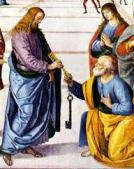 re are rules that govern how to name someone. The meaning of the name is paramount, as it tells something about the new identity of the individual and the covenant God is entering into with him. So at Caesarea Philippi, Jesus follows this same pattern, and any good Jew would recognize what was happening. They had just come back from a tremendous trip where everybody was praising Jesus and was excited about him, and he asks them whom the people say that he is. When they responded by some saying “some say John the Baptist, others say Jeremiah one of the other prophets” He asks them “but who do you say that I am?” You can almost hear the silence in the group! It’s very easy for them to say what other people think but to say what they themselves think, that’s harder! Finally Simon speaks up and says “You are the Messiah,” the Christ – the word Messiah in Hebrew and Christ in Greek both mean “the anointed one.” Jesus accepts that and says to him, “Blessed are you Simon, son of Jonah, for flesh and blood has not revealed this to you but my father in heaven. And so I declare you are Peter” – he changes his name, and the meaning of the name, “rock” is significant – and on this rock I will build my church and the power of the netherworld will not prevail against it.” There’s the covenant. “And I will give to you the keys to the kingdom of heaven; whatever you loose on earth shall be let loose in heaven, and what you hold bound on earth shall be held bound in heaven.” There’s the commission. There is no doubt what Jesus was doing here with Peter: he was entering a covenant with him and giving him a commission and promising that he would be with him forever. Let’s look more closely at what Jesus promised Peter:
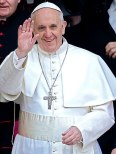 United States or just in France or just in Italy)