Here is the video from session three of our Catholic Basics refresher Course. The battery ran out toward the end, but it’s only missing about a minute or two.
Is America still the land of the free?
One of the greatest contributions of our founding fathers in their creation of the United States was that Americans would always be free to express our opinions publicly without being penalized for doing so. So important was this notion that it was enshrined as one of our fundamental freedoms in the Bill of Rights. In 21st-century America, however, it is now apparent that freedom of speech, once guaranteed by the First Amendment, will no longer be tolerated.
Last week Miami Dolphins safety Don Jones tweeted “omg” and “horrible” after seeing Michael Sam sharing a celebratory kiss with his male partner on national TV Saturday evening. In retaliation, the Miami Dolphins fined Jones, suspended him, and barred him from participating in any team activities until he underwent sensitivity training. One may not agree with Jones’ tweet, but whatever happened to his right to free speech? It is a dangerous development when certain individuals can choose to play thought police and decide to regulate what opinions others may hold. The Dolphins could easily have said, “While we respect Jones’ right to his opinion, his opinion does not represent those of the Miami Dolphins.” That would have been far more appropriate. Instead, they sent out a message that those who don’t believe what they do are to be punished and their thoughts are to be forcibly changed until they conform to their own. Is this the United States of America or a totalitarian dictatorship? Fanatical extremists punish others for not sharing their beliefs, not Americans who cherish freedom.
 All Americans should cringe at the very serious precedent that the Dolphins have set. Those in favor of gay marriage may at the moment find great joy in the way Jones was punished for his statements, but what would happen if the growing trend toward acceptance of gay marriage should suddenly reverse itself? Suppose down the line people start defending traditional marriage more and more, and it becomes once again unacceptable to embrace gay marriage. Will someone who tweets that he’s in favor of gay marriage be willing to be fined, be publicly forced to apologize for his statements, and be sent for sensitivity training until he accepts traditional marriage? And how about other issues? Are we now all to be afraid to tweet, post, or say anything for fear that there will be retribution by someone above us simply because our opinions differ from theirs? I hope everyone sees the very serious danger this development poses to American society. It in fact erodes the very fabric of the Constitution and our American experiment in liberty. When Americans cannot express their opinions freely without punishment, the United States has ceased to be the land of the free.
When Tim Tebow would bow down for a moment of thanks to God after a play that went well, critics all over the place slammed him, and all sorts of negative comments were made about him and his public expression of faith. If Michael Sam has the right to his public expression of love for another man, does not Tim Tebow have the right to public expression of his love for the man Jesus? Or should Tebow’s critics now be fined, suspended, and sent for sensitivity training until they accept and agree with his belief in Jesus? If Don Jones is to be reprimanded, then so must anyone who publicly criticized Tim Tebow. You can’t have it both ways.
We as Americans have always treasured the right to disagree with others, and our toleration of differences and our respect for others’ opinions is one of the concepts that has made America strong and free. Take away that cherished American right and we will no longer be “the land of the free” but “the home of the enslaved.”

Catholic Basics Refresher Sessions video, week two
One of my blog followers made a request of me. He said that, since he does not live in the New York area and cannot physically attend my Catholic Basics Refresher Sessions, could I video them and post the videos on my blog. I am happy to oblige! Sorry I don’t have session one recorded, as the request was made after it was completed. I had to break the session up in several segments in order to get them to upload. They are a little dark because of the projector. Next week I’ll see if I can correct that with better lighting!
It may take a few minutes for the video to start running. But please be patient! It will eventually run!
Fr. Carrozza
Catholic Basics Refresher Course
From Friday May 9 – Friday, May 30th, I will be offering a refresher course on Catholic basics at 7:30 PM each Friday night in St. Ann’s Chapel. This is intended for regularly practicing Catholics to brush up on our fundamental beliefs, for those who have been away from their faith but would like to explore coming back, for those interested in becoming Catholic, and for anyone curious about Catholic beliefs. There is no fee to attend, no registration, and no commitment; it is open to everyone. If you live nearby Yonkers, come join us for these four sessions on the Fridays of May from May 9th-30th at 7:30 PM in St. Ann’s Chapel.

Join me on a pilgrimage to Italy!
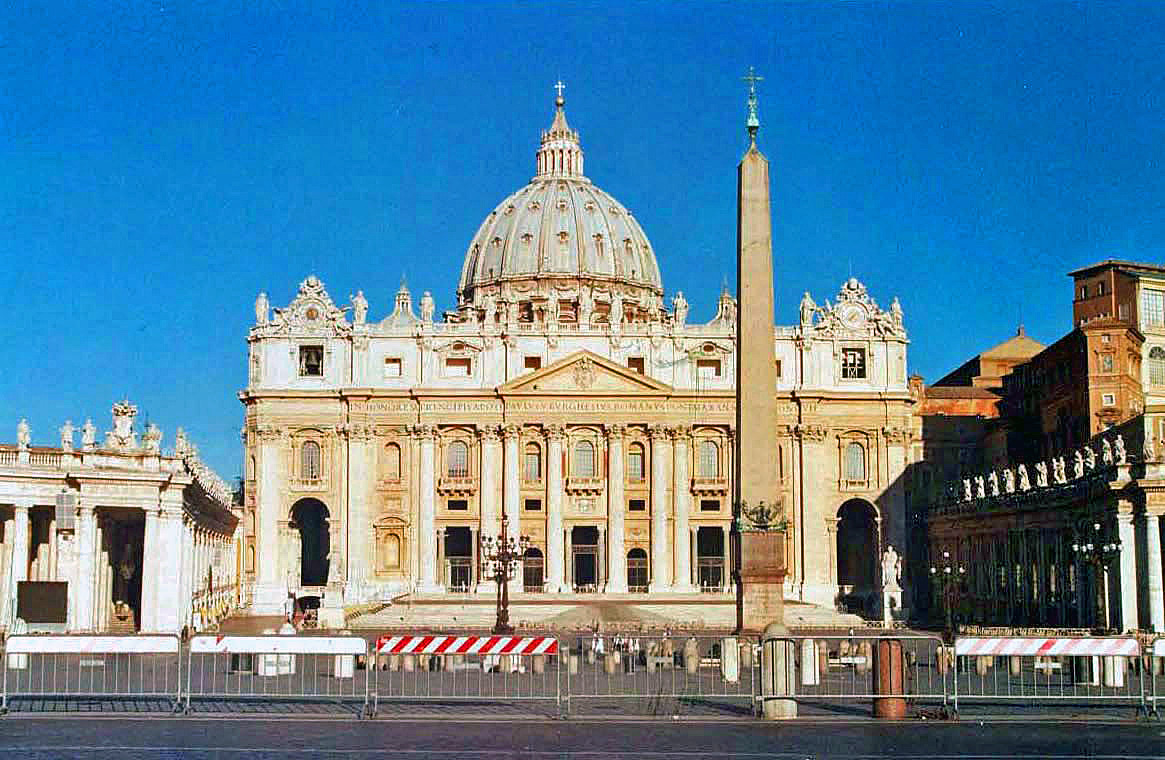
In July, 2015, I will be leading a pilgrimage to Italy entitled “Saints for Changing Times.” Our pilgrimage will visit several holy sites in Italy focusing on some of our medieval saints who helped steer the Church through the changing times in which they lived, such as St. Francis of Assisi, St. Anthony, St. Dominic, St. Thomas Aquinas, St. Clare, and St. Catherine of Siena. Our journey will take us to Venice, Padua, Bologna, Florence, Siena, Assisi, and Rome. It will include a papal audience at Castelgandalf
o, the Pope’s summer residence (pending the Holy Father’s schedule) , which is located on the brim of an extinct volcano that is now filled in by the Lago di Albano, a breathtaking view! The journey will be from July 7-18, 2015. You may click the link below to view the brochure, and you can print it and send in your application directly from the link. I’d love to have you join us next summer in our Pilgrimage to Majestic Italy!
Click here to view the Pilgrimage Brochure.
“I’ll never forgive him for what he did to me!”
 Let’s face it: we’ve all been hurt in life, often in little ways, sometimes in big ways, but we’ve all been hurt. And it stinks! It’s lousy, it’s painful, and it’s not right, but it’s the world we live in. Sometimes we feel we will never forgive somebody for what they’ve done to us, and it is certainly understandable that we would feel that way, especially when we’re in pain. But when the pain starts to subside and we think clearly, we realize that forgiveness is the only means to restoring peace in our hearts. If we continue to hold onto the pain of a wrong that someone has done we will never find peace. No one can change anything that’s happened in the past even if we want to, but when we don’t let go of the past we let the pain of the past continue to harm us in the present and the future, and we are forever victims of the harm. Instead of finding peace, we end up living as victims each and every day.
We know we should forgive people, but sometimes we think forgiving them kind of gives them the upper hand, that maybe they’ve made us into a chump by forgiving them. Maybe we think not forgiving them gives us the victory and ruins them. But it really doesn’t; it only harms us! Actually, forgiving somebody is the way that we have the upper hand in the situation; by taking the high road we win in the long run. Imagine this: suppose I do something to hurt somebody really badly and I know it and I go to them and ask for forgiveness and I’m big about it. I don’t make any excuses, I don’t try to say I was in a bad mood or I was cranky or anything like that. I say to them, “I did something to hurt you and I was wrong and I am sorry for that; will you forgive me?” Hopefully the other person will say yes, in which case we can make amends and move on with the friendship that we’re meant to have. But suppose the other person says no, suppose they say, “No, I will never forgive you for that!” Well, I can at least say in my heart that I tried to do what was right I did the right thing. I went to them and I apologized. I’m sorry for them that they could not find it in themselves to forgive me, but I can move on and leave it in the past and will have peace, but the person I hurt will continue to allow what I did to harm them into the future. No one can change the past even if we want to. We cannot go back and change something we’ve done. It is therefore healthy for us and even necessary to forgive other people who harm us.
But what exactly does it mean to forgive somebody? Let’s talk about what it doesn’t mean: it doesn’t mean I always just forget about it and pretend it never happened, especially if it was something with serious consequences. Sometimes we do have to remember that something happened, but forgiving them means that we realize that they are weak human beings like ourselves and just as we fall sometimes and do wrong things, so are they, and we’re not going to hold them to a higher standard than we hold ourselves. Forgiving others also does not mean that we pretend somehow it was all our own fault, that we must’ve said or done something to make that person react that way. Maybe there is truth to that, but not always. Sometimes we’re perfectly innocent of saying or doing anything, and the harm that was done to us was totally unprovoked. It does mean to say “I understand that you are weak like me and I forgive you because we all need forgiveness every now and then.
Hopefully if somebody does come to us and ask us for forgiveness we will always say yes to them. But what happens if somebody never comes to us for forgiveness? What happens if the person doesn’t realize or will never admit that they’ve done anything to harm us? Or suppose the person who harmed us has long since passed away and could not come to us even if they wanted to? Well, this is what I always do: I bring it into prayer and I say, “Lord, if that person ever comes to me and says, ‘listen, I’m sorry for what I did to you. It was wrong of me; will you forgive me?’ then of course I would forgive them on the spot, and if they never ask me in life they will have to one day stand before you in judgment, and they will realize then that they have harmed me, and when they realize at that point that they need my forgiveness, help them know that I forgave them a long time ago!” That gives me so much peace, to be able to move on and have healing for the times in life that people have hurt me, even if they see no reason to apologize whatsoever. You never know! You might get someone to apologize to you even many years later. That happened to me once. Somebody who had harmed me big time repeatedly when we were young and with whom I had lost contact searched for me online and many years later finally found me and said, “listen, when we were kids I was really mean and cruel to you, and I’m sorry for everything that I ever did to you. I hope I didn’t hurt you too much, but can you forgive me?” I was able to tell this person that I did forgive him and that I have forgiven him a long time ago. I found peace many, many years ago. But I wonder if this person had been holding onto the guilt for all this time. Was this the first moment that he finally found peace for what he had done to me when we were kids? If that’s true, I’m glad at least he finally found it. But you see, I was able to go through my life with peace, leaving the harm in the past, and this other person may have been carrying the pain for all of these years. Now this doesn’t always happen; there are many people who have harmed me that have never apologized, and I am certain there are people whom I have hurt to whom I have never said I was sorry. But I ask God always to help anyone whom I have ever harmed to know I am sorry, and to please see that they are not forever hurt by my carelessness. That, too, gives me peace!
So when somebody harms us, were only hurting ourselves by not forgiving them. If they ask you for forgiveness, always say yes. If they don’t, pray and say, “Lord, if there ever comes a time when they realize they’ve hurt me and they need my forgiveness, help them know that I freely grant it. In this way, we can have peace in our lives. And of course if we have harmed somebody else and need to ask their forgiveness, then remember to apologize and make amends so that we may heal. If we withhold forgiveness we hold on to anger, which embitters us and cannot give us the peace that we look for in life. Refusing to forgive only makes us bitter. So forgive as God has forgiven you; that is the path to peace!
“A poem, by Fr. Carrozza”
Since it is National Poetry Month, I’ve decided to post one of my old poems. I write a poem every Christmas to include with my Christmas cards. This one was sent years ago.

The Price of Love
One night a man came home from work
disgusted from his day.
His daughter ran to greet him
and his anger died away.
Her smile was oh, so delicate!
her childlike ways so pure!
His waning joy rekindled
as he raised her from the floor.
“If everyone could be like you
the world would be much kinder!
Why must we have such misery
and pain?” He stopped to wonder.
Then, drink in hand, he settled down
to watch the evening news.
His daughter snuggled with him
as the talk shows aired their views.
One host after another
spoke of pain, of tragedy,
of graft, corruption, vice and greed,
deceit, duplicity.
“Where is this mad world headed?!”
he screamed out in great despair.
“Where is this God they talk about?
How come he does not care?”
Just then, into his living room
walked Jesus, calm and meek.
He sat down on the sofa
and he stroked the young girl’s cheek.
He asked her father, “Why such fear?
Why do you feel despair?”
“Because you have abandoned us!”
he said. “You do not care!
You say you love us, but you lie!
We cry out, but in vain.
If you’re so good, why do we suffer?
Why not stop the pain?”
“My son,” said Christ, “I want to
but you never follow me.
You refuse to do things my way,
thus, you cause your misery!
What causes most of your distress?
Is it not people’s sin?
You’re hurt by other people’s wrong;
from you sorrows begin!
I’ve shown the way, I plead with you
but you refuse to see.
So maybe I should ask you
why you let these evils be.”
“We’re weak!” he said. “We’ll never change.
You know we cannot win!
Why not force us to follow you?
Make sure we cannot sin!”
“Because,” said Christ, “If I did that
I’d be forcing your love.
Love must be given freely,
not coerced with mighty shove!
If I truly love you, then
you must be free to turn from me.
For if I forced your love
it would be meaningless, empty!”
“That sounds so sweet, but let’s be real!
Let’s call a spade a spade!
How would you know what suffering is?
You’re God! You’ve got it made!
You don’t know what it’s like to starve,
be hated or ignored!
What did love ever cost you, huh?
what pain have you endured?”
Just then the child, who’d nodded off,
awoke, and as if planned,
look up at Jesus, shrieked, and said:
“Sir, what happened to your hand?”
No hypocrites need apply!

There are many reasons why people say they do not attend Mass anymore. Among the reasons they quote, one is their perceived hypocrisy of Catholics who worship faithfully. They accuse Catholics of being all talk and no action. Sometimes of course these accusations are unfair and reveal more about the mindset of the person making them than the Catholics they are attacking. Many times the person making this accusation is being self-righteous and sanctimonious, just like the young man in Dostoevsky’s novel who clearly sees through the hypocrisies in his society. Dostoevsky titled the work, “The idiot”.
But sometimes the accusations are spot on! Sadly, there are many Catholics who are very bold in what they say and what they do at mass and wear flashy religious items for people to see, but whose actions betray them to the point that people might say, “if that’s what being a Catholic is all about, I want no part of it!” As Catholics the worst thing we can do is be hypocritical. We cannot simply talk about how much we love God without actually doing it. Pope Francis is certainly showing us that in teaching us to be concerned about the needs of the poor and looking out for other people. Many times, though, the hypocritical situations have nothing to do with the social justice teachings that we lack but simply the courtesies and the common charity that are missing in our relationships with friends, coworkers, and family members. I am amazed sometimes when I watch what quarreling spouses will do to each other. These are people who once promised to love each other for the rest of their lives and for whom the other person is supposed to be the most important person in their lives, and the mean, vindictive, and downright cruel things that sometimes they’ll say and do to each other is deplorable. People who give a lot of money to poor people in foreign lands but who treat their loved ones like garbage are not fooling anyone. Others will see right through us and only see a phony.
We are hardly being a good example of Christ to others if we are not loving those around us and if we are not trying each and every day to be the best person we can be. To put it simply, our faith is not just for an hour on Sunday. We will impress no one by our prayer on Sunday if we forget about it on Monday.
Are we trying to live as intentional disciples of Jesus? Are we going about each and every day trying to be the people that Christ wants us to be? Are we intentionally working to be people who bring Christ to everyone we meet and who live the gospel each and every day, for whom faith is not merely a creed we follow but a way of life? If we are not actively and consciously working at this each and every day, then the clear answer to us is “no, it is not!” Honest people will forgive us our shortcomings and sins, but they will not forgive hypocrisy. The world doesn’t need a lot of hypocrites. The world doesn’t need a lot of people going around telling God how much they love him; the world needs people who tell God they love him and show it by their love for one another, whether it be the poor, people in foreign countries who are in need, or the people in our own families, our neighborhoods, our schools, and our workplaces. Christ’s love extends to everyone and no one is outside the reach of his love, especially those closest to us. If we wish to truly be effective Christians who lead many people to Christ, there is no escape from loving one another as Christ has loved us.
How do I get someone who has stopped going to Mass to return?
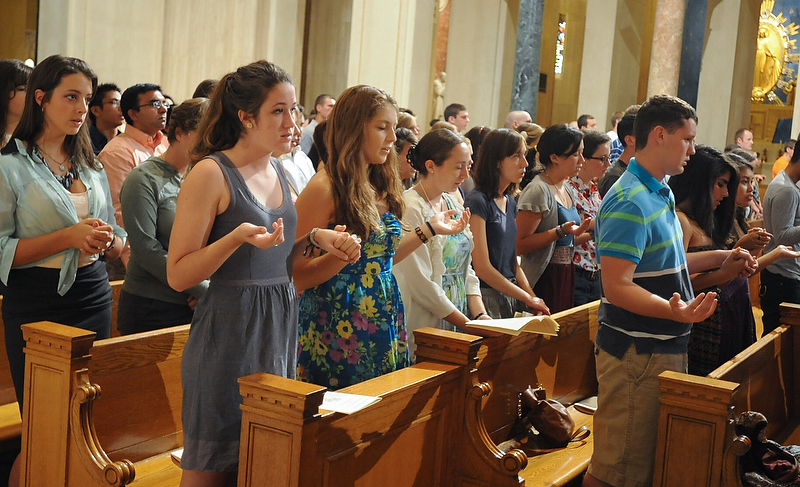
A common question I receive from many people is how to get their loved ones who stopped going to church to attend church again. This is especially true from parents of adult children who lament the fact that they brought their children to church every Sunday and taught them to be faithful to Christ and follow everything the church teaches, and often the children not only don’t go to church but don’t even bother to have their grandchildren baptized. They ask me, “What can I do to get them to return to church?” There is of course no easy answer to this question and certainly no one answer that would settle all situations. It’s almost easier to say what we should not do rather than what we should do. One thing I always remind people that is never going to work is nagging people. You know very well for, for example, that parents with teenagers, if you nag them and nag them, you can guarantee you’re going to make sure they never do what you asked them to do. The same thing can be said of grown children and anyone else who leaves the faith. There will be many different reasons why people have stopped worshiping. Some people are perhaps disillusioned, others maybe have problems with things we believe, and for many others it’s just not important enough to them. But in the past it seems to me that our approach has often been to harp on people and to be negative, to try to convince them that they’ll go to hell if they don’t worship God or threatening them with harmful things that will happen to them, that God might even punish them for not attending Mass. Or we may point out their faults and try to get people to start attending because we tell them that they’re not good enough people. Yet such an approach rarely works well.
Whenever we put people down, we tend to treat them as less than ourselves. We place ourselves in a superior position and condescend to them as if somehow we are better and we’re going to help them be as good as we are. That often can come across rather pharisaical and insulting to the individual. Instead, I suggest witnessing to them about the difference that faith makes in our own lives. Letting people know why we worship God and what we get out of being disciples of Jesus is a far more powerful way to convince people to worship than to tell them why we are better than they are or why they are sinful because they are not doing what we do. As the old expression says, “you catch more flies with honey than with vinegar!” If people see us living a life in Christ that has made a difference; if they can see that our worship has made us better people, has given us a happiness in life that they don’t know or that they would like to know, then perhaps we will bring them closer to the Lord. Leading them by desire rather than by force is certainly a better way to bring them into a faithful relationship with the Lord. We also have to be intentional disciples; we have to be living out our faith and desiring to bring Christ to other people so that they can see by our love and our actions the difference it makes, so that we are a living example to them of how faith works and how it makes a difference and is a positive attribute in our lives. Writer Madeleine L’Engle observes: “We do not draw people to Christ by loudly discrediting what they believe, by telling them how wrong they are and how right we are, but by showing them a light that is so lovely that they will want with all their hearts to know the source of it.” I often feel that in the past our approach has been all the wrong way and has turned more people away from Christ than towards him, even though our intentions were very good. Be the light of Christ; show him to the world in your words and actions. Let people see the difference Christ has made in our lives by our conscious decision to follow him, how he has given us strength to endure even the most difficult of situations and come out unharmed, and they will be compelled to want to join us as well.
Get away from that apple! Eat it and die!!!
Question: What was really going on in the Garden of Eden? I can’t believe God would actually condemn Adam and Eve just for eating an apple from a forbidden tree!
 Answer: Your instincts are correct. There was more going on in this story than meets the eye. First, let’s look at what God created: He created Paradise – a perfect world, and he basically told Adam and Eve that it would remain perfect as long as they followed what was true, in other words, to do what God told them: “Follow me, and you’ll be fine!” What was the name of the tree they could not eat from or even touch lest they die? It was the Tree of the Knowledge of Good and Evil. Whether or not it was an actual tree or simply a metaphor really doesn’t matter. What matters is what God was telling them. In effect, he was saying, “Don’t try to decide for yourself what is right and what is wrong. You can be wrong; I cannot! I am all Goodness, all Beauty, all Truth. I am perfect; you are not. Listen to me and do what I tell you and everything will be perfect.” But Satan, in his war against God, decided to try to get back at God by harming us. He knew that it would hurt God tremendously to see his children suffer. Any parent will know that feeling. It is far worse for a parent to watch their child suffer pain than to suffer that pain themselves. So Satan starts with a lie: “Did God really tell you not to eat the fruit of any of the trees in the garden?” Eve answers correctly: “We may eat the fruit of the trees in the garden; it is only the fruit from the tree in the middle of the garden that God said, ’you shall not eat of it or even touch it, lest you die.’” God was not forbidding them pleasures. Some people like to think that if we are enjoying something it must be sinful. (Harold Camping used to say that.) There are many legitimate pleasures that God gives us to enjoy. He is not trying to make our lives miserable.
Satan then drops the big temptation: “You surely will not die! No, God knows fully well that the moment you eat of it you will be like God yourself, knowing right from wrong!” In effect he was telling Eve that God was the one being deceptive. The only way God could keep them under his control – so said Satan – was by telling them not to follow their own hearts and minds. If they did, they would no longer need God. He successfully convinced them that God was the liar, that he was merely trying to control them and keep them from breaking free from under his power. So they ate the fruit – they listened to their own minds and hearts and not to God. And with that “their eyes were opened” and did they discover that they knew right from wrong on their own? No! They saw that they were naked! They saw their shame. And Satan didn’t respond by saying, “Gee! I thought they’d know right from wrong! I guess I was wrong!” Of course not! He knew very well what the result would be. By disobeying God they gave Satan his entrance into the world – and that’s why we have all the evil we do in this world! Original Sin brought it in!
Now, how many times do we hear people say, “Why do you think you have to listen to everything the Church teaches or parrot every word the Pope says? You have a brain; think it out for yourself!” (I actually had someone ask me that very question once at a wedding!) What are they telling us to do? They are telling us to commit Original Sin all over again! Our hearts and minds are not infallible. You and I can be mistaken, and just because we feel it or think it doesn’t make it right. Only God’s word is truth. Therefore, those who tell us that God’s teaching through the Church is wrong because “they don’t feel there’s anything wrong with it” are committing Original Sin all over again! They are buying the devil’s lie; they sucked it in hook, line, and sinker!
What we see from this is that God’s law is not subjecting us to him; that was Satan’s lie. Rather, God’s law is freeing us from error. It is the truth that we can follow with confidence. God’s way is not always the easy way, but it is always the right way. So, by following God’s law, we are not so much subjecting ourselves to him as sharing in his power! Sin enslaves; God frees! When we follow God completely, we are free from the errors of sin – we are truly free!
Jesus, the New Adam, reversed Original Sin by His total obedience to God. He showed us that obedience to God brings salvation, just as Adam showed us that disobedience to God brings suffering and death.
So the lesson we learn is simple: don’t try to decide for yourself what is right and wrong. Don’t merely follow what you think or feel because you can be wrong. Follow what God tells you at all times and you will truly be free!


