The True Presence of Jesus in the Eucharist. Do you believe?

As we prepare to welcome Pope Francis to New York at the end of the month, I would like to ask everyone to view this video about something he was personally involved with that is astounding: the Eucharistic Miracle of Buenos Aires. (I wrote about this in a previous post which you can view here.) This story gives tremendous strength to anyone whose faith in the Real Presence of Jesus in the Eucharist is doubtful. It is eight minutes long and very inspiring.

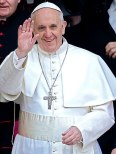
Pope Francis holds dove before his weekly audience at the Vatican

By the way, I will be one of the priests on CBS News in New York alongside Mary Calvi covering the Pope’s visit this month.

view the video on the Eucharistic Miracle of Buenos Aires here

Catholics and the Supreme Court’s decision on marriage “equality”: where do we go from here?

I’m sure many of you who are my devoted followers on this blog are eager to hear me discuss my reaction to yesterday’s decision by the Supreme Court. I wasn’t surprised at the outcome; in fact, I was kind of expecting it. After the Defense of Marriage Act was shot down the writing was on the wall for this decision. My opposition to allowing same-sex marriage or altering the definition of marriage hasn’t changed since the blog I wrote on Pandora’s box nearly two years ago. For details of that, please see that blog. Just click the link here:The Supreme Court and Pandora’s Box

But what has changed this time?

First of all, I find the language that was used to defend allowing same-sex marriage and overriding the laws of the states to be interesting. They kept referring to the definition of marriage as between one man and one woman only as “discriminatory”, “hate filled”, “bigoted”, and a host of other negative descriptions. But where did this definition come from? It came from God. Therefore, if we are referring to the definition of marriage as between one man and one woman as hate filled and discriminatory and bigoted then  we’re calling God hate filled, discriminatory and bigoted. In effect, yesterday the Supreme Court sat in judgment of God and declared God “discriminatory”, “hate filled”, and “bigoted”. I remember another Supreme Court that sat in judgment over God. That was the Sanhedrin in Jerusalem. Caiaphas and Annas and the Sadducees and all of their supporters sat in judgment of Jesus and accused him of blasphemy and they sent God to his death. The United States Supreme Court has done the same thing: they have sat in judgment of God and called him hate filled.

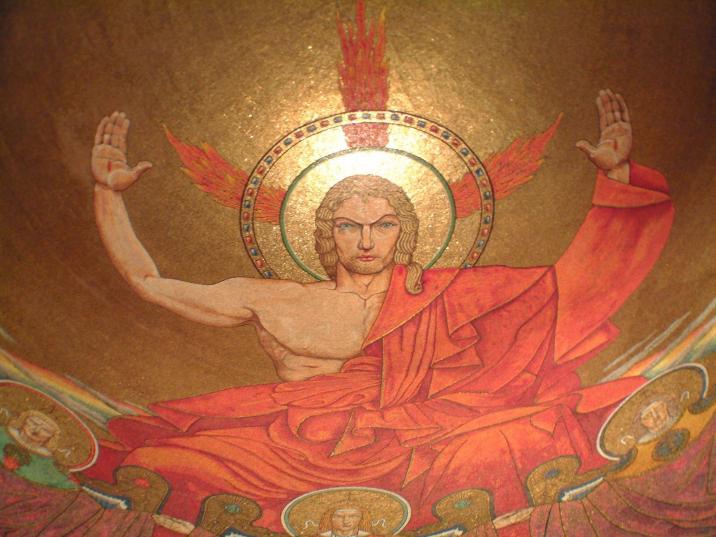
Christ in Majesty2

What is the good news? The good news for us is this: God has already won the victory! Every member of the Supreme Court and every politician and everyone who has been fighting to overturn God’s definition of marriage will have to stand before Christ in judgment when they die and they will hear Christ say to them, “I declared marriage to be between one man and one woman. Who were you to decide that my definition was hate filled?” I’d love to be able to be there that day to see what will happen.

The big question is, “Where do we go from here?” The final remaining question is whether or not the courts will try to force religions to perform marriages that violate their religious beliefs. If they do, they will be in clear violation of the First Amendment which states, “Congress shall make no law respecting an establishment of religion, or prohibiting the free exercise thereof.” We will then have every right to be in civil disobedience and open rebellion against the Court should that ever happen because it clearly will have violated the United States Constitution.

As for ourselves, however, while we may not be able to do much to change yesterday’s ruling or what happens in states throughout the nation, what we can change is how we respond to it. Many people have lamented to me about the world we’re leaving to their children and grandchildren. The best way we can protect them from not being affected by this is to teach them clearly from now to follow God and not the social mores of our time. The days of cultural Catholicism are over. We can no longer go with the flow and feel content just to say we went to church on Sunday and did our Easter duty. The time has come for us to be countercultural. It is no longer possible for us to go along with society and remain faithful to God. We must choose one or the other; either we will follow God or we will follow society. In many ways it can be a glorious time for us to be Catholics today, because we are following in similar circumstances that the ancient Christians faced. They had the awesome responsibility of converting the Roman Empire to the faith, and even though the Roman Empire used all of its might to try to fight the new faith, ultimately it embraced as its official religion the very faith that tried to destroy. We today, if we wish to win back our country need to do so by remaining firm ourselves in the faith by being truly dedicated to God not merely on Sunday but every day of the week, that we literally fall in love with Jesus, that we let our life revolve around him and his call to holiness and his truth and unashamedly and unhesitatingly reject anything that contradicts God’s call to holiness. When civil law disagrees with God’s law, God’s law trumps it, and we have an obligation to obey God and not man.

So my dear friends do not panic! Christ has won the victory and we are on the side of that victory. We may feel right now like our opponents have hit a grand slam and are now beating us ten to nothing, but hang in there! At the end of the game we are the victors! Do not jump ship and try to decide that we must change the teachings of the Church to be more popular and fit in with the rest of the world so as to win more people back, as so many people would like us to do. Jesus never called us to be popular; he called us to be faithful. Our job is to teach the truth whether convenient or inconvenient, whether in season or out of season, whether popular or unpopular. If people listen to us, wonderful! We will then have saved their souls. And if they don’t at least we have done our job, and when we stand in judgment before the Lord we will not hear the condemnation that Jesus certainly gave to Caiaphas and Annas and will give to anyone else who has sat in judgment of his law and called it hateful and discriminatory, but we will hear Jesus say to us “Well done brave and faithful servant! Inherit the kingdom prepared for you from the foundation of the world! As you bore witness to me in the world, so I bear witness to you before my father! Come share in my joy!” May Jesus Christ be praised!

What is the Purpose of the Church?

My St Peter's_edited-1Last week at our teen club meeting I asked a question of the teenagers, and I was a little surprised at the answers I got. I asked the question, “What is the purpose of the Church?” I got back a variety of comments such as to help people, to show people goodness, to teach the gospel, to show people to follow Jesus, but only eventually did I get the answer I was looking for: to lead people to heaven; to save souls. That is the purpose of the Church, and when I said it of course the kids agreed, but it wasn’t what they first thought, and it occurred to me that maybe that is the cause of many of the problems that we have today with people who either do not embrace the Church, do not follow it as fully as they should, or do not understand why we hold the positions we do. Because they don’t understand what the Church is all about, they don’t understand our insistence on certain teachings. This is not the first time that I’ve come across this.

Recently I had a phone conversation with a man who was rather angry because a layperson I invited to speak after Communion mentioned that gay marriage was wrong. He was furious with me because he thought that the Pope had allowed gay marriage when he said “Who am I to judge?” When I explained to him that that’s not exact at all what the Pope said he started giving me his diatribe of “Well, see this is why people don’t follow the Church any more. The Church insists on holding these unpopular opinions and the Church has to change and say what people want to hear if they want to get people to come. When I asked the man, “What is the purpose of the Church?” he couldn’t answer me. He actually said, “I don’t know!” I said to him, “So you really don’t know what the purpose of the Church is, yet you can be firm in telling me that the Church is wrong in teaching that gay marriage is not permissible.” He then just yelled some more insults at me and hung up. Don’t we need to know what the goal of the Church is before we can assert with force that the Church’s teaching is wrong? Sadly, many people have totally lost track of what we’re all about.

I recall a woman who once called me asking if I could do her wedding even though she needed an annulment.  She told me she knew that technically she needed an annulment. I said to her, “No, truly you need an annulment.” “Well, Father,” she asked, “can’t you just marry me anyway without it? The way I look at it God just wants me to be happy and marrying this man will make me happy so, why won’t you do it?” I tried to explain to her that she had it all wrong, that God doesn’t just want us to be happy. Jesus didn’t have to suffer and die on the cross to help us figure out whatever is going to make you happy and then do it; that was Original Sin! In fact he’s called us to quite the opposite: not just to listen to what you think is right and what you feel is right but to listen to and follow what God teaches us. That was the whole temptation from Satan. God had warned Adam and Eve not to try to listen to their own hearts and heads and what they think is right, because they can be wrong, but God can’t. Basically God was saying, “I am God and you are not. I am all-knowing, you are not. If you follow your own heart and mind you can be wrong, but I can never be wrong. So do and follow all I tell you and your life will be perfect.” Of course, they didn’t listen to God, and when they decided to choose for themselves what was right and wrong instead of listening to God they destroyed Paradise. When I told the girl on the phone this she didn’t want to hear it and abruptly hung up the phone on me.

But that’s the problem we’re facing: in so many situations people somehow got the got the idea that the Church is here just to make people happy. No, the Church is here to show people the way through a fallen world to return to what we lost by Original Sin. It was the disobedience of Adam and Eve to the will of God that lost that unity – that Paradise – that we once had. Christ, by his obedience to the Father even unto death, reversed the disobedience of Adam and Eve, and now, when we are obedient to him we allow him to lead us to union with him – which is what “going to heaven” means – to be one with God. Our beliefs are not arbitrary and they are not decided by vote or opinion but by the truth revealed to us by God and preserved through the Church, what we call the Deposit of Faith.”  Just because the majority of people don’t agree with it does not make it all of a sudden wrong, or because now a majority of people accept it doesn’t automatically make it in fact a means to union with God.

eating-junk-food-can-cause-weight-gainIf you want to have a healthy body, you know that you can’t eat junk food. Well, imagine if people were to say “We like junk food; therefore, we think we should be allowed to eat all the junk food we want!” Nutritionists are simply going to tell you you’re wrong, that junk food doesn’t make you healthy. They tell you you have to severely limit your intake of it, perhaps even avoid it all together. You don’t like it. You want to be able to eat all the junk food you want and still be healthy, but your opinion or desire doesn’t change the fact that junk food is not healthy. Even if nutritionists should decide to appease people and tell them, “Okay. Since you believe there’s nothing wrong with junk food and a majority of you feel that way, then we’ll now declare that junk food is good for you,” does that now make junk food healthy? Your opinion can’t change the truth. In just the same way, when God reveals that something such as gay marriage, contraception, abortion, whatever it may be, is not healthy for your soul and does not lead us into union with him, all the opinion to the contrary doesn’t change the truth that these activities do not make us healthy but are harmful to that union with God, which is the definition of a sin.

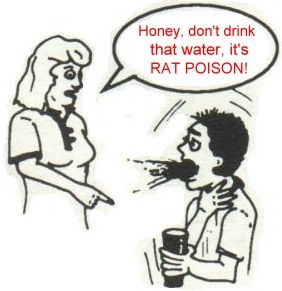
Moral teachings tell us what leads us to union with God (salvation) and what harms that union (sin). If we were to say that something that was once revealed as a moral absolute has now changed, that what was once sinful is now holy, that would imply that God had changed, and that’s a metaphysical impossibility! We know that drinking rat poison would kill us. For rat poison to now be good for us there would have to be a complete metabolic change in the very structure and essence of the human body. If 96% of people now believe rat poison is okay and we should now be allowed to drink it, that doesn’t change the fact. Opinions don’t change truth.

rat poisonIf a doctor should have a patient who was insisting that the doctor allow him to drink rat poison, if the doctor cares about his patient and is doing his duty, he doesn’t tell the patient drinking rat poison is healthy no matter how much he whines, pickets, petitions, carries on, or threatens to go to another doctor who will tell him it’s okay. Imagine if the doctor were to say, “Oh, I don’t want to lose any patients, so I’d better allow him to drink rat poison or he’ll leave me,” and he tells him it’s okay, what is the outcome? A dead patient! What would then happen to the doctor? He’d be sued for malpractice, lose his license, and probably be sent to jail as a killer! His duty is to counsel his patients only in the truth. If he tells them otherwise he would be held accountable for their death. If they guy refuses to listen to the doctor and threatens to leave him, the doctor can only say, “Well, you are wrong. Drinking rat poison is not healthy, and if you drink it you will die. You may choose to leave and find a doctor who will tell you it’s okay, but that doctor will not be teaching you the truth, and if you follow his advice, you will die!” In the same way, if the Church truly loves her members, she does not tell them it’s okay to do something that God has declared is sinful no matter how much they demand it. If we were to do that, the person would die in sin and we’d be responsible for their death. We cannot change the truth because people don’t like it, and we cannot change the teachings because people may choose to leave. We may only teach the truth.


And so, my brothers and sisters, if you feel concerned or confused about what the Church teaches and don’t understand one thing or another, remember that the purpose of the Church is not to be a social club. Our purpose is not to try to win in as many people as we can by promising anything that will make people join us. Our purpose is to save souls, and the only way we do that is by teaching the truth, by pointing out what is sinful and calling people to avoid sin and embrace what is holy. No opinion, no changes in popular acceptance of an idea can ever change that. To do the work of the Church means simply to preach the Gospel of Jesus, the good news that calls us away from sin and to union with him, and nothing else. Lies destroy and kill. Jesus came that we might have life and have it abundantly. That life is only found in obedience to the truth, the truth that will set us free.

i-am-the-way

You’ve been granted an interview with God!

interview-with-godImagine God were to tell you that he was giving you a five minute interview, and you could ask him or say to him whatever you wanted. What would you say to him? I’m sure some people would use the opportunity to present their laundry list of wants and demands to him, kind of like a child on Santa Claus’s lap, “give me this, give me that…” Others would assuredly decide to take God to task for everything he’s not doing right. They would proceed to chastise him for all the things he’s doing wrong, for all the evils he’s not ending, and telling him all the things they think he should be doing if he’s going to be just. I know what I would do: I would only ask him one question. I would say to him, “Lord, are you pleased with me?” I would then allow him to speak. I would listen to what he told me he was pleased with, and I would (hopefully) accept with humility the areas where he wanted me to change. But I certainly hope I would not waste precious time before God talking to him rather than listening to him. To me that seems to be one of the biggest problems that we often face in our relationship with God: we spend far too much time talking to God and not enough time listening to him. Samuel, when he heard the voice of God said to him “Speak Lord, for your servant is listening!” We too often say to God, “Listen Lord, for your servant to speaking!”

How much time do we spend listening to the Lord? Isn’t it a shame that we go to him talking and talking and very seldom listening to him? If a student were studying a sport or a musical instrument under a master teacher, would he spend all of the time telling the teacher how bad he is at his sport or his musical instrument? Would he constantly try to tell him how he could improve in his art, or would he sit and ask the master to teach him what he needs to do to be better at that sport or at that musical instrument? So it needs to be with us and God. Our job is not to dictate to the Lord how we think he should be running the world, but to turn to him and ask him what he wants us to do to make the world a better place, and to change my life so that I will be the person he has created me to be.

If we really want to know meaning in our lives we need to know God. Lots of times we come across people looking to “find themselves”. Whenever I’m talking with someone who says they need to find themselves, I always tell them “if you wish to find yourself, find God!” We need to know why we were made and what we’re here for in order to know that we’re fulfilling that function, and since we are all here because God wants us here, then we can only know true peace and contentment when we know what God wants us to do with the life he has given us. And that often comes not from talking to God but from listening to God. So my suggestion to all of us is, if you want to know peace, if you want to know contentment, if you want to know happiness and have meaning in your life, spend less time talking to God and more time listening to God. May our motto never be “Listen Lord, for your servant to speaking!” But rather “Speak Lord, for your servant is listening!”

Why Do You Catholics Pray to the Saints?

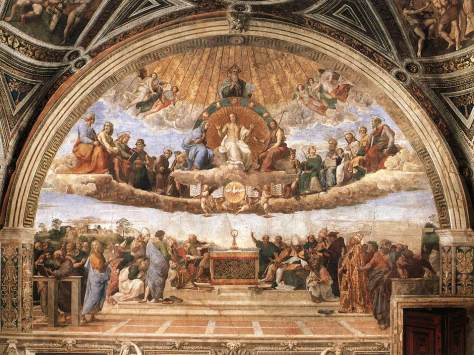
A common objection we receive from critics as well as people trying to understand the faith is why we invoke the saints. “Why do you Catholics pray to the saints?” they ask: “Why don’t you just pray directly to Jesus?”disputa1

I always respond this way: “Do you ever ask a friend to pray for you?” “Of course!” they respond. “Well, why do you pray to your friend? Why don’t you just pray to Jesus yourself?” No one who asks a friend to pray for them is for a moment implying that they’re asking the friend to pray instead of praying themselves; they’re asking their friend to pray along with them. And of course, no one is thinking that their friend is going to be the one who grants the answer to their prayers. Well, if we can ask friends on earth to pray for us, why can’t we ask our friends in heaven, the saints? It’s part of what we call the Communion of Saints, that the souls on earth, the souls in Purgatory, and the souls in Heaven are not separated from each other in such a way that we can’t be of assistance to one another when needed. Only the condemned souls in Hell are beyond our ability to help. Purely speaking, we don’t pray to the saints; rather, we pray through them, or we ask them to pray along with us. Saint Augustine once put it perfectly in a treatise against a man named Faustus that he once wrote:

“We celebrate the martyrs with love and fellowship.

“We, the Christian community, assemble to celebrate the memory of the martyrs with ritual solemnity because we want to be inspired to follow their example, share in their merits, and be helped by their prayers. Yet we erect no altars to any of the martyrs, even in the martyrs’ burial chapels themselves.

“No bishop, when celebrating at an altar where these holy bodies rest, has ever said, “Peter, we make this offering to you,” or “Paul, to you,” or “Cyprian, to you.” No, what is offered is offered always to God, who crowned the martyrs. We offer in the chapels where the bodies of those he crowned rest, so the memories that cling to those places will stir our emotions and encourage us to greater love both for the martyrs whom we can imitate and for God whose grace enables us to do so.

“So we venerate the martyrs with the same veneration of love and fellowship that we give to the holy men of God still with us. We sense that the hearts of these latter are just as ready to suffer death for the sake of the Gospel, and yet we feel more devotion toward those who have already emerged victorious from the struggle. We honor those who are fighting on the battlefield of this life here below, but we honor more confidently those who have already achieved the victor’s crown and live in heaven.

“But the veneration strictly called “worship,” or latria, that is, the special homage belonging only to the divinity, is something we give and teach others to give to God alone. The offering of a sacrifice belongs to worship in this sense (that is why those who sacrifice to idols are called idol-worshippers), and we neither make nor tell others to make any such offering to any martyr, any holy soul, or any angel. If anyone among us falls into this error, he is corrected with words of sound doctrine and must then either mend his ways or else be shunned.

“The saints themselves forbid anyone to offer them the worship they know is reserved for God, as is clear from the case of Paul and Barnabas. When the Lycaonians were so amazed by their miracles that they wanted to sacrifice to them as gods, the apostles tore their garments, declared that they were not gods, urged the people to believe them, and forbade them to worship them.

“Yet the truths we teach are one thing, the abuses thrust upon us are another. There are commandments that we are bound to give; there are breaches of them that we are commanded to correct, but until we correct them we must of necessity put up with them.”

The saints are our heavenly prayer partners, our role models, our heroes, but only God is our God! So by all means, invoke the aid of the saints! They help us by their example and their prayers to follow Christ.

Hey, you Catholics! This is 2014! You gotta get with it and change those unpopular teachings!


i-am-the-wayA comment we all frequently hear from people is that lots of people don’t accept the Church’s teaching on certain issues, therefore the Church should change them so that people will come to church again. They will claim, “This is 2014! The Church has to get with the times and change its teachings or more people will continue to leave!” We don’t at all like the idea that people are leaving, but what would it profit us to change the teachings just to keep people in church on Sunday? Recall what happened when Jesus revealed his teaching on the Eucharist and many people found it too hard to accept and no longer followed him (cf John 6). What didJesus do? Did he call out after them and say, “Wait a minute! Come back! You don’t like that teaching? Okay, I’ll change it. What do you want me to teach? Just tell me and I’ll teach that, as long as you stay with me!” No. Instead, with a heavy heart, he let them go. He was not happy that they would no longer follow him, but he could not change his message and the call to unity with himself and the truth he had come to reveal simply because people didn’t like it. Neither can the Church change a teaching just because it is not popular.

“But,” they may object, “if the message were more appealing, more people would come, and you’re never going to get certain people to come back as long as the Church holds that teaching!”  In other words, “give the people what they want and they will come!” I like to use this analogy:

I could fill our church every Sunday night with teenagers, young adults, and others who would never otherwise come to Mass. It’s very simple: give away free beer and show porn. First of all, I’d be arrested. But even if I weren’t, would that be doing anyone any good? Are we merely trying to count how many people are sitting in church on Sunday, or are we trying to bring them the call of salvation by fidelity to the teachings of Christ? I realize this is a drastic example, but it makes the point: anyone who would have us change the teachings just to get more bodies in the pews does not understand the call to salvation by avoiding sin and being formed in the image and likeness of Christ.

Yes, we should do everything in ourpower to be welcoming and acknowledge that even people who are sinners – as we all are – are welcome in church on Sunday and can have positive gifts to offer, which is what Pope Francis has been saying. But under no circumstances can we pretend that sin is not a sin just to make them happy. Our job is not to craft a popular message but to be consistent to the message of salvation by fidelity to the call of Christ. Only that can save people.

Suppose someone, tired of paying over $4 per gallon for gasoline, observing that water from the garden hose is far cheaper, decides he wants his car to run on water. He even gets 96% of car owners to agree with him, and petitions the car manufacturer to allow them to put water and not gas in the gas tank. All the opinion of those people doesn’t change the fact that the car doesn’t run on water. If the people complain that the car manufacturer lacks compassion and understanding of the people’s difficulties and keeps petitioning every new CEO who comes along to change the “law” and allow the car to run on water, does the manufacturer give in and allow it because the people want it? Of course not! Put water in your gas tank and your car will be destroyed! Similarly, when the Church clearly teaches that any given action (such as any sexual act outside of the covenant of marriage, abortion, etc.) does not lead to union with Christ but instead damages that union, no one’s personal opinion changes that. So anyone who advises us to ignore what the Church teaches and “follow their own hearts” is like telling people it’s okay to put water in the gas tank.

“Okay, but how about issues that do notseem to have moral relevance, such as women priests?” Some people are clamoring for the Church to readdress this issue. Well, Pope Paul VI did precisely that. He looked carefully at Tradition, at Scripture, and at previous magisterial teachings, and after extensive prayerful study, he defined in the encyclical Inter Insigniores that the Church does not possess the authority to admit women to the priesthood, and that this is a teaching that is part of the Deposit of Faith which must be adhered to by all. Pope John Paul II further defended and upheld this position in his encyclical Dignitatis Mulieris. Both Pope Benedict XVI and Pope Francis have upheld this, Pope Francis most emphatically so when in one interview he would not even address the question. He simply said, “No. That has been settled definitively.” The question is therefore settled; end of discussion. So those who are still clamoring for women priests are, quite frankly, throwing an ecclesiastical temper tantrum. Like a child who continues to cry and nag when a parent says no, trying to wear them down until they give in and give the child what he wants, so these people continue to cry and carry on, kicking and screaming in their tantrum. This is hardly mature behavior, and hardly what a disciple of Jesus is expected to do. While some issues are within the Church’s power to change (such as married clergy), others are not, such as women priests, gay “marriage”, abortion, contraception, etc. These have been definitively settled by the Church. So let’s end the temper tantrums, but in a spirit of love for the Lord and maturity of action, accept it and move on.

Remember that the Church’s purpose is not to be popular. We’re not battling other religions to see who has the most people in our pews on Sunday. Our commission by Jesus is to preserve what he has revealed to us and to faithfully teach everything he has commanded us and call people to salvation. Our job is to teach the truth whether people accept it or not. Yes, we will do everything we can to help people understandand accept Christ’s call to holiness, but we cannot change Christ’s teaching. That would betray our very reason for existence. going to heaven

On Popes and Babysitters: how are they alike?

When I was a little boy my father taught me a lesson I will never forget. Whenever my parents used to go out and leave us with a babysitter my father gave us the same speech: “she represents me! You listen to her as if you were listening to me!” Usually my brother and I were not much difficulty for babysitters, but there was one time where I was being a real buster and I made that babysitter earn every dollar my father paid her! I guess she gave my father a bad report about my behavior, because the next morning I heard about it from my father. Only instead of yelling at me he asked me something. He said to me, “Andrew, do you love me?” “Yes dad,” I responded, “of course I love you!” My father said, “No you don’t! If you loved me you would have listened to that babysitter. I told you that she represented me, that she had my authority, so by disobeying her you disobeyed me!” I never forgot that lesson. Anytime we disobey any authority over us we disobey the person who gave that authority to the person in command over us. The Church is no exception.

Jesus gave his authority to St. Peter in the famous passage from Matthew’s Gospel account where he says to him “you are Peter, and upon this rock I will build my church, and the power of the netherworld will not prevail against it. And I will give to you the keys to the kingdom of heaven; whatever you loose on earth shall be loosed in heaven and whatever you bind on earth shall be bound in heaven.” (Matt. 16:13-20) Jesus wasn’t just plucking this out of the air he; was following a classic formula from the Old Testament. Whenever God entered a covenant with someone, he blessed him and changed his name. Giving a name to someone was extremely important. Even our Jewish friends today who observe the traditional rites know that theJesus giving the keys to Peterre are rules that govern how to name someone. The meaning of the name is paramount, as it tells something about the new identity of the individual and the covenant God is entering into with him. So at Caesarea Philippi, Jesus follows this same pattern, and any good Jew would recognize what was happening. They had just come back from a tremendous trip where everybody was praising Jesus and was excited about him, and he asks them whom the people say that he is. When they responded by some saying “some say John the Baptist, others say Jeremiah one of the other prophets” He asks them “but who do you say that I am?” You can almost hear the silence in the group! It’s very easy for them to say what other people think but to say what they themselves think, that’s harder! Finally Simon speaks up and says “You are the Messiah,” the Christ – the word Messiah in Hebrew and Christ in Greek both mean “the anointed one.” Jesus accepts that and says to him, “Blessed are you Simon, son of Jonah, for flesh and blood has not revealed this to you but my father in heaven. And so I declare you are Peter” – he changes his name, and the meaning of the name, “rock” is significant – and on this rock I will build my church and the power of the netherworld will not prevail against it.” There’s the covenant. “And I will give to you the keys to the kingdom of heaven; whatever you loose on earth shall be let loose in heaven, and what you hold bound on earth shall be held bound in heaven.” There’s the commission. There is no doubt what Jesus was doing here with Peter: he was entering a covenant with him and giving him a commission and promising that he would be with him forever. Let’s look more closely at what Jesus promised Peter:
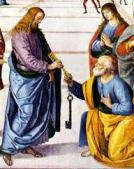
First of all, he declares Peter blessed and changes his name from “Simon” to “Peter”. Peter means bedrock in Greek, the type of rock foundation you look for to set a building on a solid foundation. “And on this [solid rock foundation] I will build my church and the power of the netherworld will not prevail against it.” That means two different things. First, it means that the Church will never come to an end, so when we hear people saying “Ah, this will be the end of the Catholic Church” we know better. Jesus promised the Church would never come to an end and in fact it can’t because the Church is the body of Christ. So to say that the Church would come to an end would mean that Christ will come to an end. Christ is reigning in glory in heaven so there’s no way he can come to an end; therefore, there’s no way the Church can come to an end. Secondly, what was ‘the power of the netherworld,” “the jaws of death,” “the power of hell” – there are many different ways we could translate that line? It is a lie. A lie led Adam and Eve to sin. Satan tempted them with a lie, and Jesus promised that that power would not prevail against the Church; in other words, he promised Peter that he would never allow the Church to sustain a lie or an erroneous teaching. That doesn’t mean that everything the Pope says is automatically true just because he said it. He never promised Peter he would be impeccable – that he could never possibly make a mistake – but rather that under certain circumstances he is infallible – he cannot be wrong. There are several conditions that must be met:

  1. When he is speaking on a matter of faith and morals
  2. When he is speaking ex cathedra, as the recognized head of the Catholic Church
  3. When he’s speaking to all Catholics universally (he can’t be talking just to Catholics in thepope-francis-2-300 United States or just in France or just in Italy)
  4. When he intends to make an infallible decision.

Under these conditions the promise that Jesus gave to Peter is fulfilled and the Pope speaks infallibly on his own authority. That’s what we call the Extraordinary Magisterium. In the course of history popes have exercised that right precisely twice: Pope Pius IX in 1854 to infallibly define the Immaculate Conception of the Blessed Virgin Mary, and Pope Pius XII in 1952 to infallibly define the Assumption of the Blessed Virgin Mary. So all of this hullabaloo about the infallibility of the pope is about something that happened precisely twice in history!

But that doesn’t mean that’s the only time that the church exercises her infallibility. The authority that Jesus gave to Peter is exercised in the Ordinary Magisterium, the teaching power that comes with the clear and consistent teaching of the church. Part of the Church’s infallibility that Jesus gave to Peter is exercised whenever the church clearly and consistently teaches something over the course of time. When that happens, we know that it must be true or Jesus lied to Peter. So for example, pick any one of the hot topics today that people want the church to change. If the church should all of a sudden decide “Well alright, I know for the last 2000 years we said that was sinful but now are going to allow it” what would we be saying? We’d be saying that for 2000 years the Lord has allowed the church to sustain a lie! We’d have to say that either he couldn’t stop it – which is inconceivable; he’s God – or he chose not to, which is also inconceivable. It is not consistent with the promise he gave to Peter. So when the church clearly and consistently teaches something we know that it is the truth because of the promise Jesus made to Peter. The only other possibility would be for people to say that something which used to be wrong is now okay. But that too is impossible, for that would imply a change in God himself. Morality is our conforming our lives with the nature of God, so to try to declare that something that used to be moral is now immoral or vice versa would imply a change in God and that’s a metaphysical impossibility. That doesn’t mean that everything the Pope says is automatically true. For example in the 18th century when the waltz first came out, the Pope at the time condemned it as a sinful dance because it required the gentleman to put his hand on the lady’s waist as they danced, which was a rather risqué thing to do in their time. But it was never followed up by any other pope, and today there was nothing wrong with dancing the waltz. It was merely the opinion of one pope at the time. Popes could also sometimes make a mistake and say things that later they might retract. For example Pope Paul VI once talking to priests in Rome was encouraging them to go into the schools and teach the children their catechism, and he told to them this is the most important thing they do as a priest. Of course that’s not the most important thing they do as a priest; the most important thing they do as a priest is celebrate the sacraments, most especially the Holy Sacrifice of the Mass, and when questioned about it later I’m sure he said “yeah, I misspoke!” He was speaking off-the-cuff; he wasn’t intending an infallible decision. But when the Church teaches something clearly and consistently we know that that teaching is a clear teaching of God and is infallible because that’s what Jesus promised Peter.

And I will give to you the keys to the kingdom of heaven; what you declare bound on earth shall be bound in heaven what you let loose on earth shall be let loose in heaven.” In other words Jesus is saying, “Peter, you speak for me! You have my authority to decide what leads people to heaven and what doesn’t, what is sinful and what is licit.” He promised Peter that he would speak through him, so when the Pope speaks, it is Christ who speaks. Again, it’s not arbitrary. It’s not that God automatically gives the Pope the perfect ability to never make a mistake but that Jesus promised the Holy Spirit would guide him in making those decisions so he would not err. It is God at work and not the individual person of the pope. That’s how we can notice that even some of the popes in history who were quite sinful were able to make good faith-filled decisions in spite of their own sinfulness.

That brings up what a lot of people would ask us about some of those sinful popes, especially in the Middle Ages. They would say, “how can you talk about following the Pope after all those popes who sinned so much?” Yes, is certainly true there were some popes who were quite an embarrassment and who did sin grievously. I like to think of it this way: suppose were talking about the President of the United States, and let’s imagine some president somewhere commits a serious crime that is embarrassment to the entire nation, and both political parties – even the president’s own party – decide he has to be removed from office. He is impeached, removed from office and sent to prison. What do we do now? The vice president becomes president and he’ll probably have to do a lot of work to build up and restore the credibility of the office of the president in the eyes of the rest of the world as well as our own nation, but would anyone claim that the Constitution of the United States is now null and void simply because the president committed a crime? Of course not! The sin of the man in office says nothing about the power of the office itself. The same thing can be said about the papacy. Just because one pope commits a sin does not mean that Jesus’ promise to Peter is now null and void. If we’re looking for a perfect pope who has never sinner, there has never been any! Even Peter on the night Jesus was arrested denied three times that he even knew who Jesus was. What did Jesus do later? He reinstated Peter, as we hear in John when he asked him “Simon son of John, do you love me?… feed my sheep… tend to my flock!” He was reinstating what he had promised at Caesarea Philippi. It’s as if he was telling him “your weakness at that moment does not stand in the way of what I promised you; it still continues.”

The authority of the Pope was never a problem for the church until the time of the Protestant Reformation where the reformers wanted to break away from the power of Rome. Of course they had a serious problem when confronted with Matthew 16:13-20. It’s amply clear what Jesus said and did there, so they tried to get around it and explain away the meaning of that verse. They claimed that Jesus really meant Peter’s faith and not Peter himself was the rock on which the Church would be built, citing nuances of the word petra in Greek. Their argument in effect would say that anybody who has faith in Jesus as Peter did can know the truth and know what’s right and wrong, and would have the authority to speak infallibly in Jesus’ name. Well, just the fact that Christians disagree about that line let alone other things proves that cannot be true. Jesus never intended to say that anyone who believes in him will be infallible! That nullifies the whole call to discipleship, to following his teachings! The ability to decide right from wrong on one’s own authority is precisely what Original Sin was, the very thing Jesus was about to die to reverse! It is ludicrous to hold that Jesus was authorizing the very cause of our downfall! If you follow the reformers’ argument the conclusion you come to is that Jesus didn’t know how to use a metaphor! And if you step back and look at the story you have to ask, “then what the heck was Jesus doing there?” Without the traditional Catholic understanding of this text, it was a pointless dialogue. There is no getting around it: Jesus gave his authority to Peter, and the reformers tried to get around it but they failed.

For us even in our Catholic circles there are some people who try to excuse themselves from their obligation to follow the Pope. This usually comes into play when there is a teaching that we don’t particularly like or agree with. We want it to change but the Church is not changing it, so people will come up with things you’ll hear such as “Oh, that’s just Rome!” or “Well the Pope is an old man in Rome. he doesn’t understand what my life in America is like” or “he doesn’t understand what it’s like being a woman, so we can just take what he says with a grain of salt!” No we can’t. The Holy Father has the authority to speak in the name of Jesus, and we cannot just dismiss away his authority in our lives anymore then we could just dismiss away the authority of the federal government by saying “Oh, that’s just Washington!” Like it or not, we are bound by the laws of the United States and the laws of the state in which we live. Similarly, we are bound by the authority of the Holy Father and there is no way we can ignore the Pope and say were still following Jesus. To deliberately disobey the Holy Father is to deliberately disobey Jesus. There’s no way around it. And that’s the lesson that my father taught me all those many years ago about disobeying the babysitter.

Finally, sometimes people see the papacy and the authority of the Pope as this big authority on top of us crashing us under its power and putting this heavy weight in our shoulders, that somehow Catholics are slaving under this burden of all the things that the Church teaches. I don’t see it that way at all! In fact I see quite the opposite! I see the authority of the Church as quite liberating. Those denominations of Christianity that have rejected the authority of the Pope and decided they can decide right from wrong on their own are caught in a quandary. What happens when they disagree among themselves? If they take a vote and it’s 50-50, who has the ultimate authority to decide which 50% is right and which 50% is wrong? They have no one! But we, thankfully, have the power of the Holy Father that Jesus gave to Peter, that when we disagree among ourselves and bring it to the Holy Father, when he makes his final decision, we know it’s true because Jesus promised the Holy Spirit would guide the Holy Father through all of time. It’s a tremendous freedom for us to know that we can follow this with certitude because we know that this is not just the opinion of a man in white in Rome, that this is the very teaching of God. I pray that all people will come to realize the tremendous gift that God has given the world in the infallibility of the Church and the Holy Father. May we never try to get around that authority, but rather, may we turn and embrace that authority as a wonderful gift from God and ask the Lord to help us to accept the Church’s teachings as the truth leading to salvation in his kingdom.

 

The Accidentally Incomplete Confession

“I’m afraid when I go to confession that I may not remember everything I want to say. What do I do if I later remember something I should have said?”confession 3

I wish I had a dollar for every time I’ve heard that said! I also wish I had a dollar for every time I’ve said that myself! It does happen once in a while that we go to confession and later remember something we forgot to say. Does that make our confession invalid? Or do I have to go back and do it all over? The answer is, “no” to the first and “not necessarily” to the second. It’s kind of hard for a sincere confession to be invalid. Only if you deliberately held back a serious sin with some intention to sneak it past the priest could it be invalid. It doesn’t seem likely that someone would forget to mention something serious that is really plaguing him. Most likely, anything we forgot to bring up was of venial nature. But it does happen. So what do we do? Well, one thing I always do in confession to make sure I’ve covered everything is to say to the priest, “for these sins and any which I don’t now remember or realize I have committed I am truly sorry.” That gives me a sense of peace. But remember, the priest says “I absolve you of all your sins…” so unless there was a conscious effort to avoid mentioning a certain sin or something we deliberately did not confess, all our sins are forgiven.

Now for the real test: what happens about sins we don’t realize we’ve committed? Maybe we know something is sinful but we didn’t realize we had actually done it, or maybe we never knew something was sinful, or maybe we’re totally unaware that we have that sinful habit? Well, one thing I always try to remember is that, in our imperfect state, we are sometimes totally ignorant of our own sinfulness, and that may not be our fault. Of course we want to overcome all our sins, but what about the ones we don’t see? God is very much aware that in our fallen state, one of our shortcomings is not always being able to see all of our weaknesses. That’s why I always add in my confession the line I mentioned above: “…and for any sins I don’t realize…”  Part of our growth in holiness is coming into awareness of our weaknesses. We should not expect to be aware all the time of everything that is wrong in our lives, and God is patient with us while we learn what sin is in our lives and how to overcome it.

So how, then, do we figure out what our sins are, especially if we don’t think we have too many? First of all, an examination of conscience and a good spiritual reading book will help point out things that we may not realize are happening in our lives or do not realize are sinful. Other clues can come from other people. Listen, for example, to the criticisms that people will sometimes offer about you, even if they are not always offered in the most charitable manner. Not every criticism of us is valid, and sometimes we will get conflicting opinions. For example, early in my priesthood one parishioner told me I didn’t seem to care about anyone over 18 years old, and another told me I had no interest at all in working with young people. Obviously they can’t both be right! Just because one person says something doesn’t mean it’s true about you. But listen for repeated comments. If you frequently hear someone say, for example, “he’s so critical” or “she has no patience at all”, chances are you may be guilty of being critical or impatient. Another thing I like to do is imagine I’m having a conversation with Jesus. I imagine he is in a chair in front of me and we are speaking face-to-face, and I ask him , “Lord, what are the things about me of which you are pleased, and what areas in my life do you want me to work on improving?” Sometimes the answer comes almost immediately to me. But I also believe, and have found, that God never leave such a question unanswered, and in his own merciful way he has a way of showing me the areas in my life where he really wants me to grow and change. If we practice these skills, I’m certain we will grow in our awareness not only of the sin in our lives but also of our growth in holiness.


Remember that one confession is not going to automatically bring us to perfection; rather, every confession is a further step of growth in holiness. The more frequently and honestly we confess the holier we’ll be bound to grow. Just like learning to play a musical instrument, frequent practice and frequent lessons help us grow to be a virtuoso, so the same thing happens with holiness. While all of our sins are in fact forgiven every time we sincerely confess them, even if we don’t recall everything that was sinful whether it’s because we forgot or were not aware of it – provided we have not deliberately left out something – we do need to grow in our knowledge of exactly what is sinful and of precisely what sins we are guilty. God is patient with the understanding that we’re not always aware of all the weaknesses in our lives and if we make an honest effort to overcome them as he shows them to us, we will grow in holiness. So do not be afraid if you have not made a perfect confession. A perfect confession is not one where we remember every single detail that must be confessed but rather one in which we can truly say we are sorry from the bottom of our hearts for any sin we have committed, no matter how small. If we can do that, then just like the thief on the cross, when we stand before Jesus in judgment we will hear him say to us: “this day you shall be with me in Paradise!”

confession 4

Three reasons why Catholics leave the Church

I came across an excellent article by a young man involved with FOCUS (Fellowship of Catholic University Students). It addresses some misunderstandings people have about the faith that keep them from remaining in the Church. It is well worth the read!

http://www.focus.org/blog/posts/a-deadly-vaccine-3-reasons-catholics-leave.html

I pulled a prank on my parishioners!!

I pulled a great prank on my parishioners today at Mass. Several people told me it needs to be on my blog, so here it is!